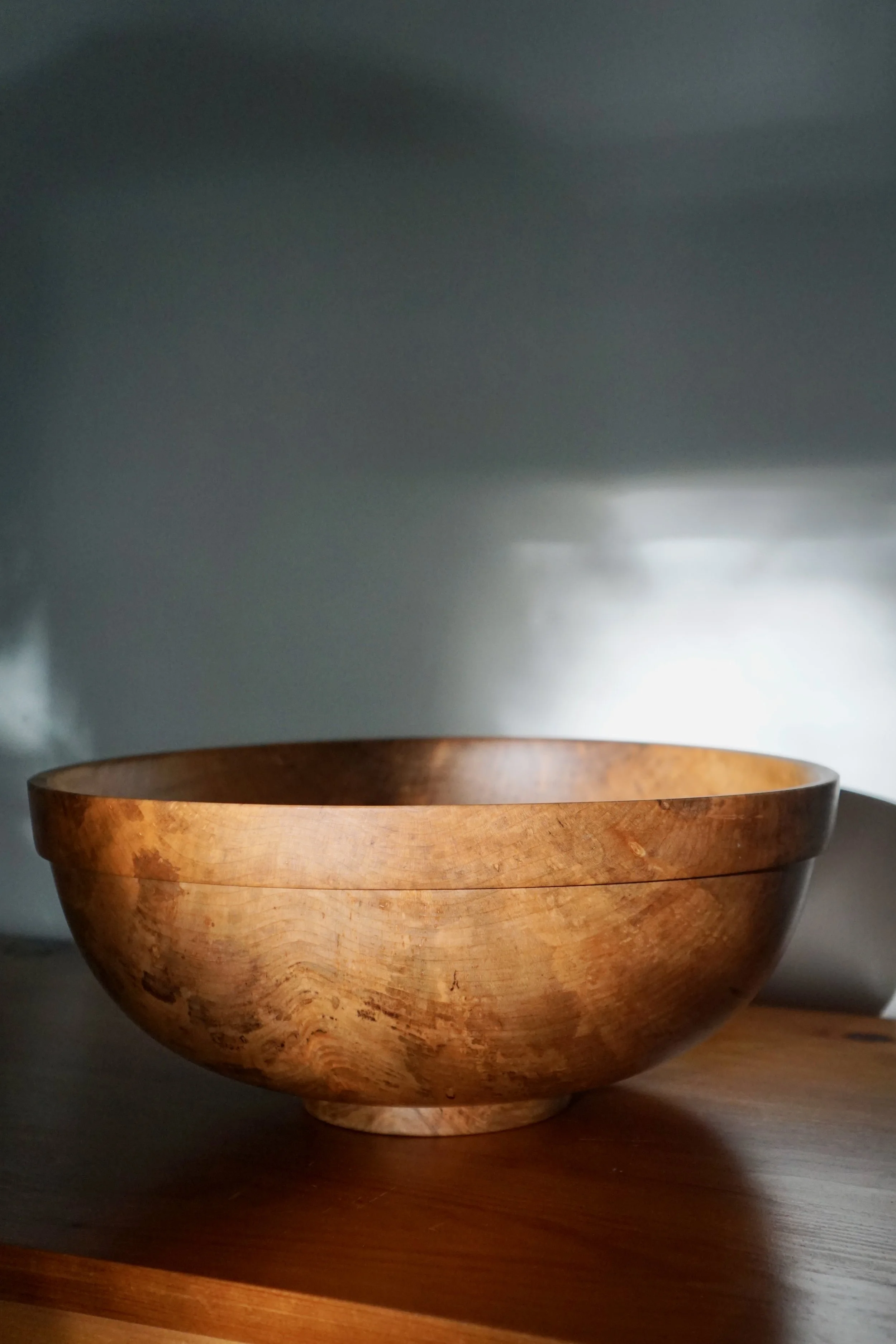
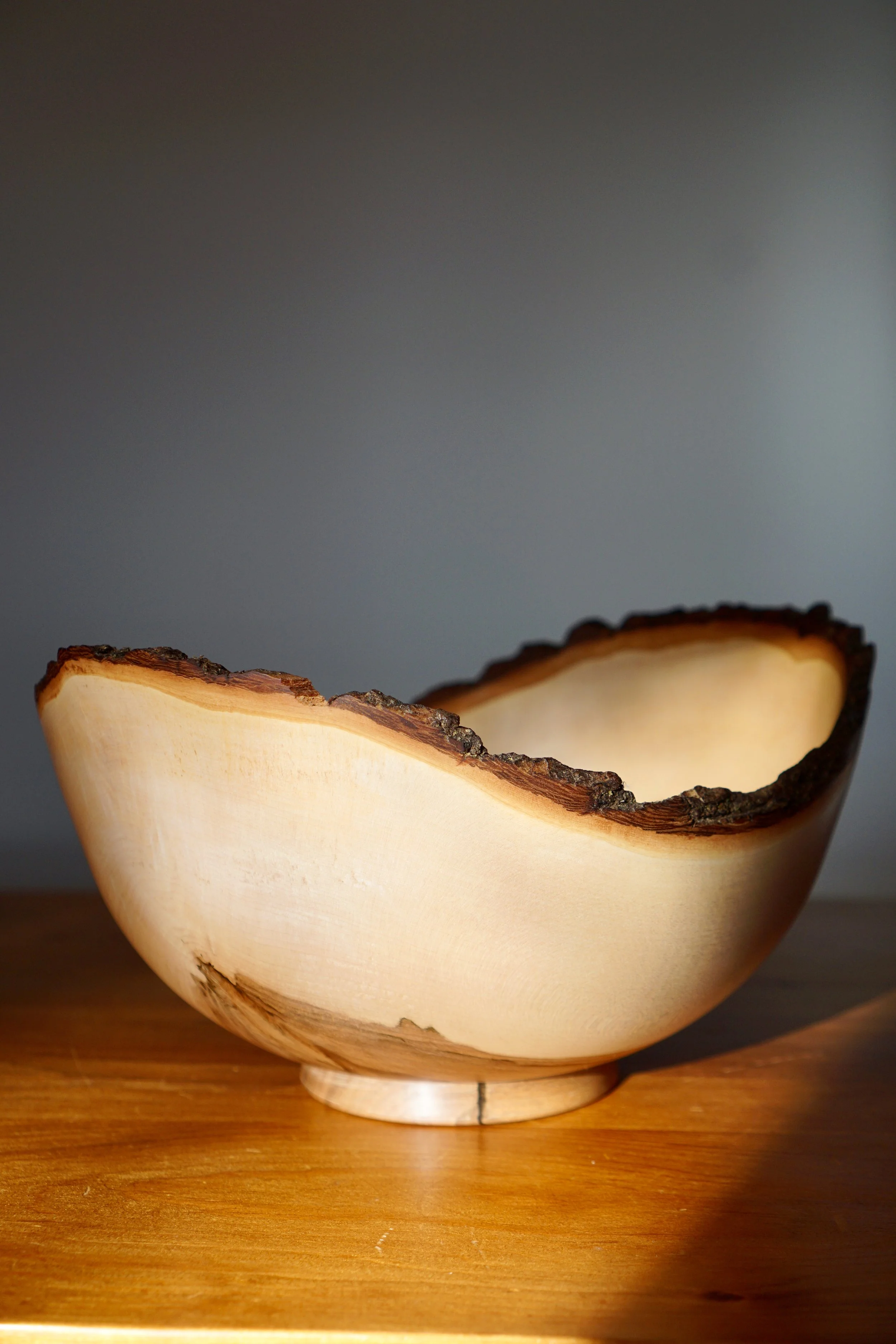
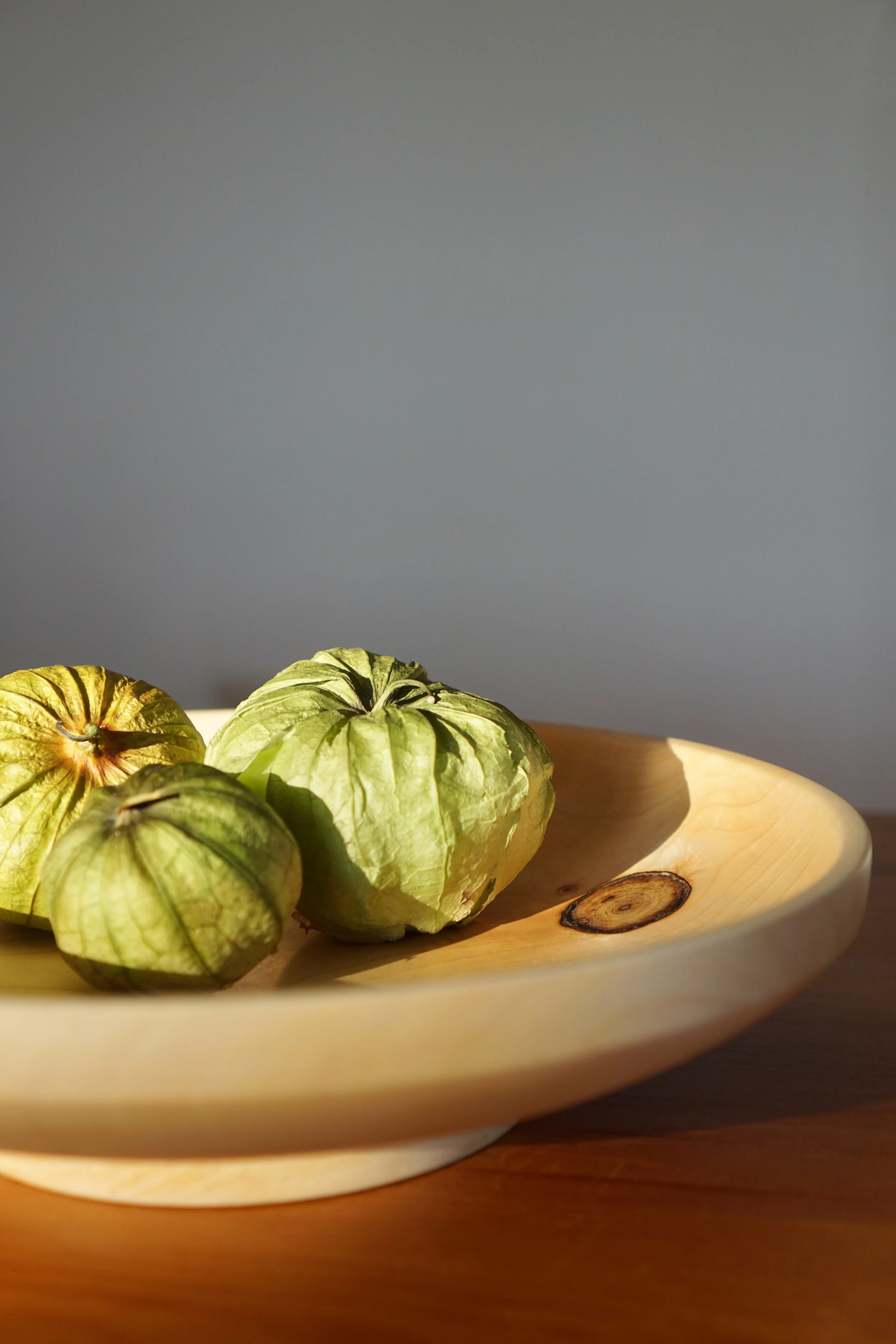
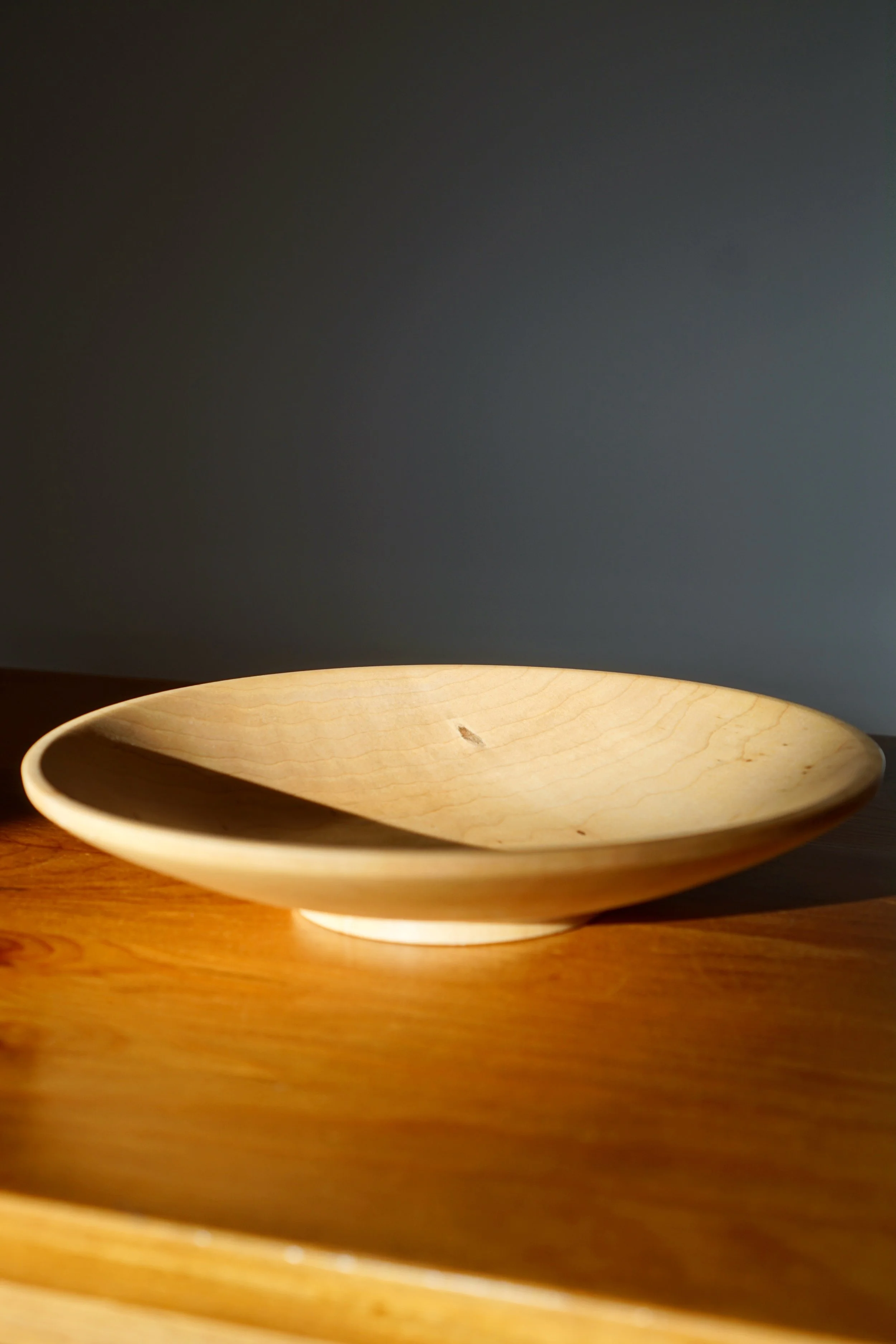
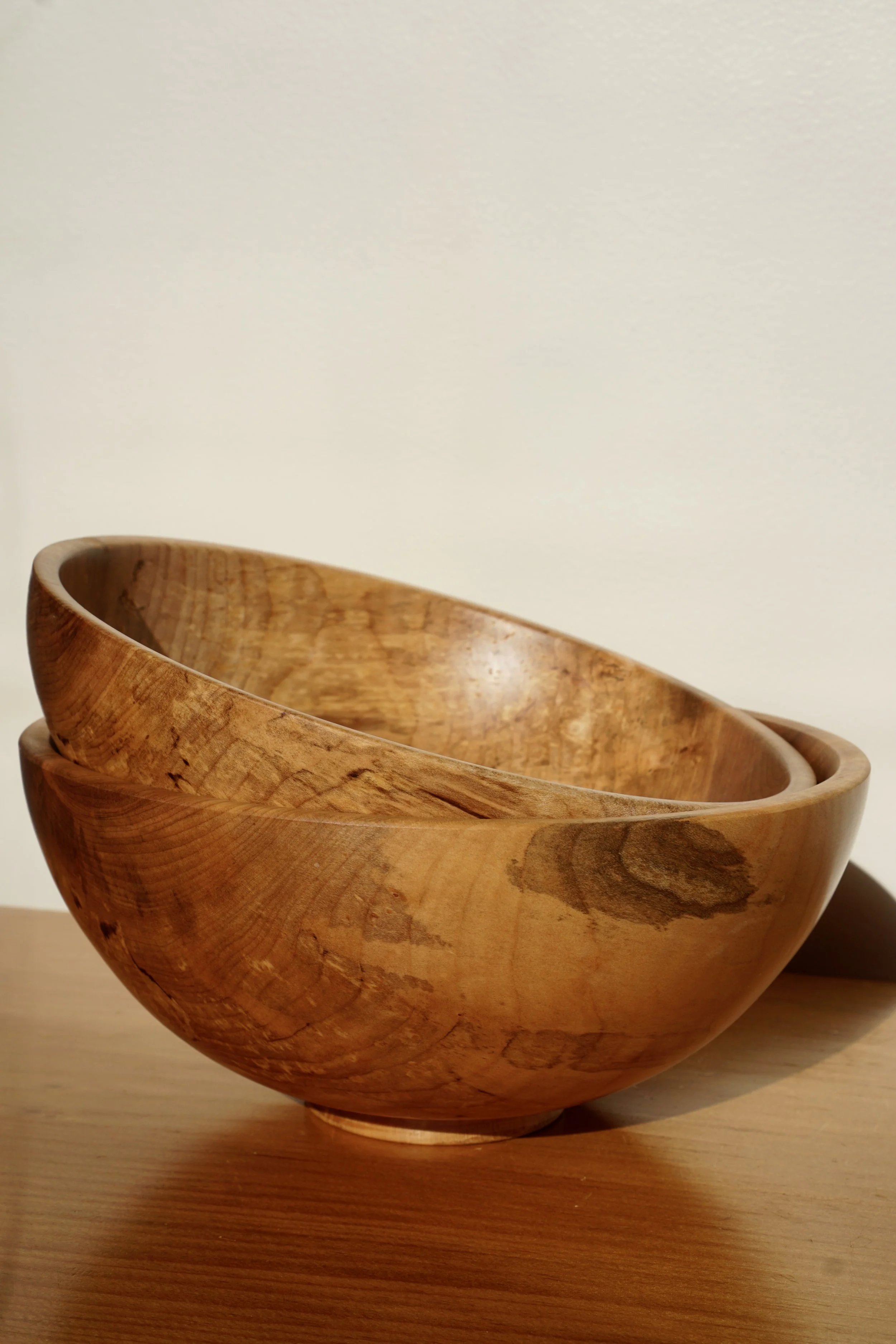
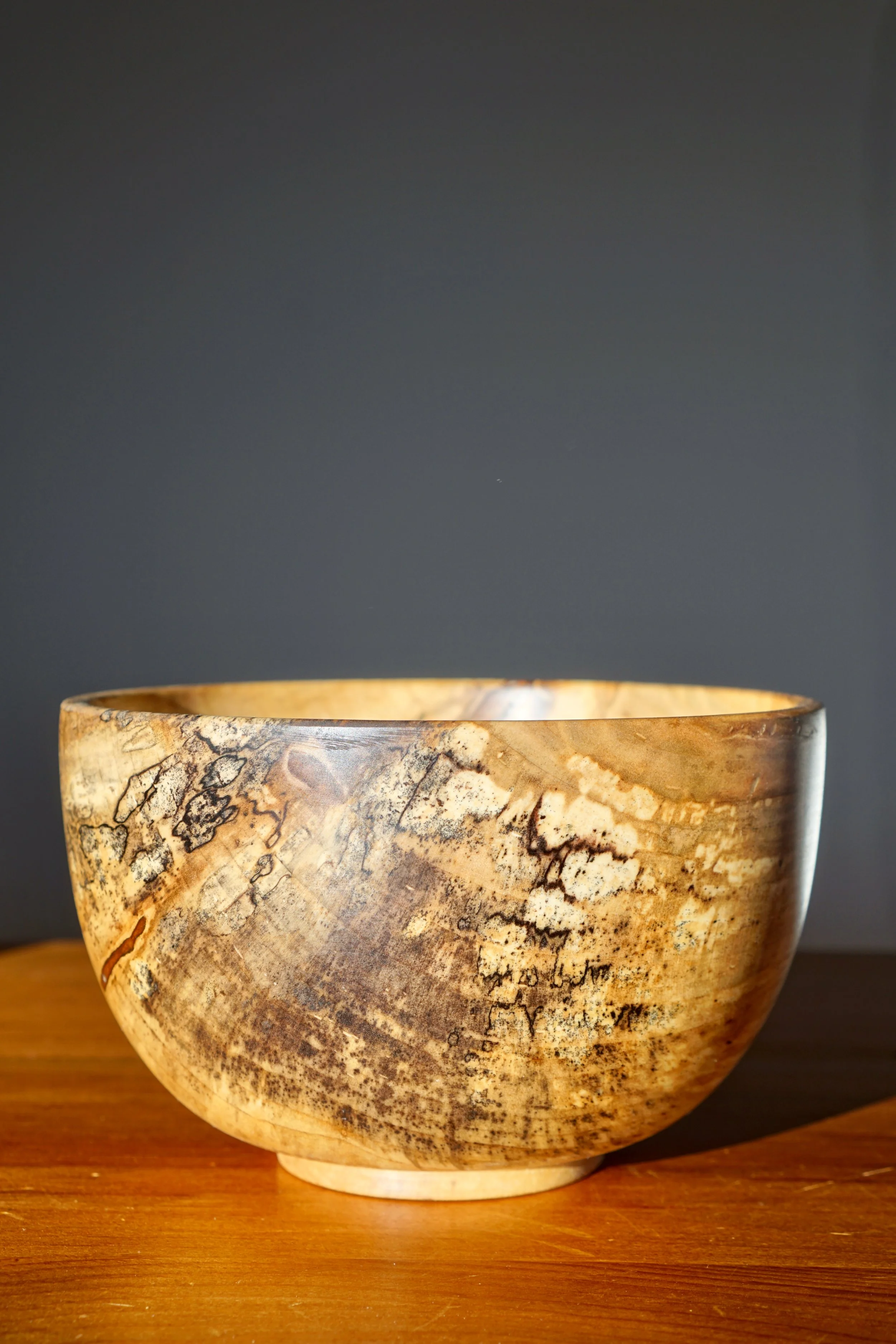
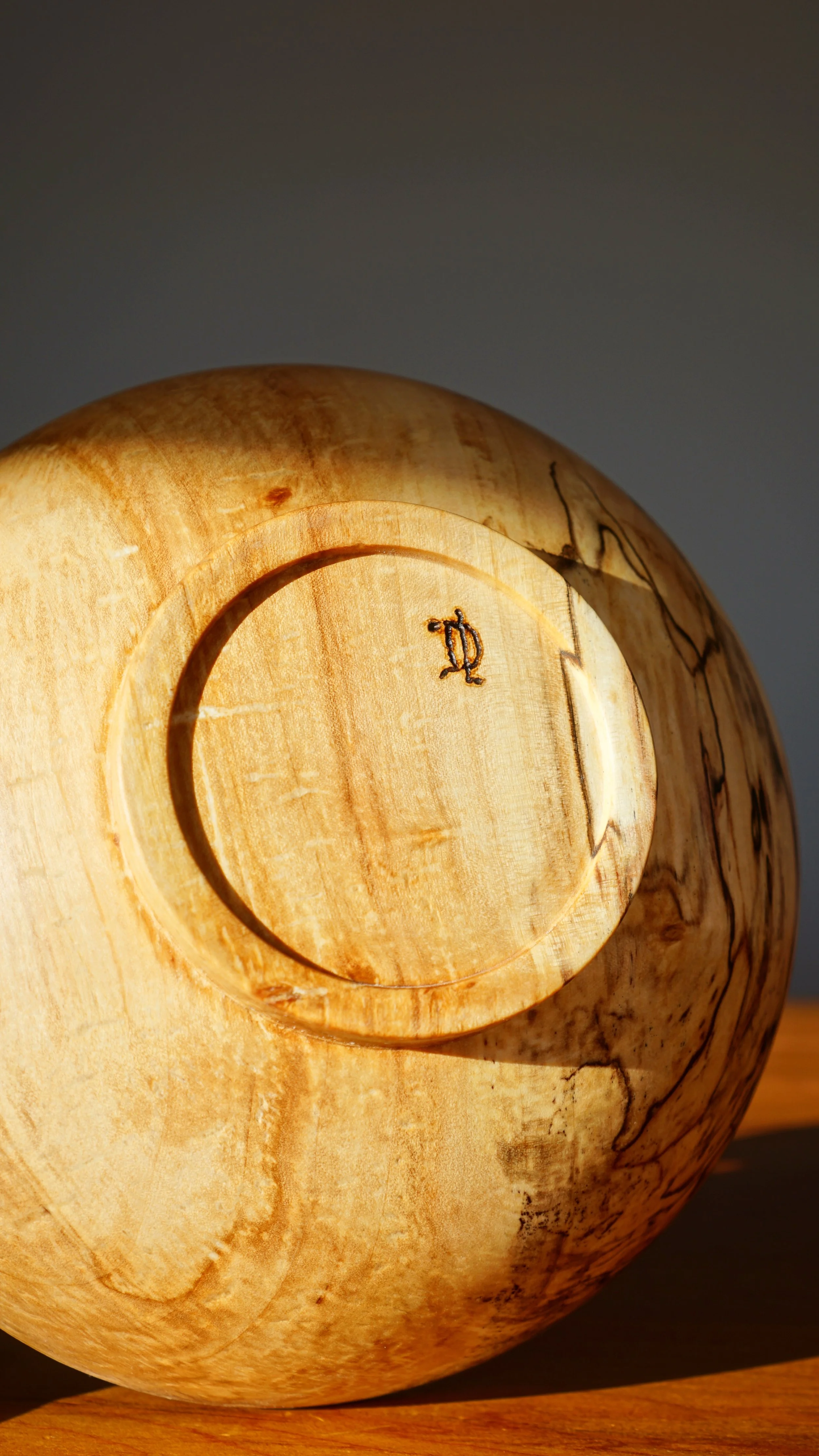
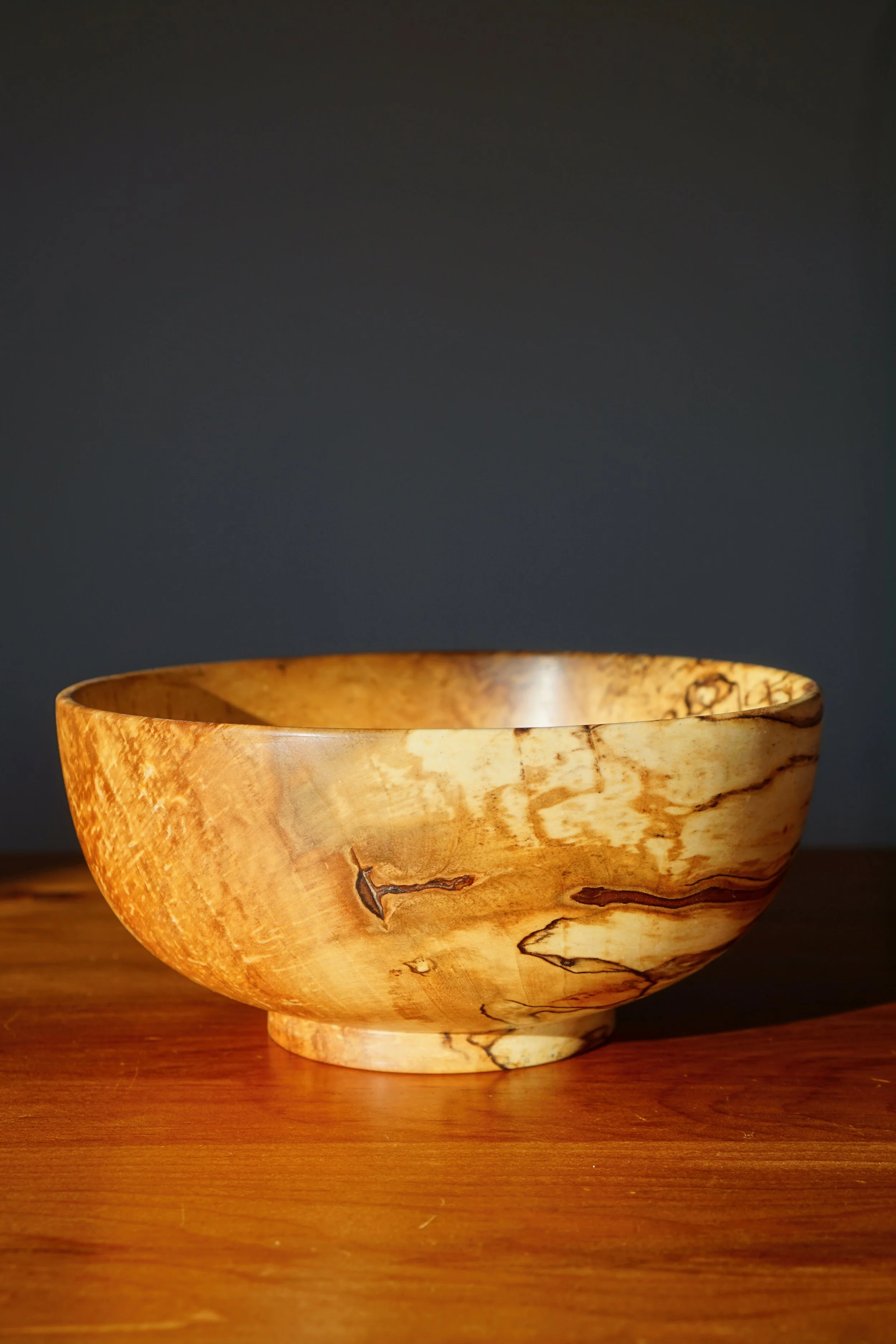
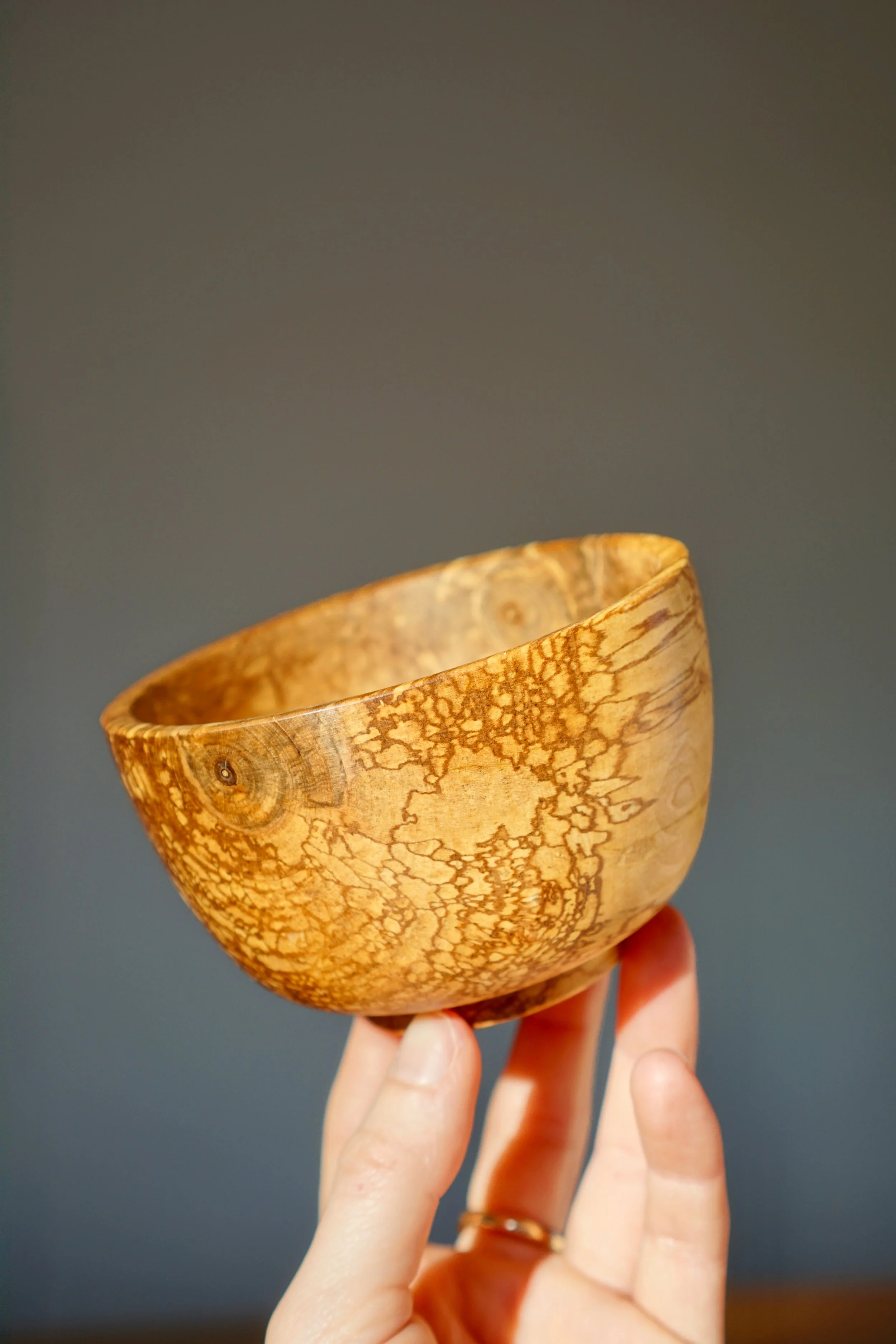
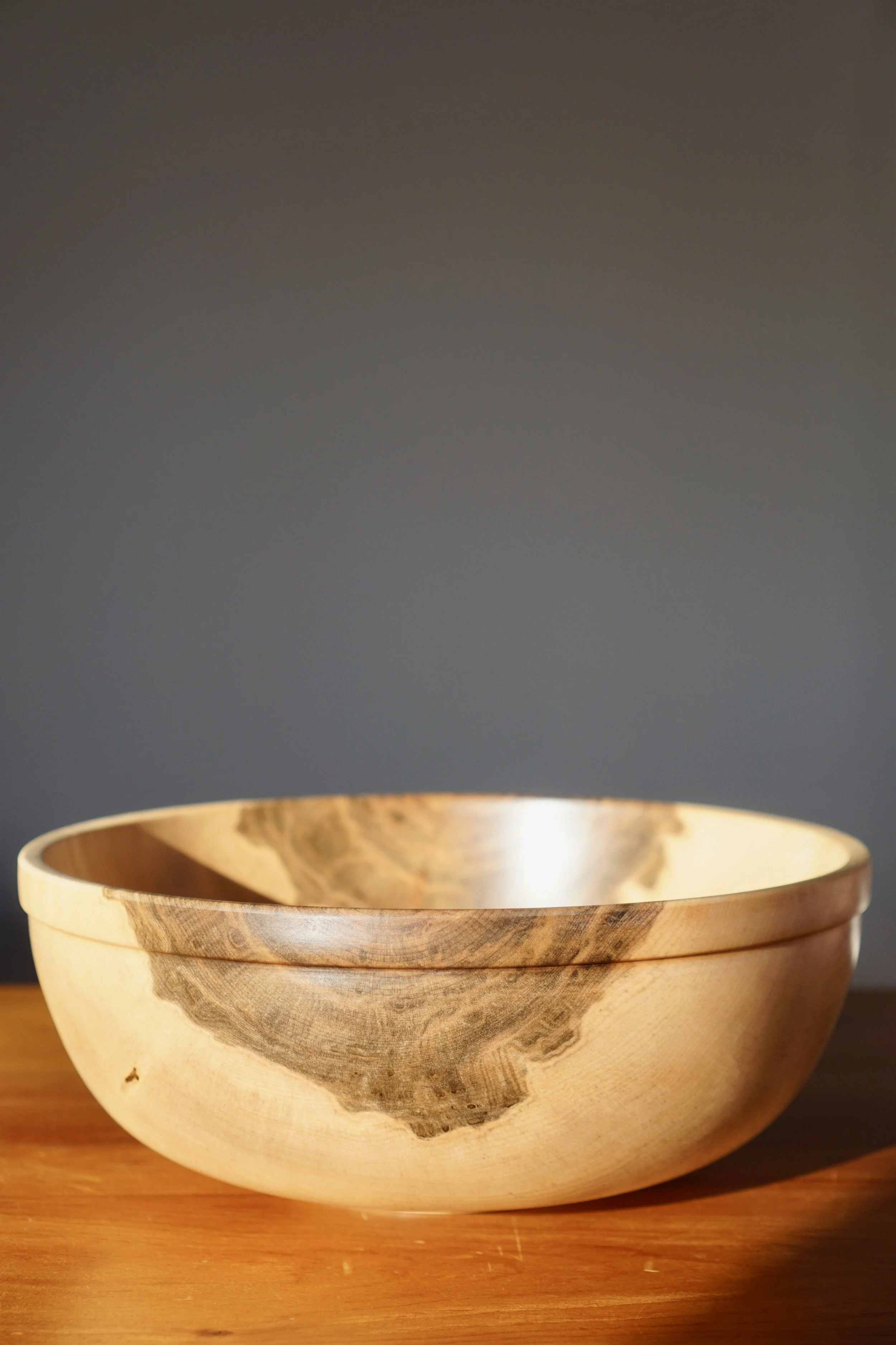
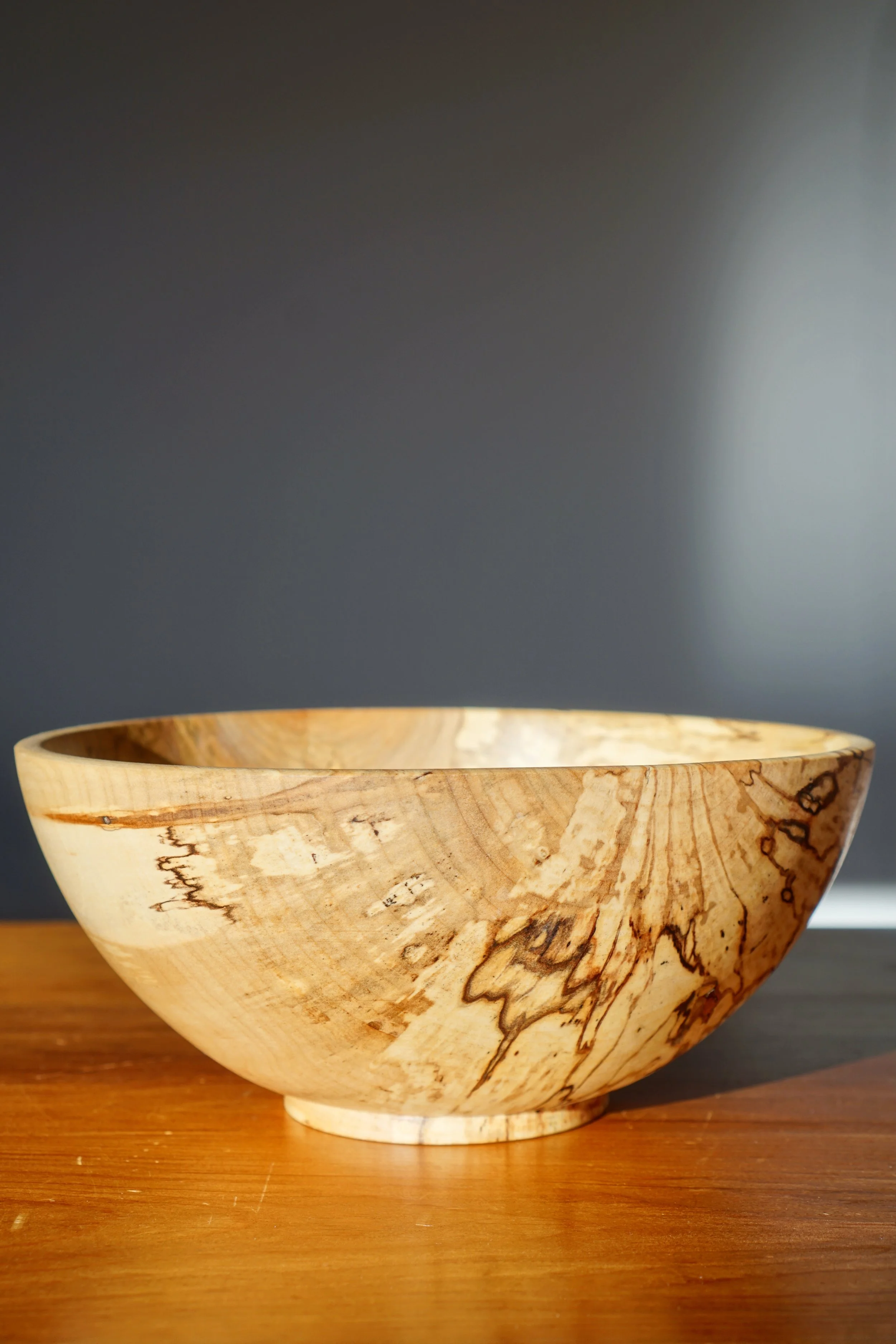
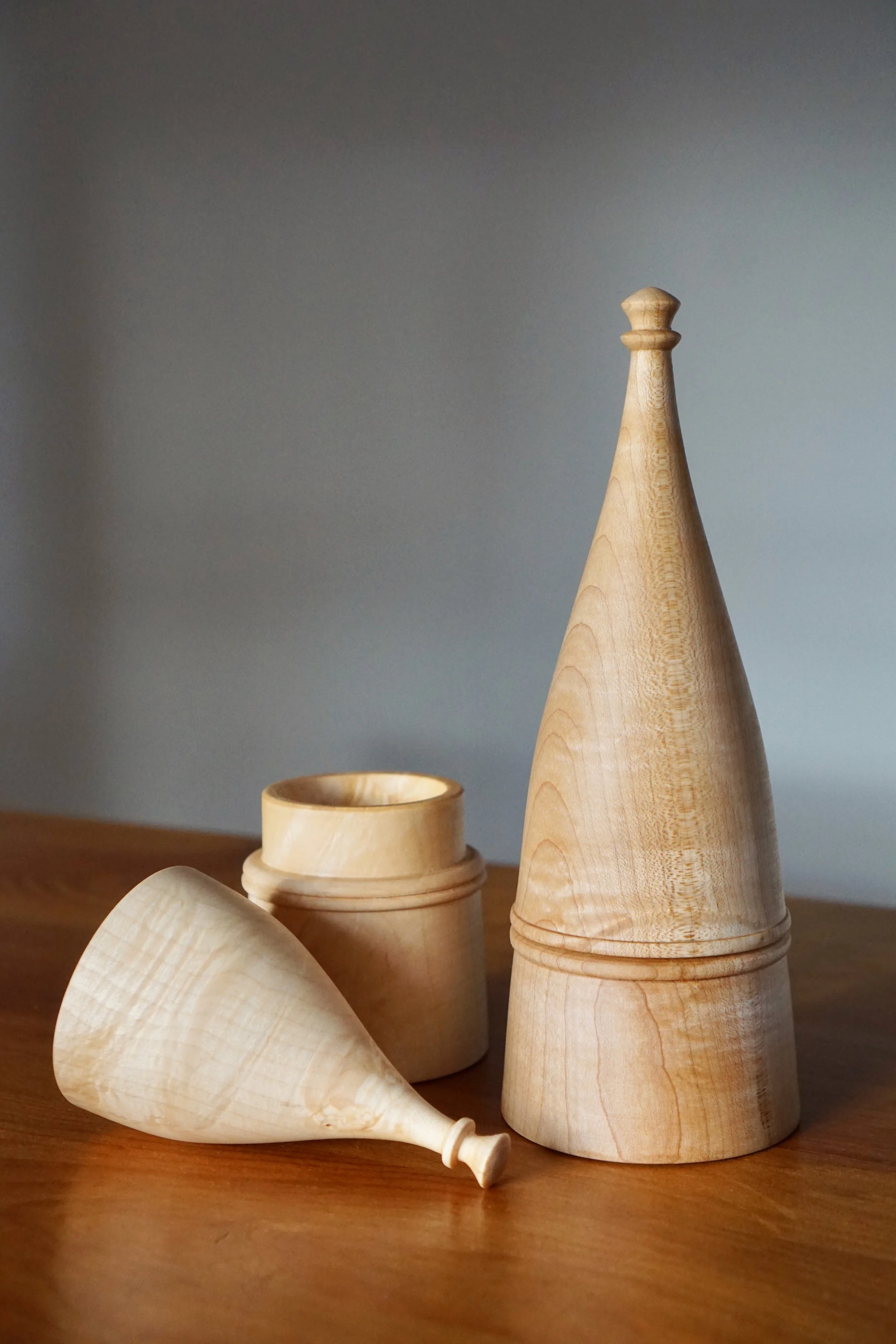
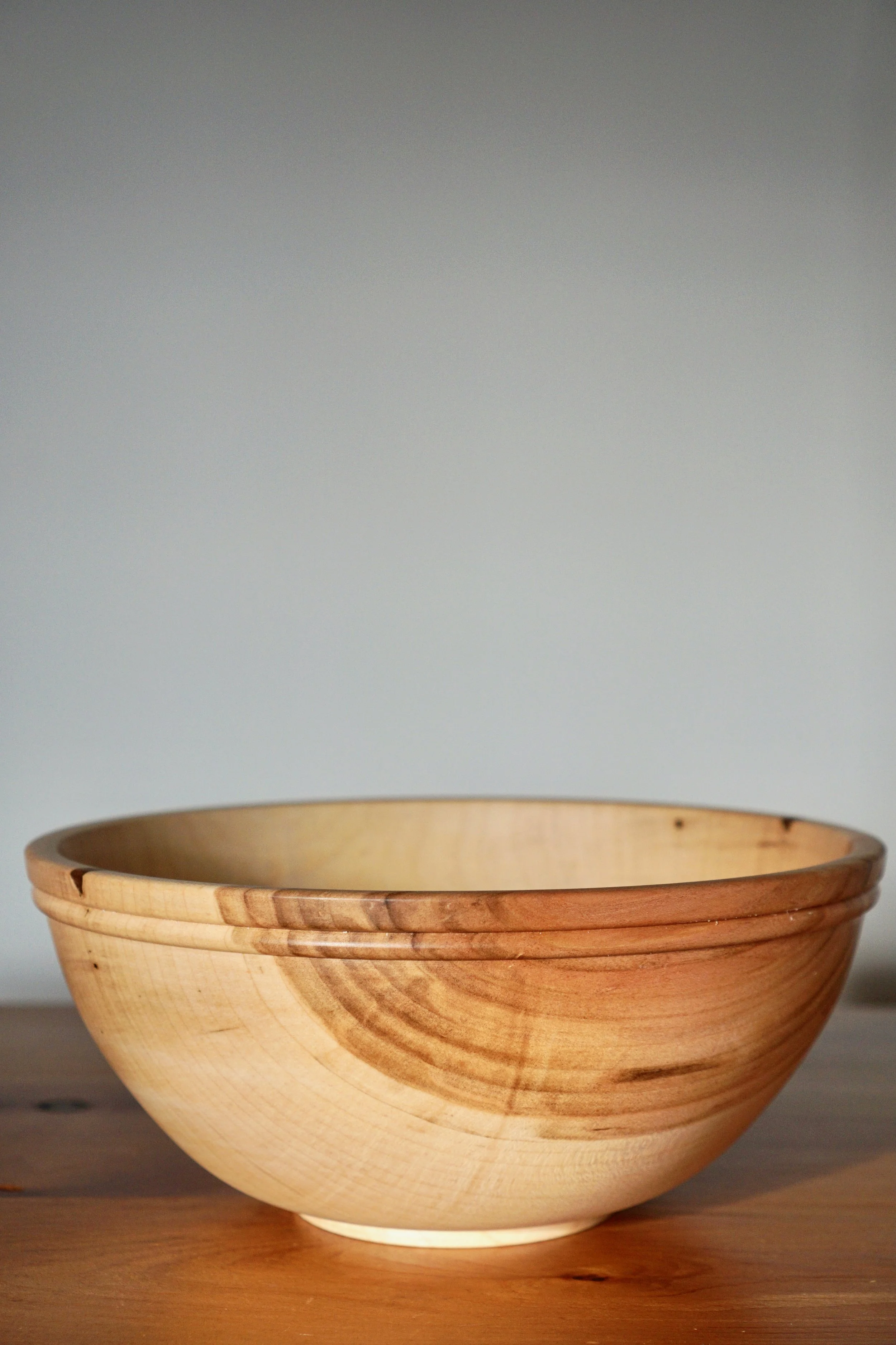
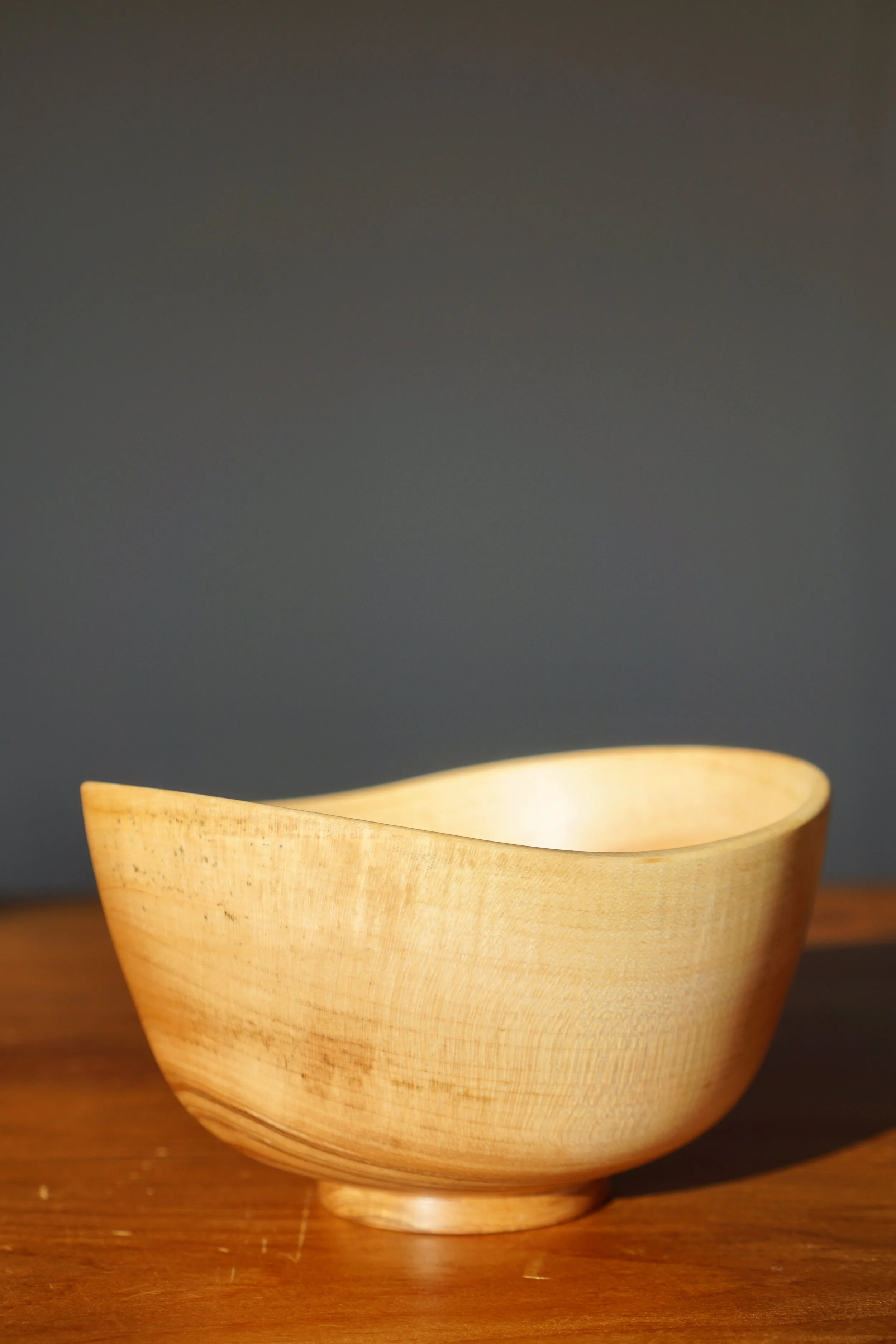
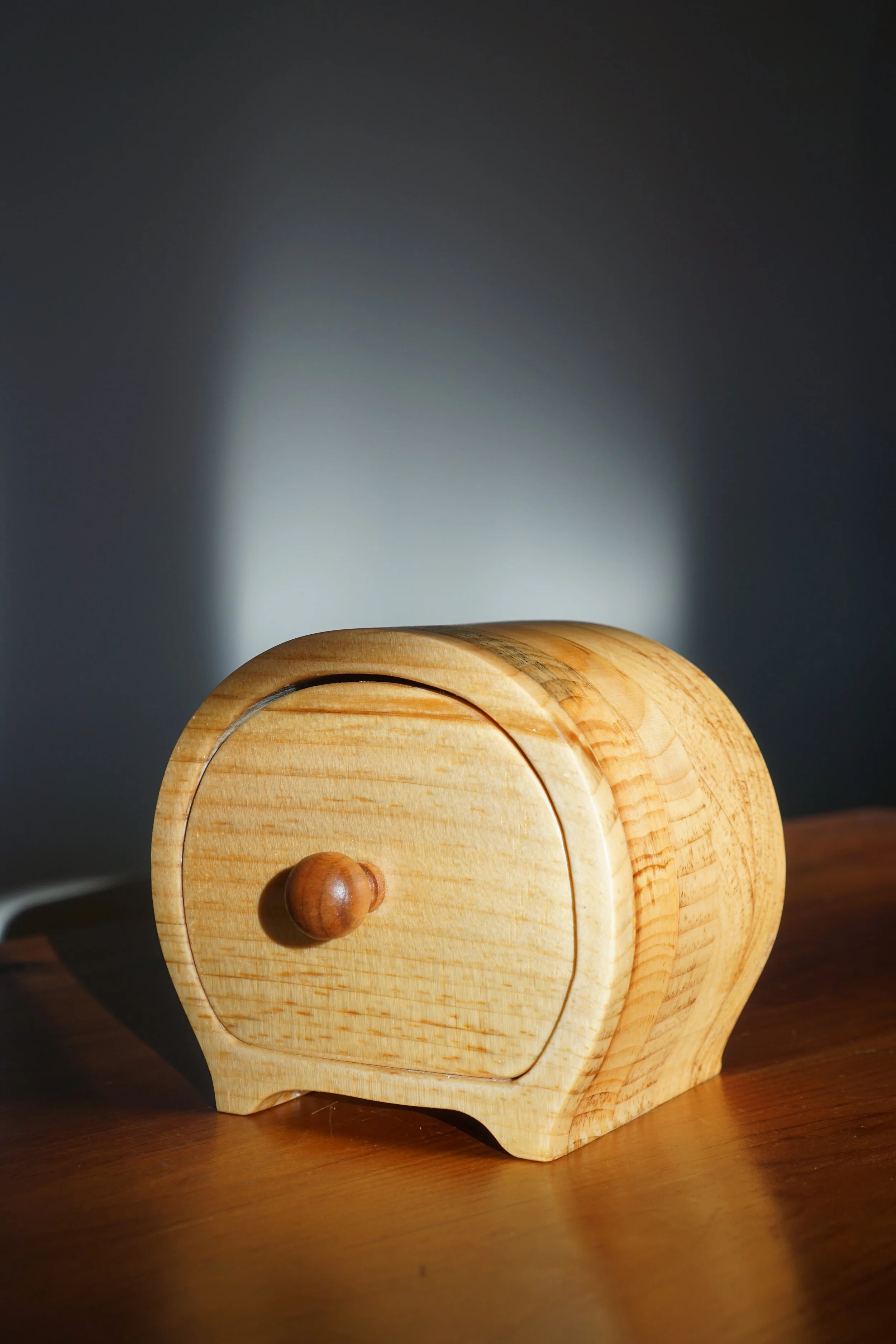
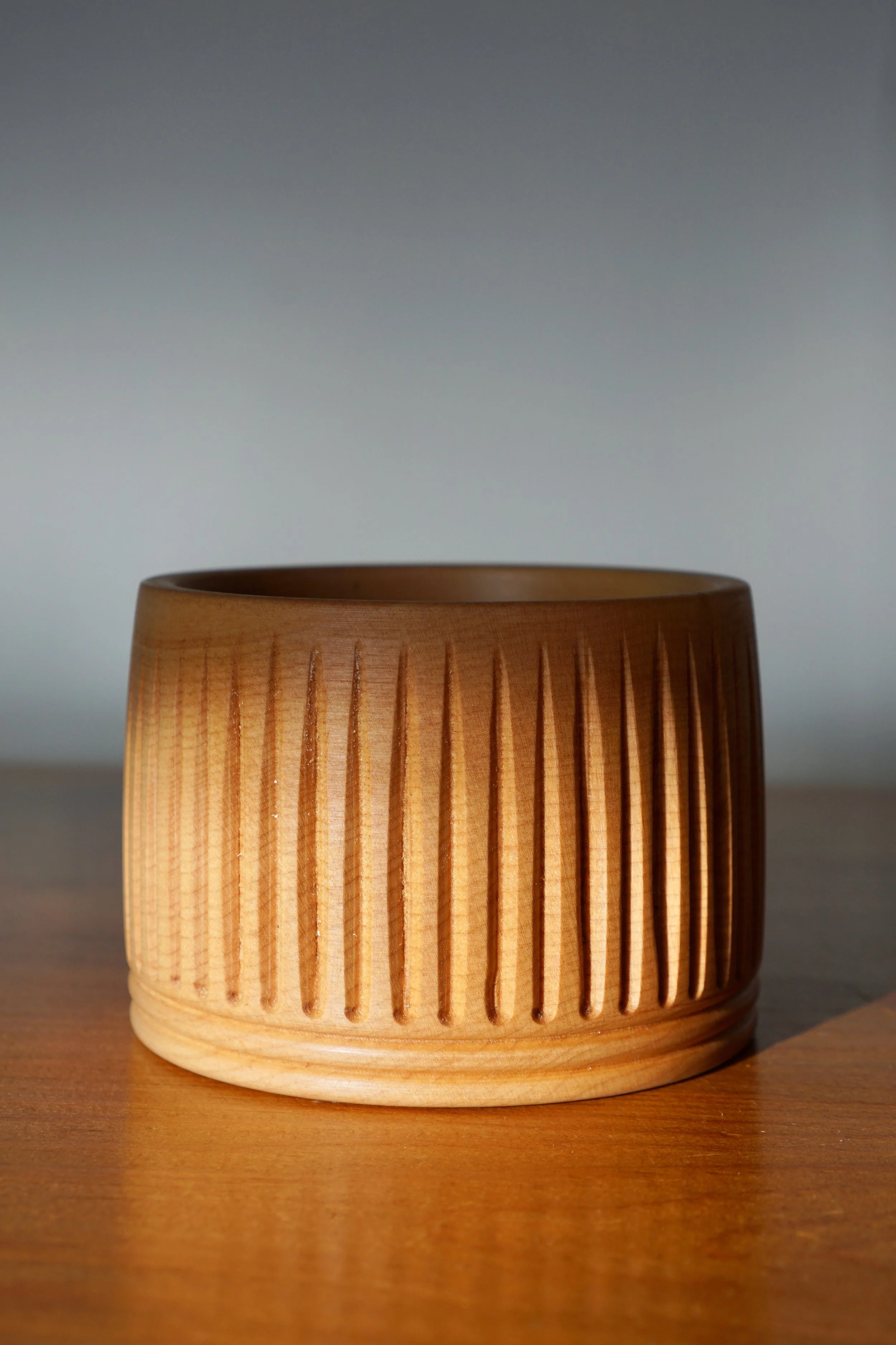
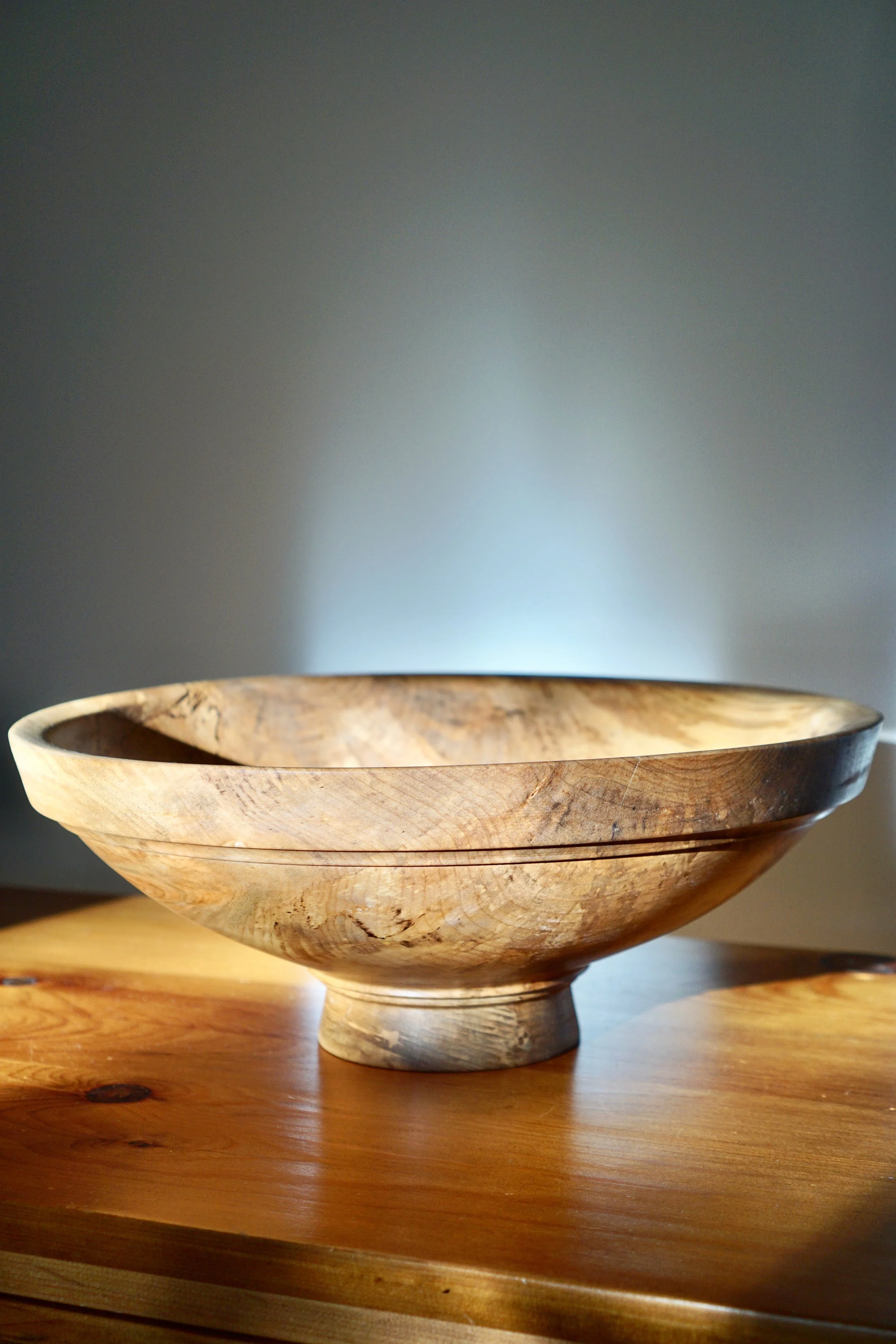
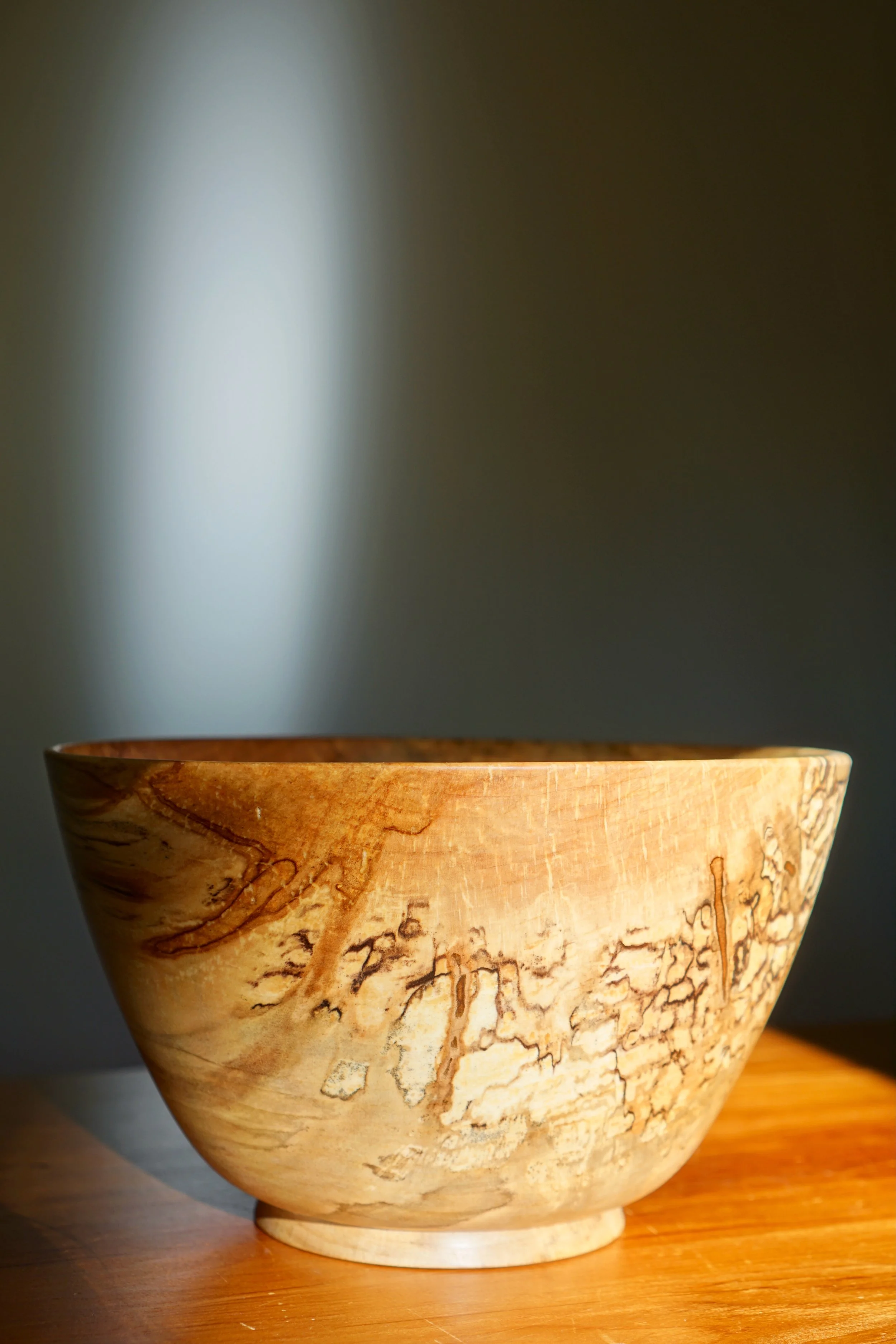
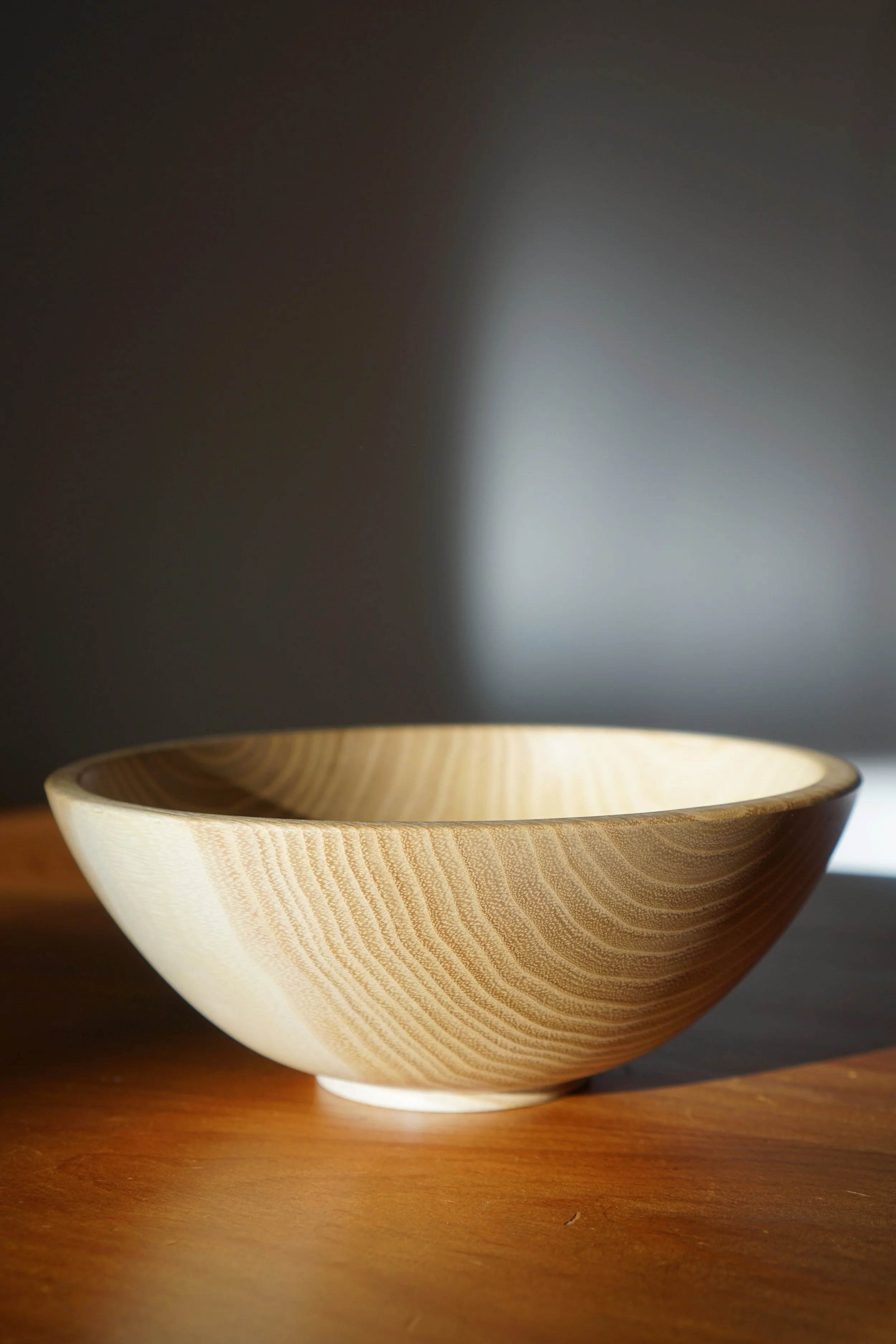
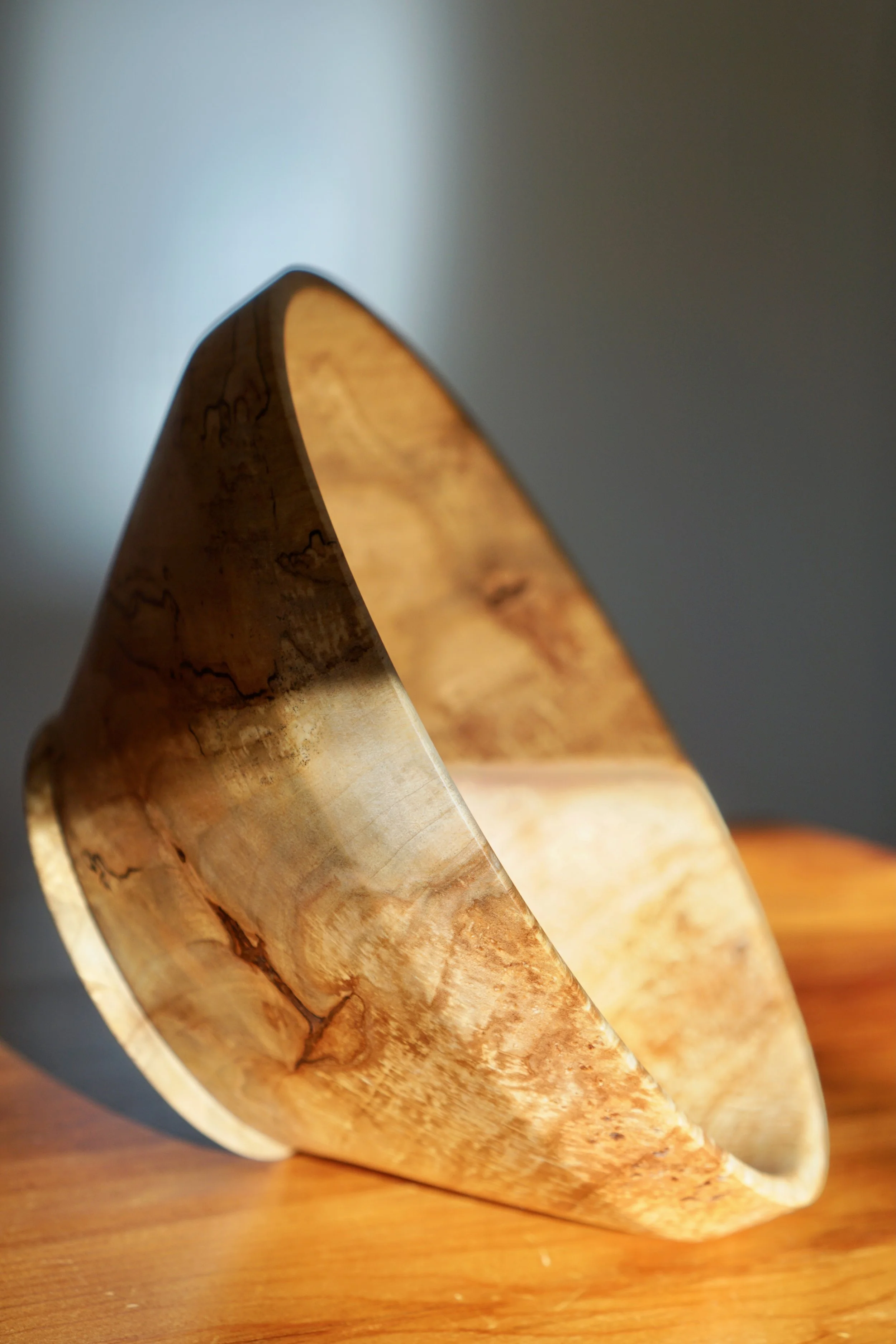
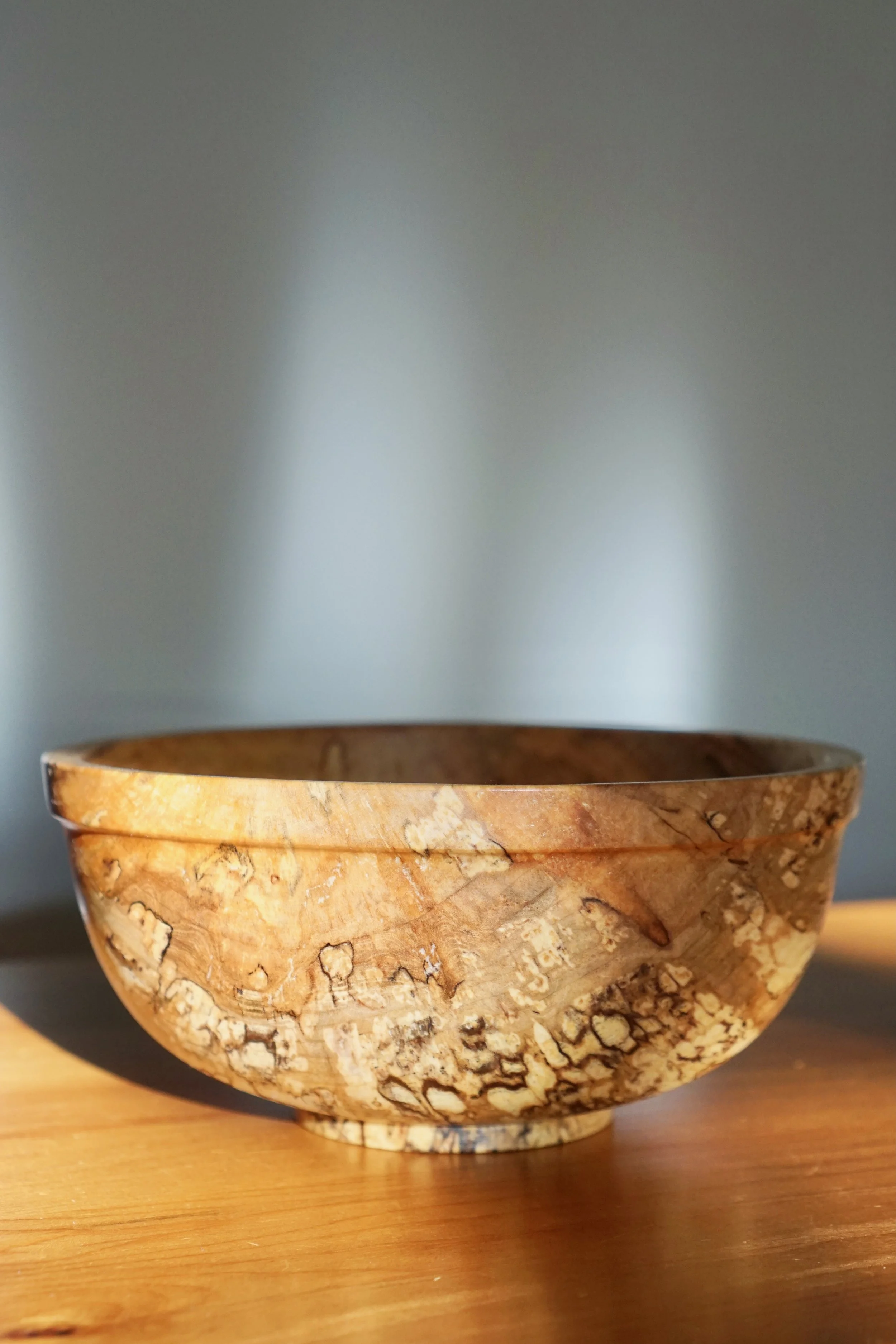
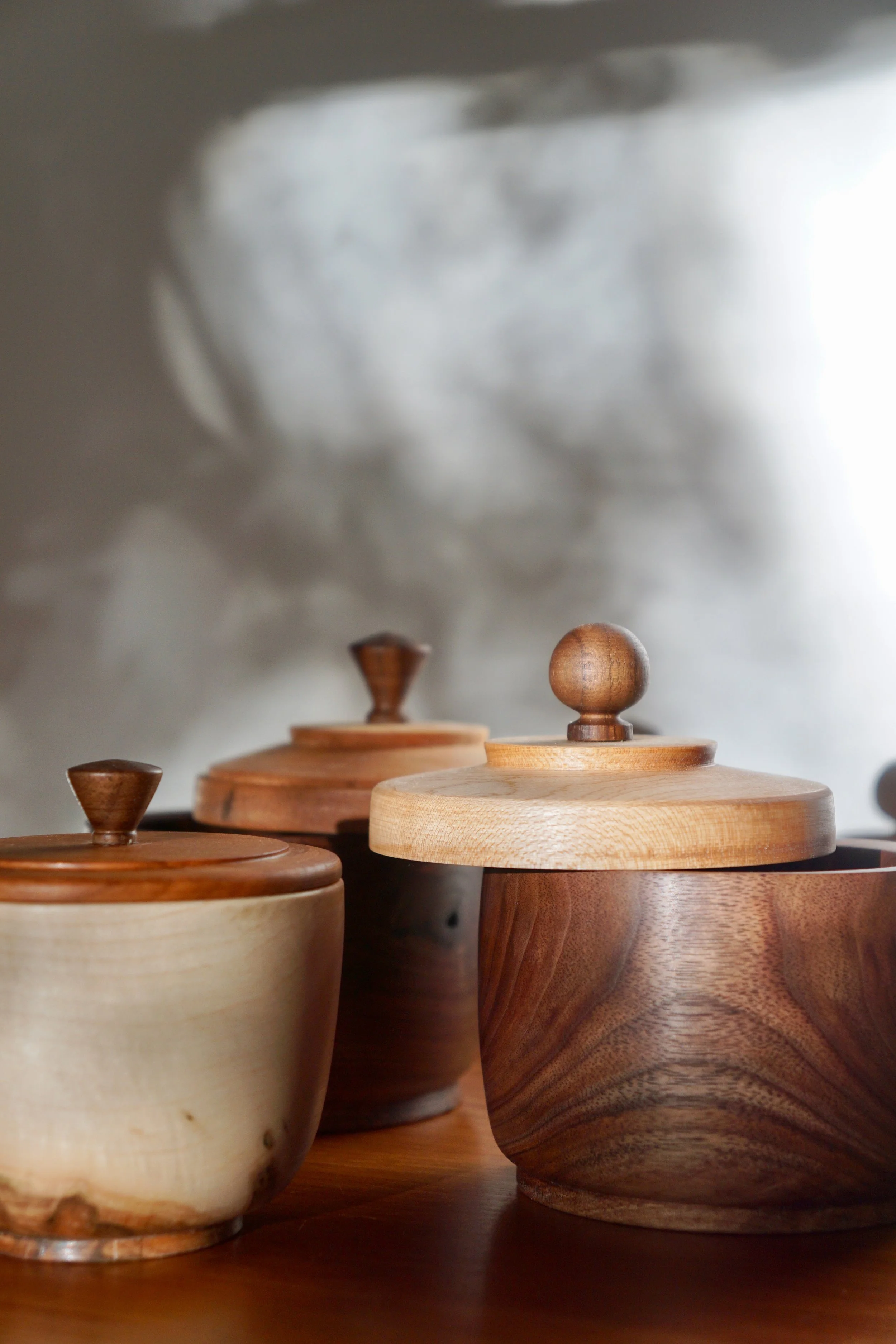
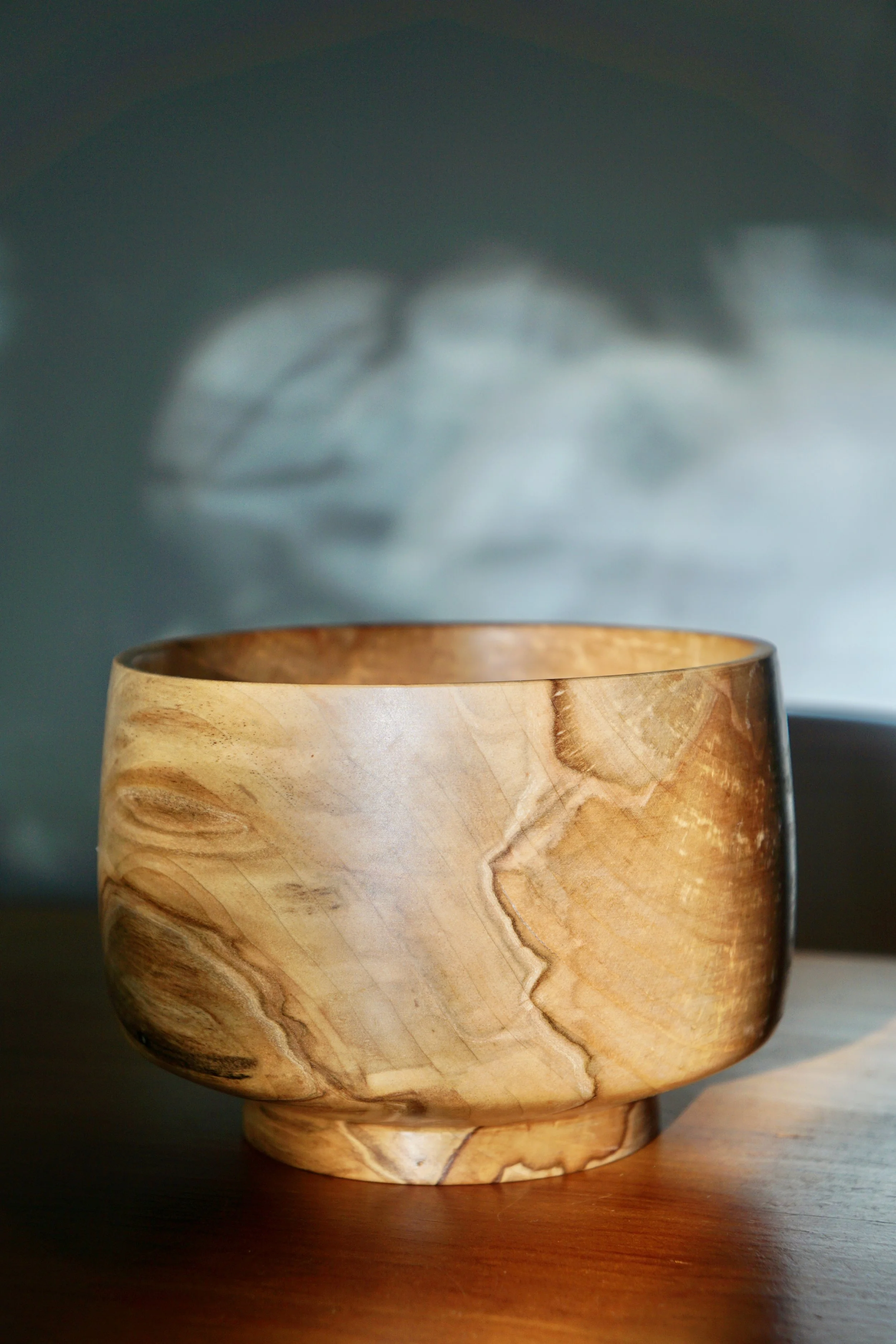
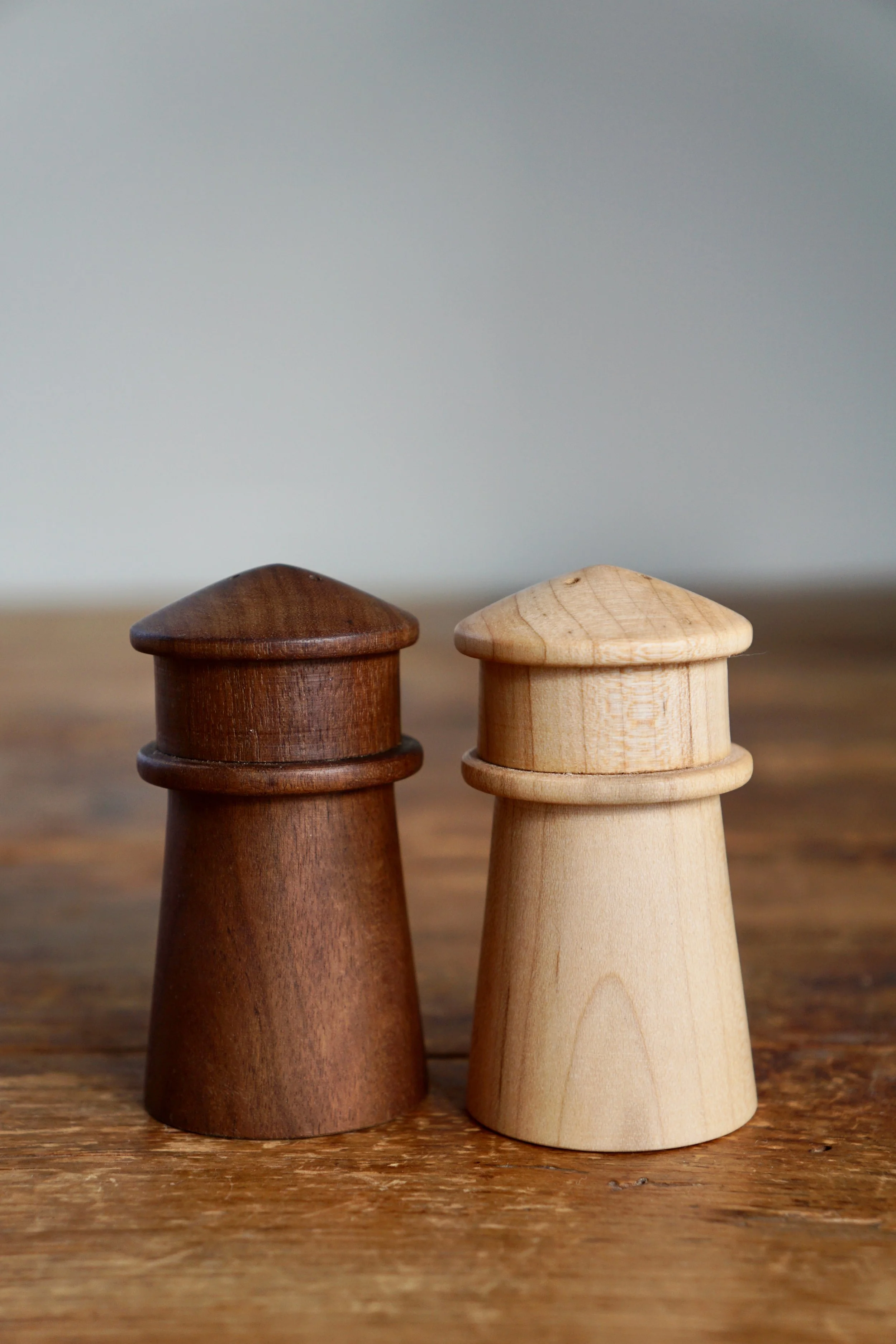
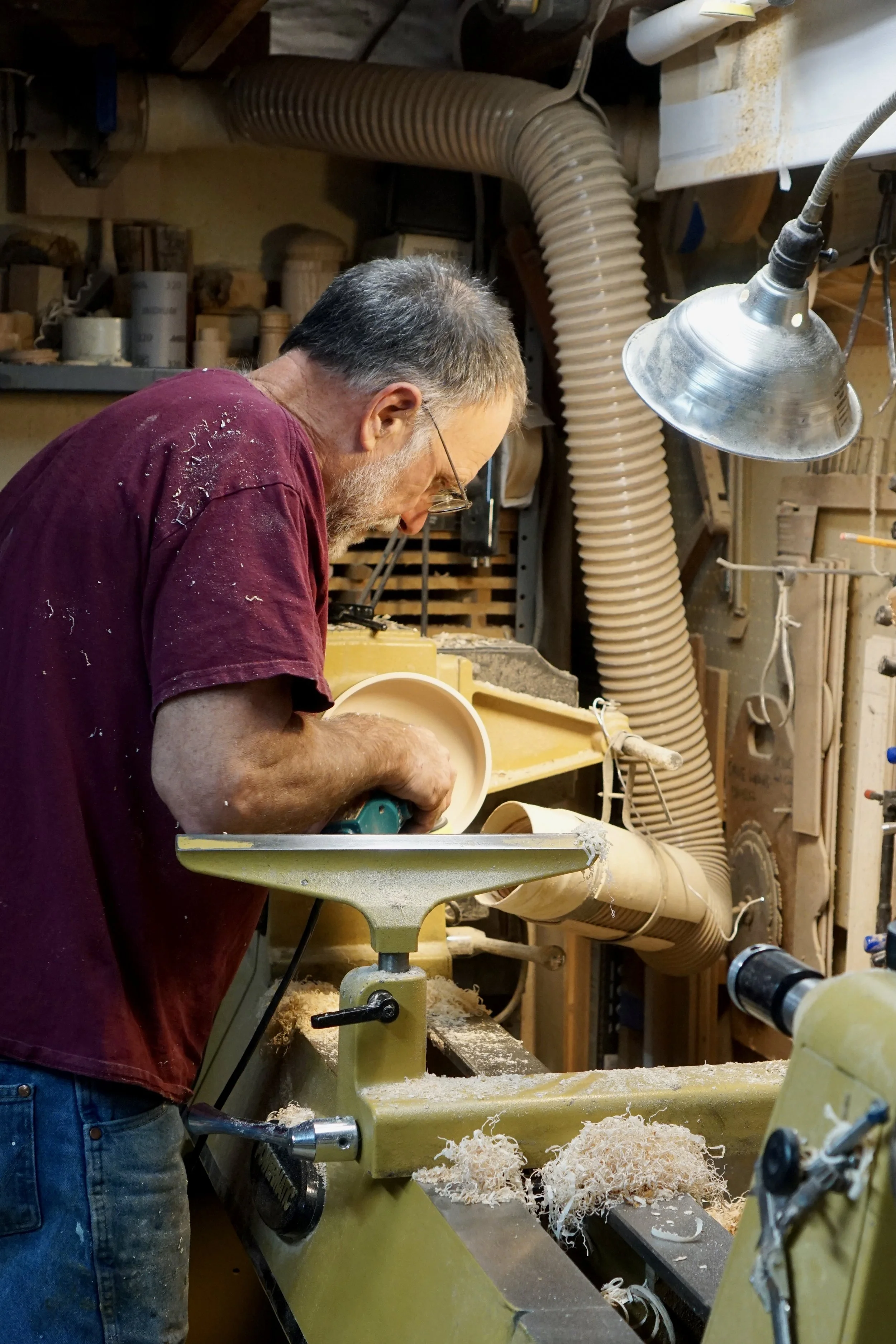
Twice Turned is the collection of wooden objects made by hand from trees salvaged over decades of work as a homebuilder, arborist, and fine woodworker in Maine. The name Twice Turned conveys the process: wood dries at a rate of one year per inch of thickness, so a bowl turned from a solid blank would need up to four years to dry. Turning bowls twice allows me to drastically reduce this time by first rough turning recently-harvested greenwood to an oversize dimension, drying it for 3-6 months, then turning pieces a second time to their final form.
Salvaged and often spalted, these pieces may carry blemishes, cracks, and imperfections. All are finished with food-safe linseed oil and beeswax and can be maintained with an occasional application of an oil of your choice.
current collection [winter 2026] —
SUGAR Maple
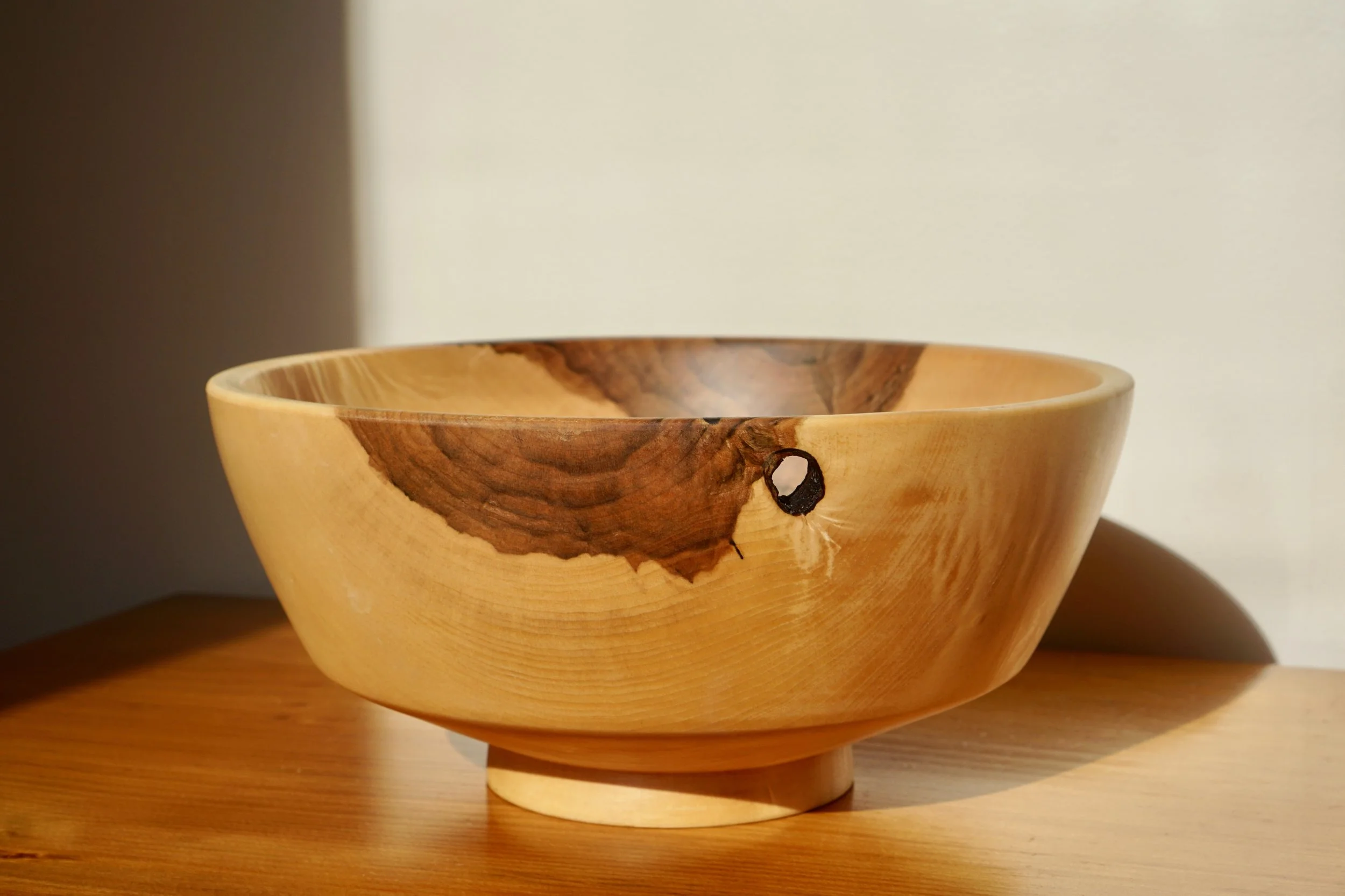
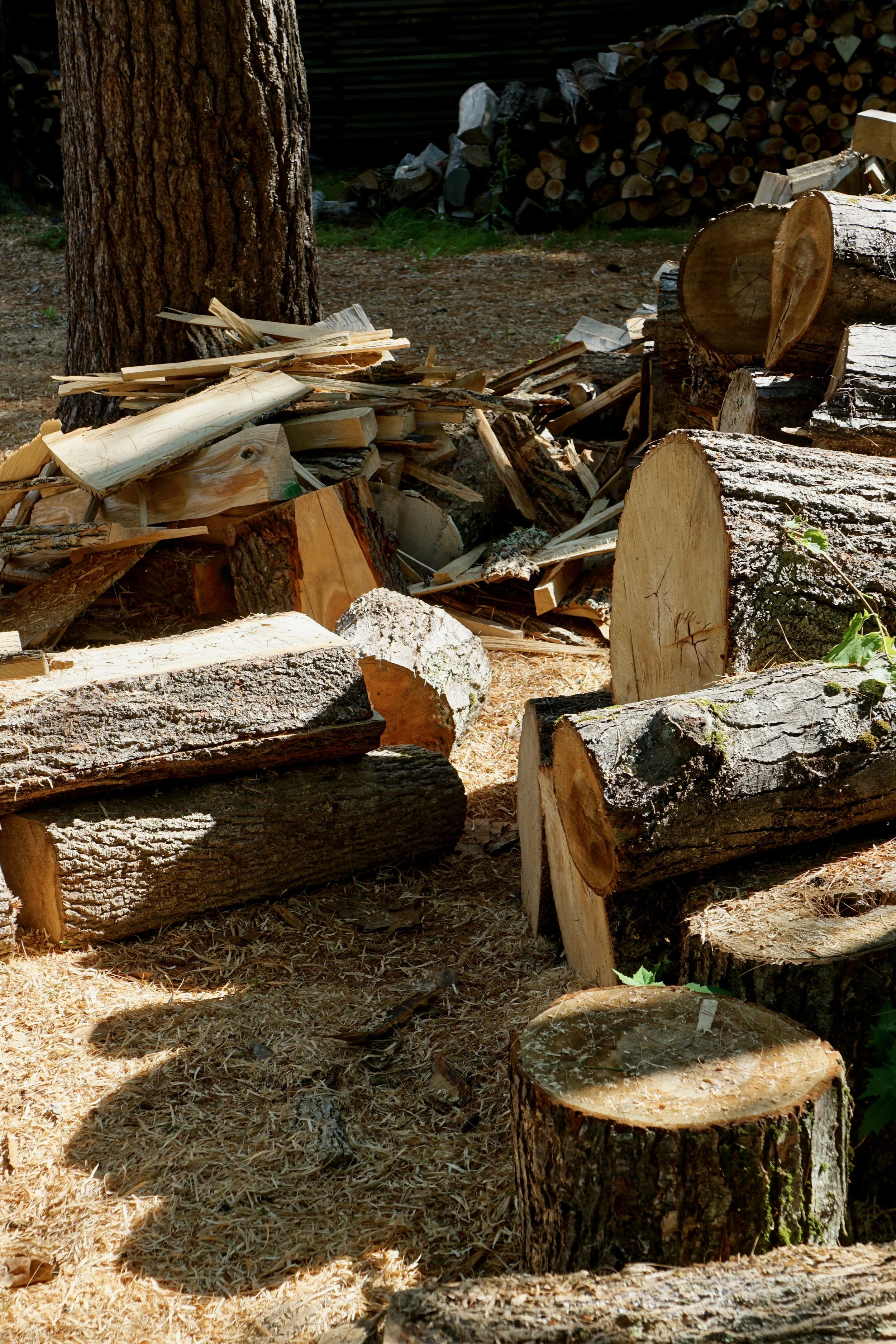
This 140 year old Sugar Maple was knocked over in a summer thunderstorm in Cumberland, Maine when a neighboring Pine tree fell into it, blocking the home’s driveway. The tree was only a half mile from home, so I drove my farm tractor over, cut and piled the Pine, then limbed the Maple – splitting the branchwood to 4’ lengths and the trunk to 8’ lengths – and loaded it onto my 1-ton dump truck. We used the branches for firewood but I salvaged the trunk for these bowls. Hopefully there are some nice surprises still ahead with this log but you never know until you get it on the lathe.
RED Maple
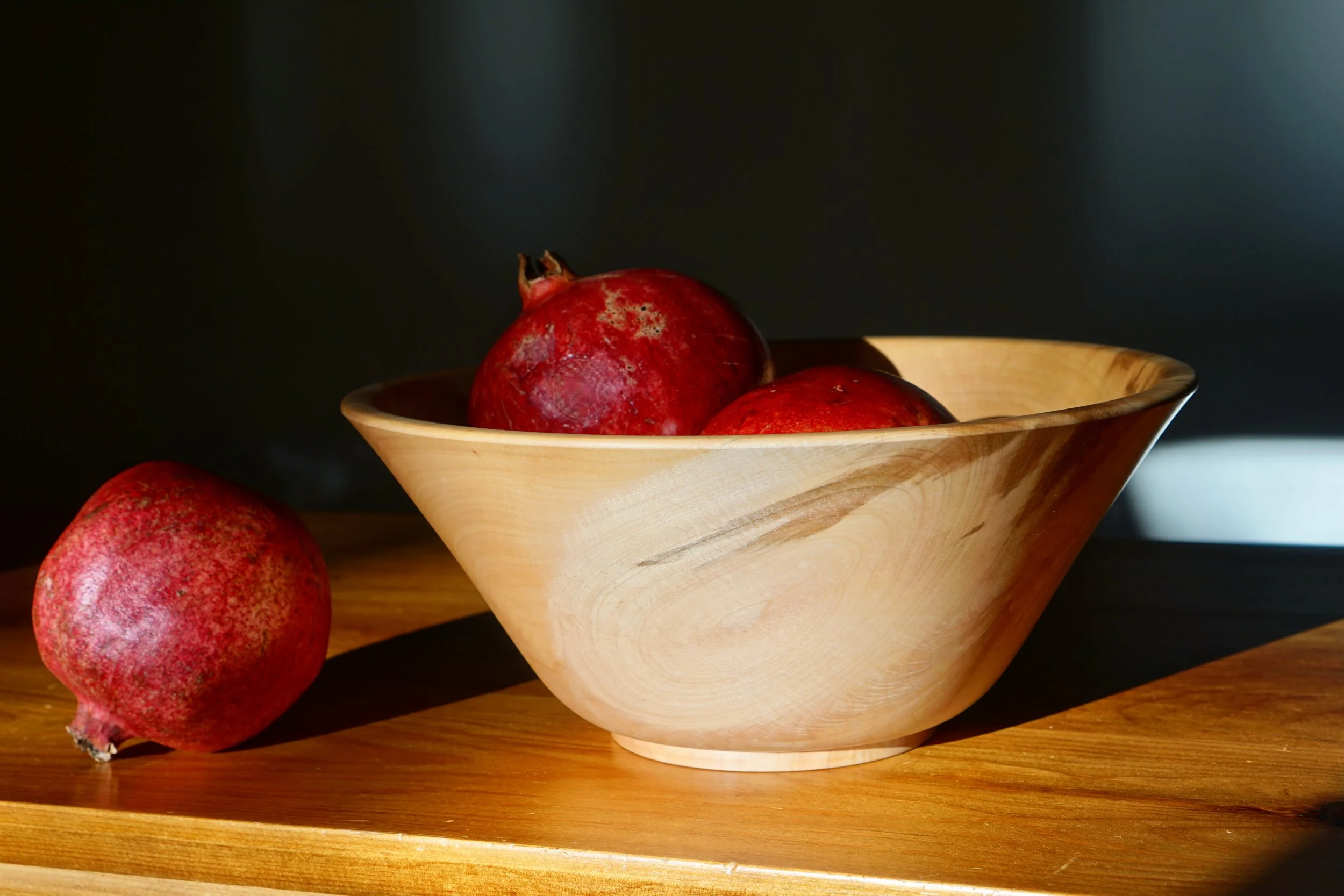
This 70-year old soft Maple tree was rooted in a wet, swampy spot in Yarmouth, Maine. Trees in this circumstance are prone to uprooting and this one would have landed right on the neighbor's house, so it had to come down. I salvaged what I could of the 16” diameter trunk for bowl blanks, and the rest became firewood for the winter. Some parts of this tree carry distinctive patterns left by ambrosia beetles when they tunneled through the wood to lay their eggs. You can spot ambrosia by the straight black boring lines running through the grain.
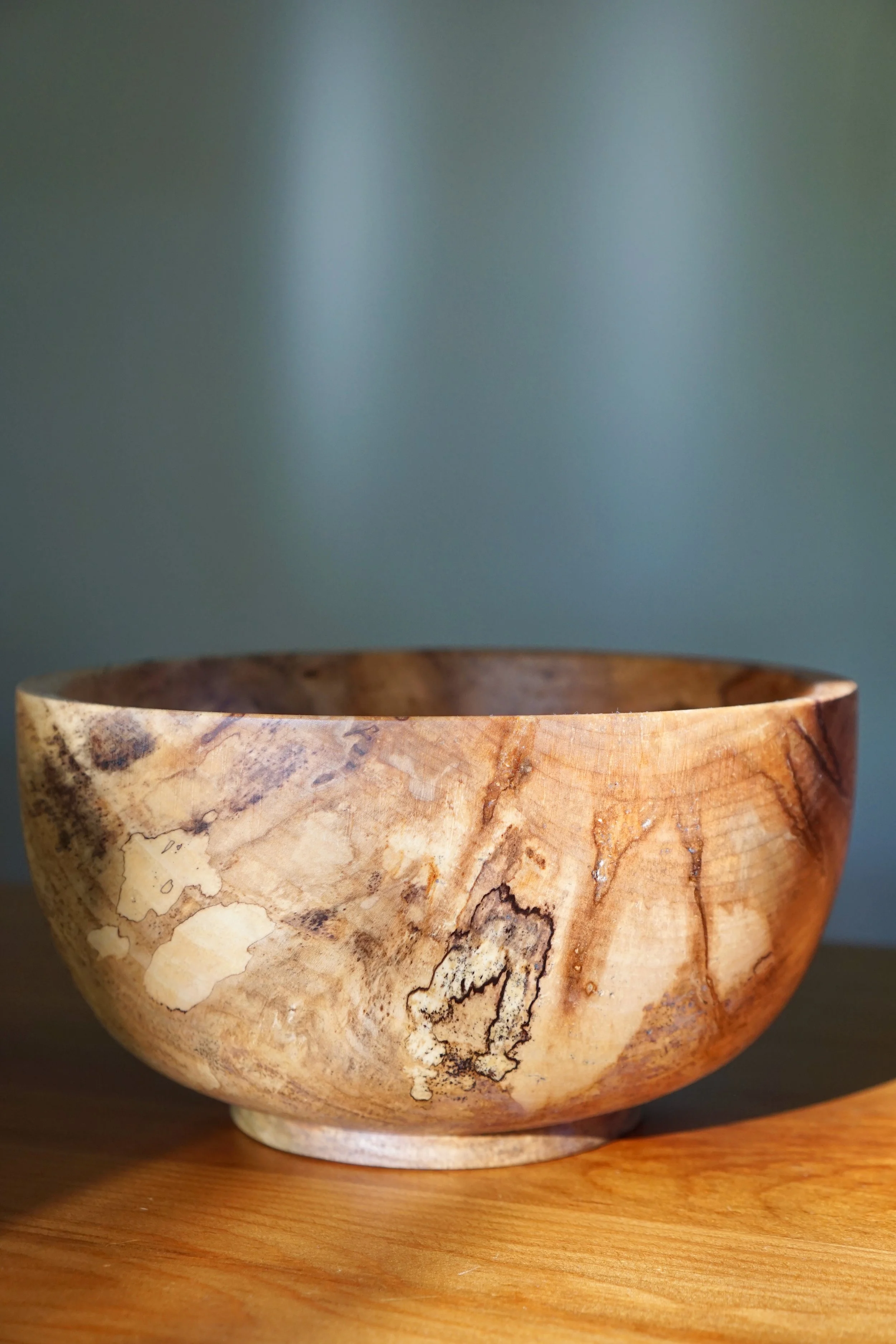
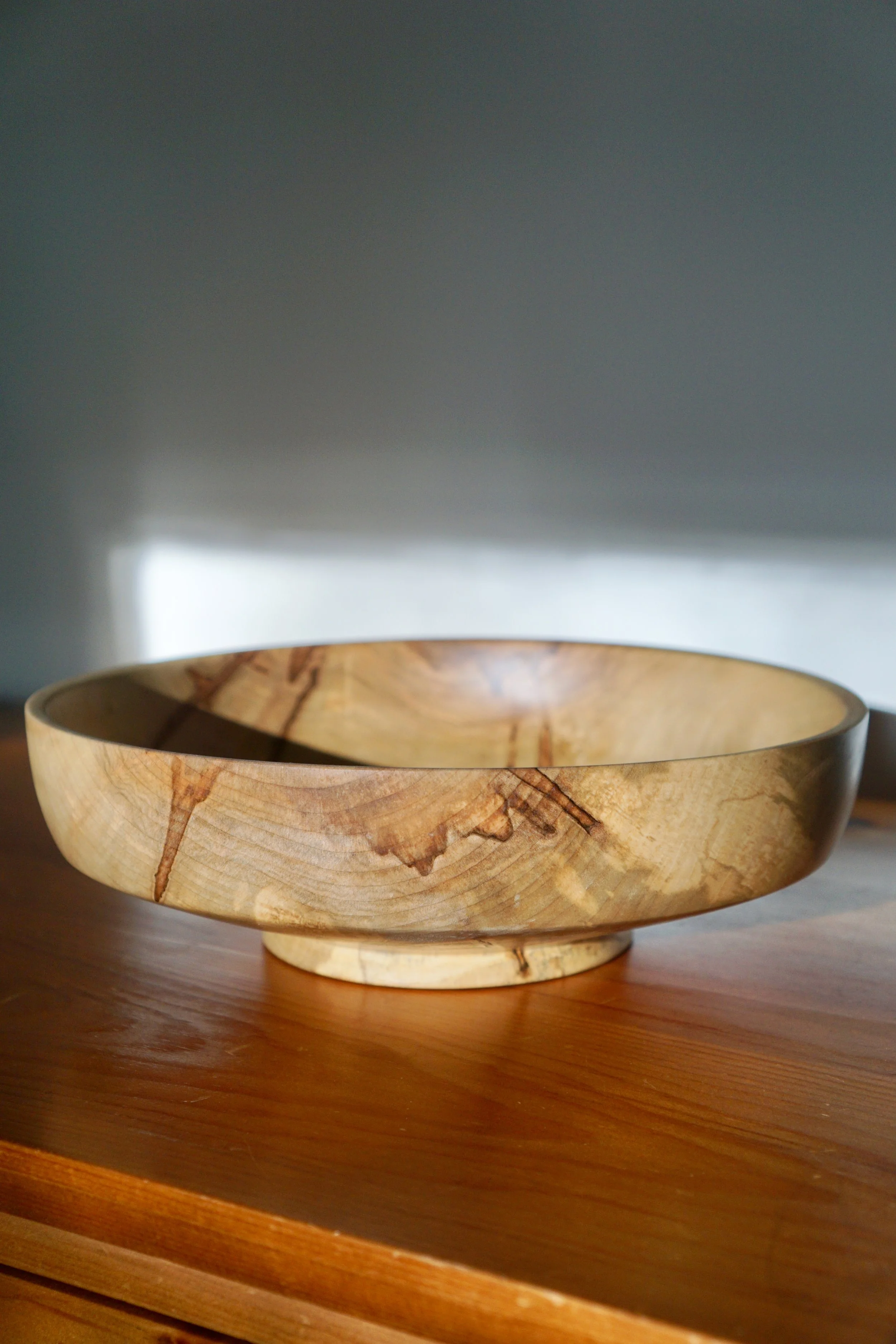
SPALTED SILVER Maple
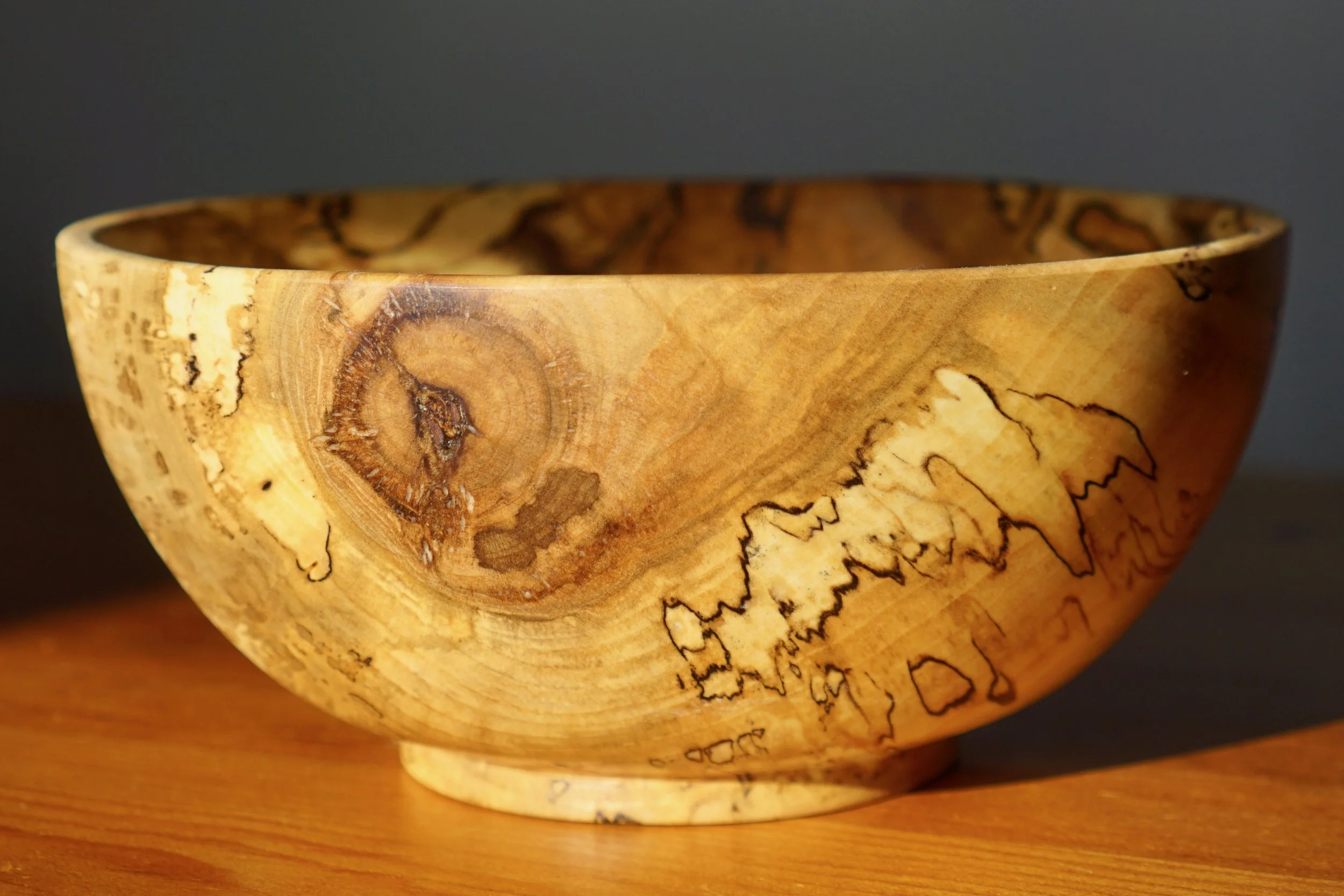
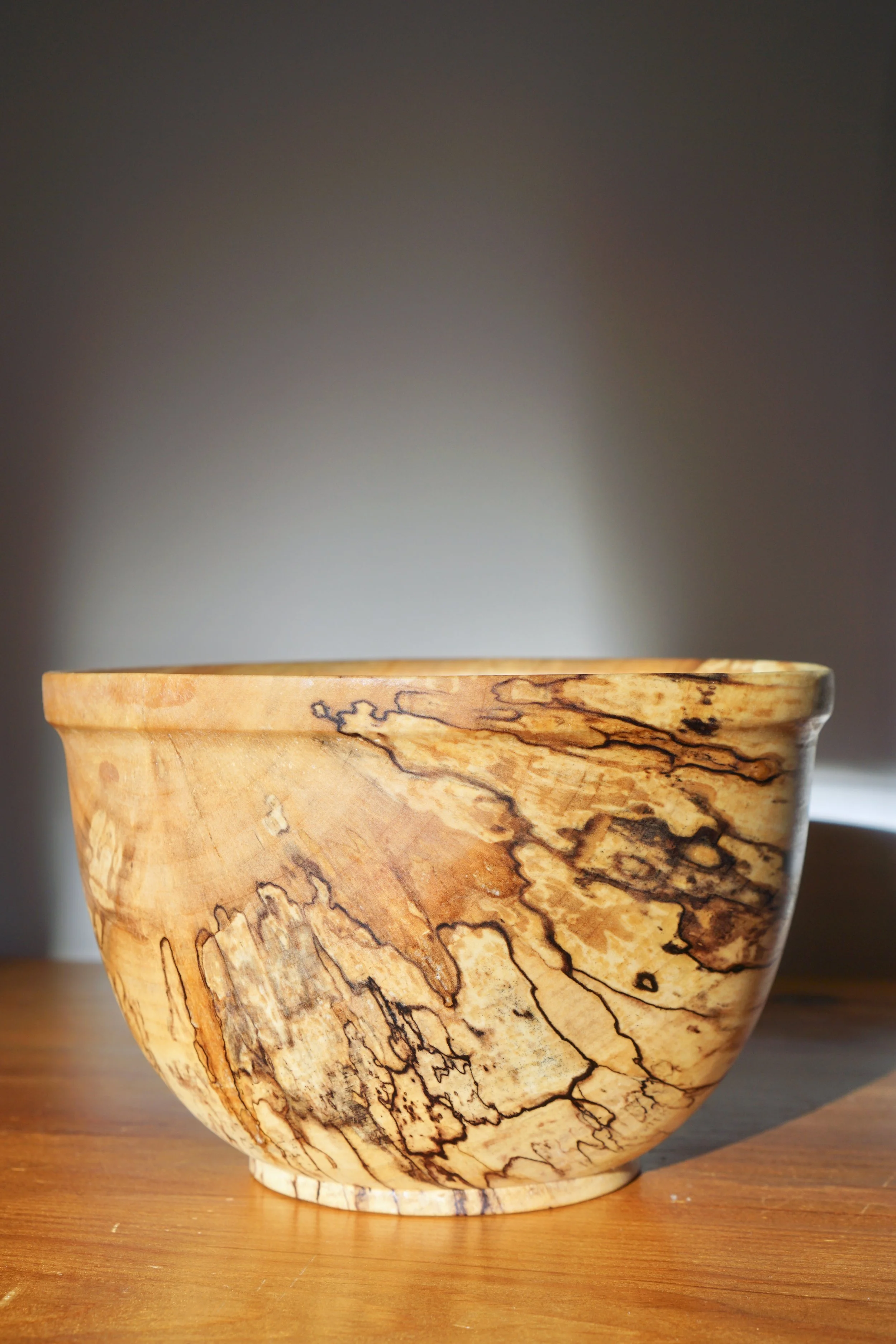
This tree came down in a storm a few years ago in a neighbor’s yard up the street. It was left decaying outside for about 4 years, so I knocked on the door and the owner was happy it was put to use. There were 3 trunks growing out of one stump! The wood turned out to be beautifully spalted, though a lot was too decayed to be usable.
Spalting is staining that occurs in the wood from the decaying process and the minerals from fungi. Insect trails leave interesting patterns and streaking… if you can catch it before it’s too soft to work, it can produce striking, one of a kind pieces. Spalting can occur in many hardwoods, though Maple seems to be the most common in Maine.
SHOP IN PERSON
Bowls from all collections are on display in Maine this winter at Working Loose in Blue Hill & the Center for Maine Craft in West Gardiner.
DETAILS —>
PAST WORK