VIew these pieces in person:
WOODSHOP exhibit at Working Loose
Blue Hill, Maine
November 17 — January 16, 2027
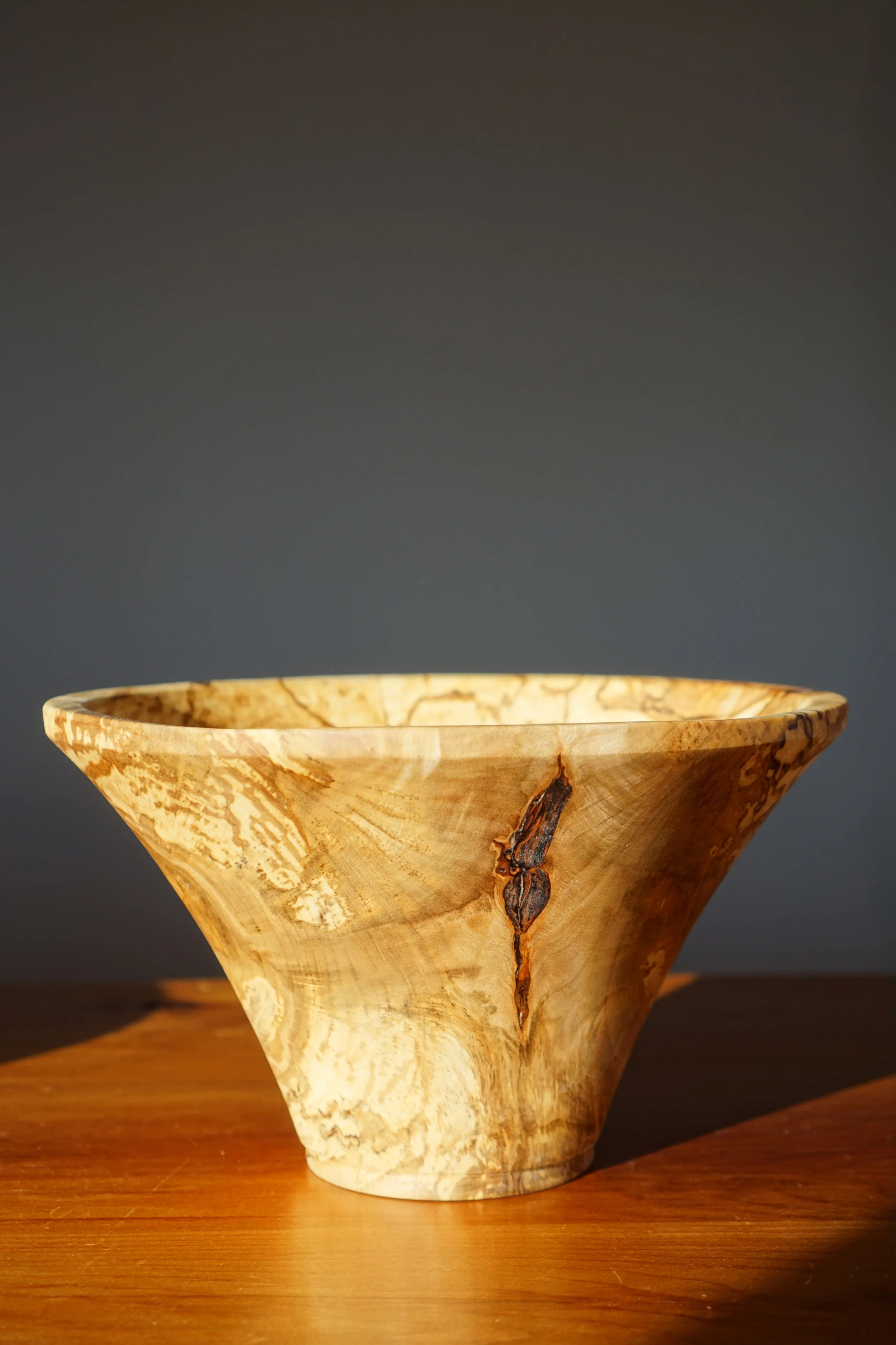
Dimensions: 9” x 5” tall
About the tree
This tree came down in a storm a few years ago in a neighbor’s yard up the street. It was left decaying outside for about 4 years, so I knocked on the door and the owner was happy it was put to use. There were 3 trunks growing out of one stump! The wood turned out to be beautifully spalted, though a lot was too decayed to be usable.
Spalting is staining that occurs in the wood from the decaying process and the minerals from fungi. Insect trails leave interesting patterns and streaking… if you can catch it before it’s too soft to work, it can produce striking, one of a kind pieces. Spalting can occur in many hardwoods, though Maple seems to be the most common in Maine.
Care instructions
All bowls are made from locally sourced Maine wood, often spalted and salvaged. The forms and finishes therefore may have blemishes, cracks, and imperfections. Finishes are food-safe linseed oil and beeswax, and can be maintained with an occasional application of an oil of your choice.

Dimensions: 9” x 5” tall
About the tree
These bowls originate from an assortment of various Maples from my log pile – all are soft (Red, Silver, and Norway) acquired from various downed trees and backyard finds. Maple’s closed, straight grain make it an exceptionally durable (and very pretty) material for bowls.
Care instructions
All bowls are made from locally sourced Maine wood, often spalted and salvaged. The forms and finishes therefore may have blemishes, cracks, and imperfections. Finishes are food-safe linseed oil and beeswax, and can be maintained with an occasional application of an oil of your choice.
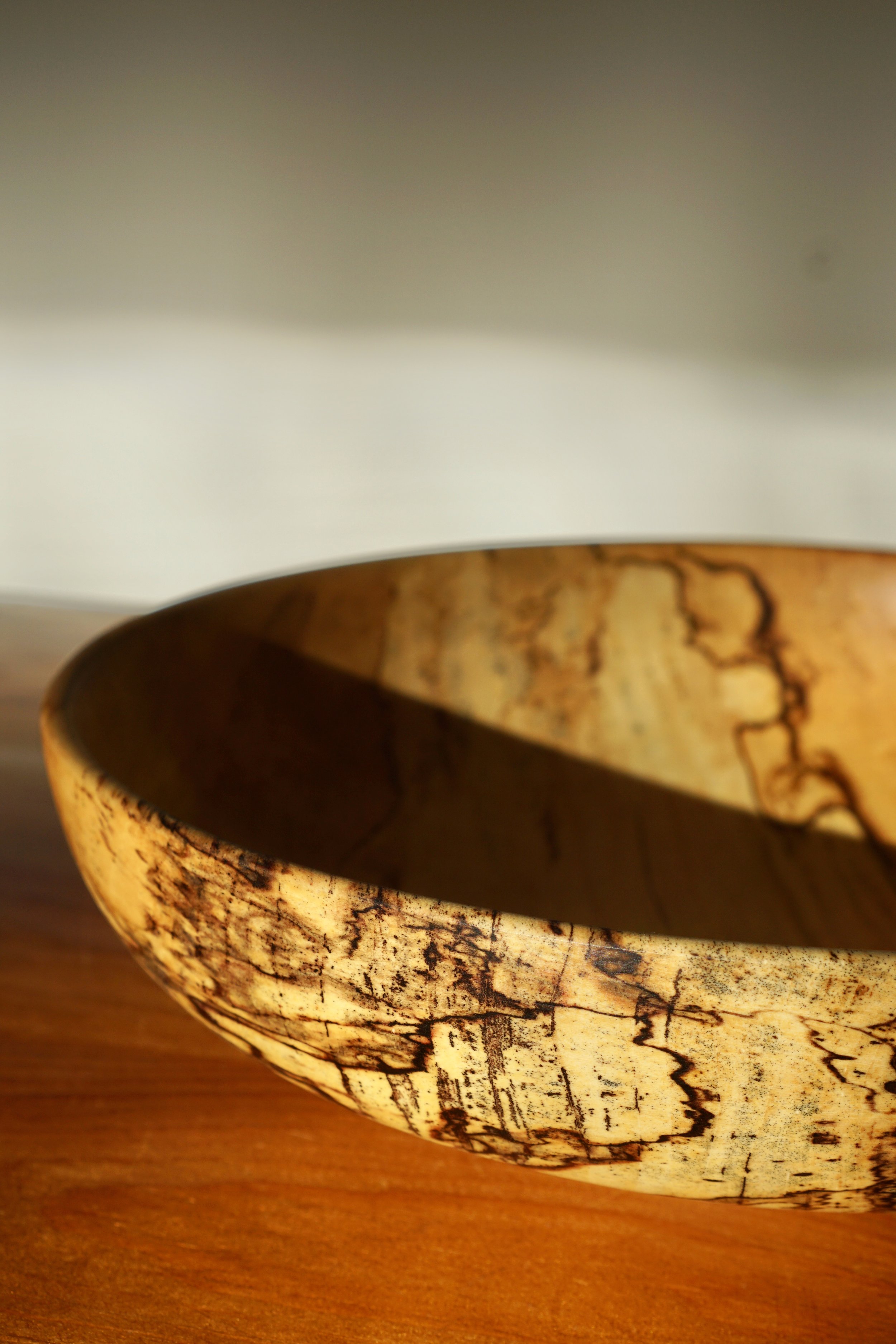
Dimensions: 9” x 2.5” tall
About the tree
This tree came down in a storm a few years ago in a neighbor’s yard up the street. It was left decaying outside for about 4 years, so I knocked on the door and the owner was happy it was put to use. There were 3 trunks growing out of one stump! The wood turned out to be beautifully spalted, though a lot was too decayed to be usable.
Spalting is staining that occurs in the wood from the decaying process and the minerals from fungi. Insect trails leave interesting patterns and streaking… if you can catch it before it’s too soft to work, it can produce striking, one of a kind pieces. Spalting can occur in many hardwoods, though Maple seems to be the most common in Maine.
Care instructions
All bowls are made from locally sourced Maine wood, often spalted and salvaged. The forms and finishes therefore may have blemishes, cracks, and imperfections. Finishes are food-safe linseed oil and beeswax, and can be maintained with an occasional application of an oil of your choice.
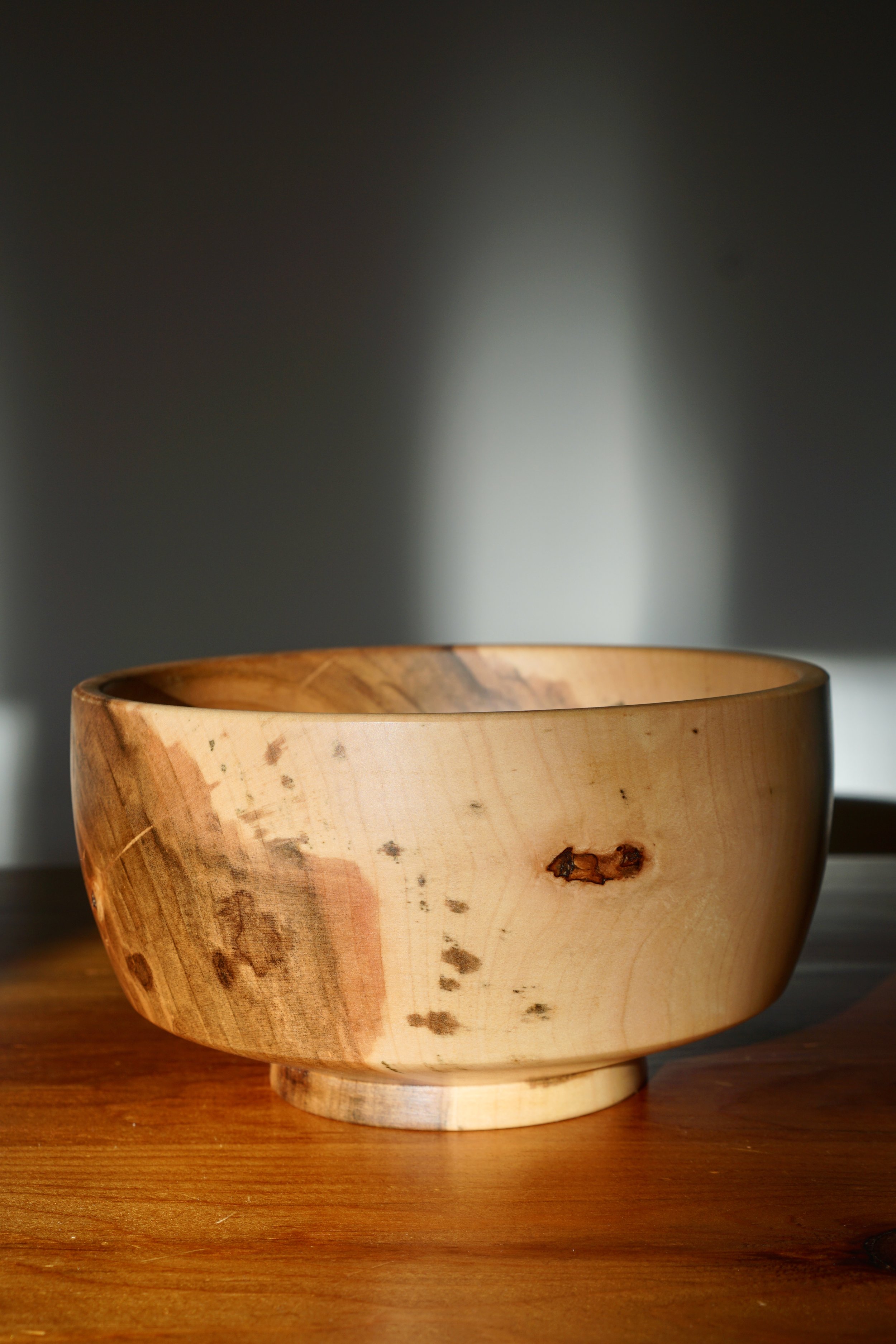
Dimensions: 6.25” x 4” tall
About the tree
These bowls originate from an assortment of various Maples from my log pile – all are soft (Red, Silver, and Norway) acquired from various downed trees and backyard finds. Maple’s closed, straight grain make it an exceptionally durable (and very pretty) material for bowls.
Care instructions
All bowls are made from locally sourced Maine wood, often spalted and salvaged. The forms and finishes therefore may have blemishes, cracks, and imperfections. Finishes are food-safe linseed oil and beeswax, and can be maintained with an occasional application of an oil of your choice.
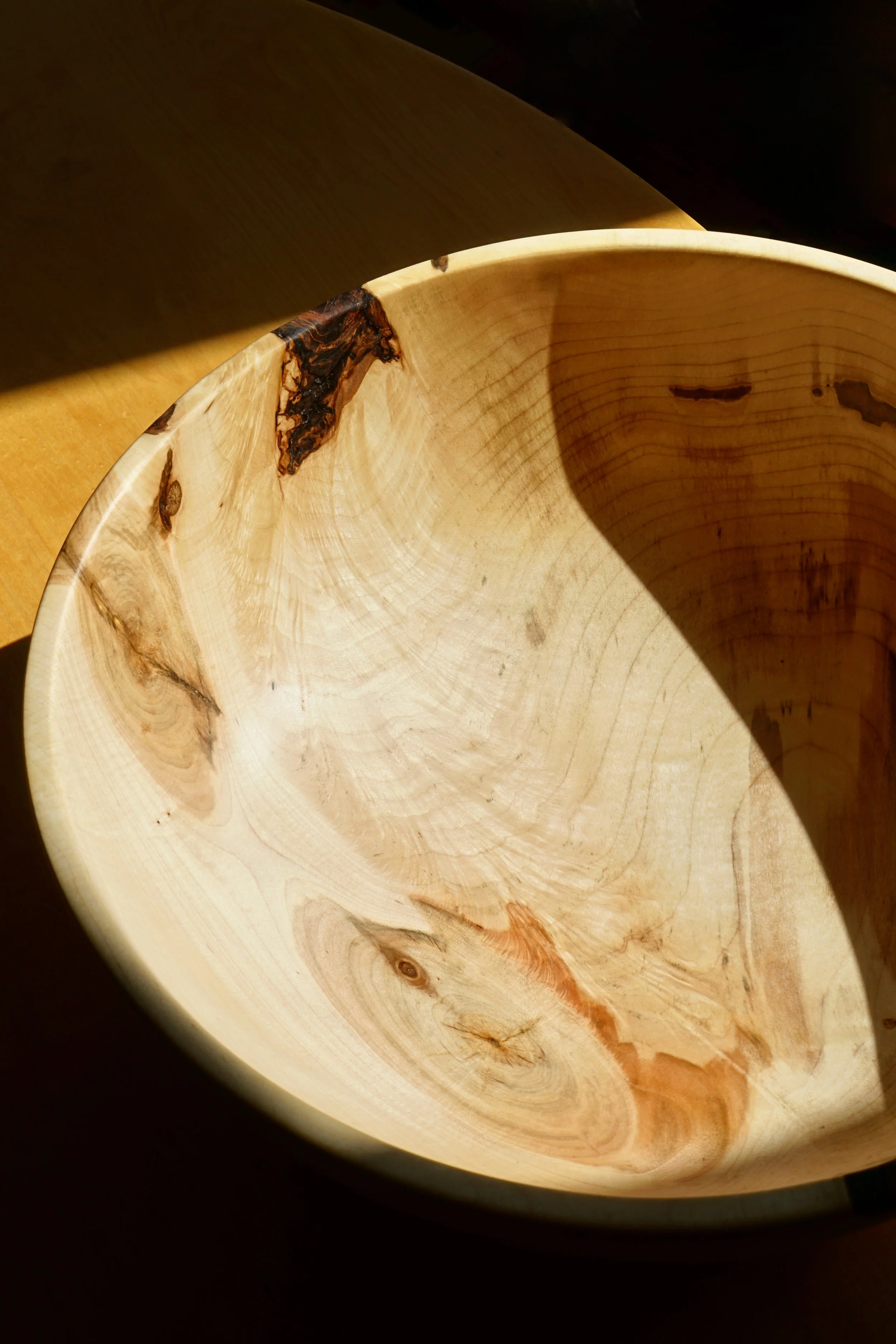
Dimensions: 14” x 5” tall
About the tree
These bowls originate from an assortment of various Maples from my log pile – all are soft (Red, Silver, and Norway) acquired from various downed trees and backyard finds. Maple’s closed, straight grain make it an exceptionally durable (and very pretty) material for bowls.
Care instructions
All bowls are made from locally sourced Maine wood, often spalted and salvaged. The forms and finishes therefore may have blemishes, cracks, and imperfections. Finishes are food-safe linseed oil and beeswax, and can be maintained with an occasional application of an oil of your choice.
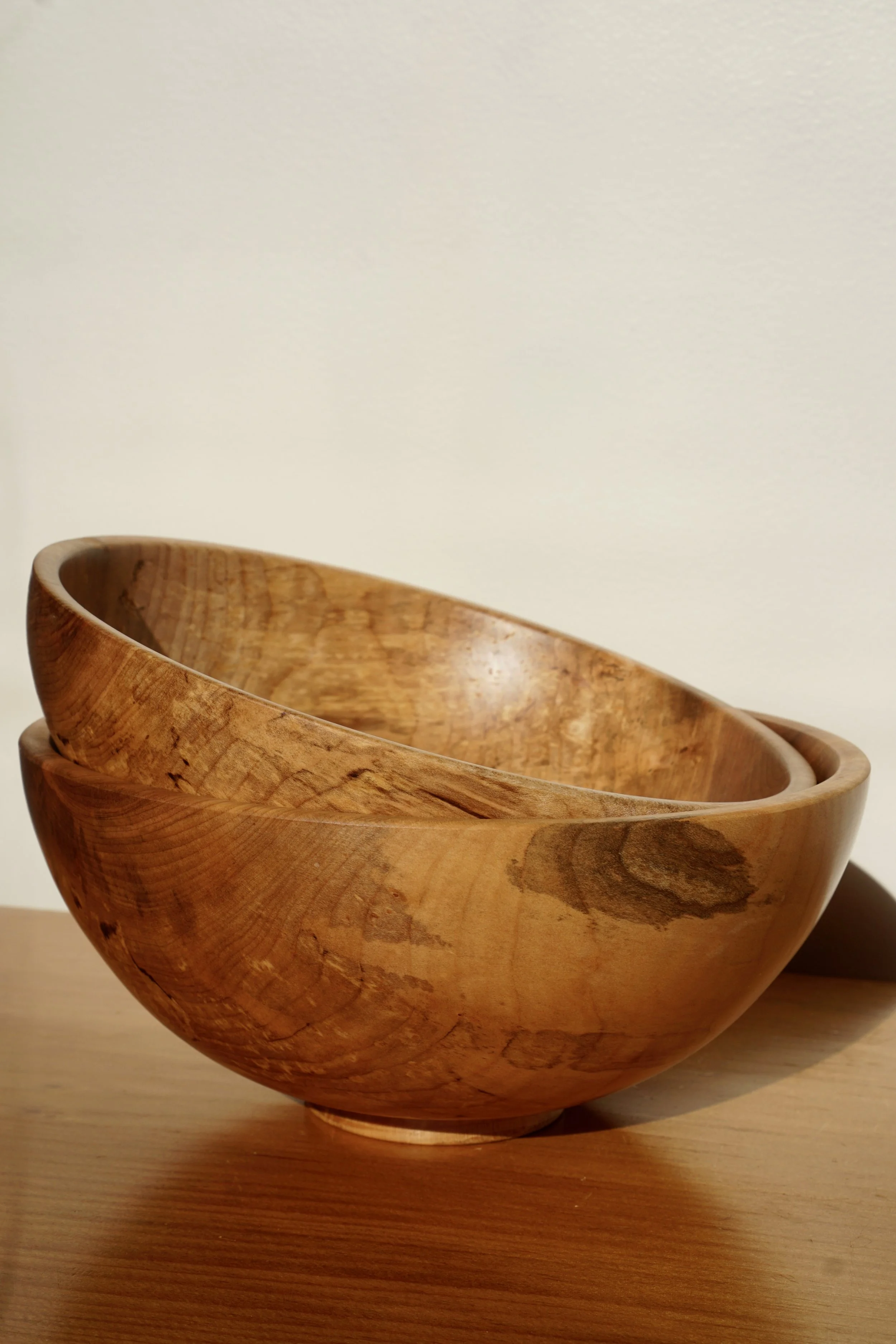
Dimensions: 8” x 4” tall each
About the tree
These bowls originate from an assortment of various Maples from my log pile – all are soft (Red, Silver, and Norway) acquired from various downed trees and backyard finds. Maple’s closed, straight grain make it an exceptionally durable (and very pretty) material for bowls.
Care instructions
All bowls are made from locally sourced Maine wood, often spalted and salvaged. The forms and finishes therefore may have blemishes, cracks, and imperfections. Finishes are food-safe linseed oil and beeswax, and can be maintained with an occasional application of an oil of your choice.
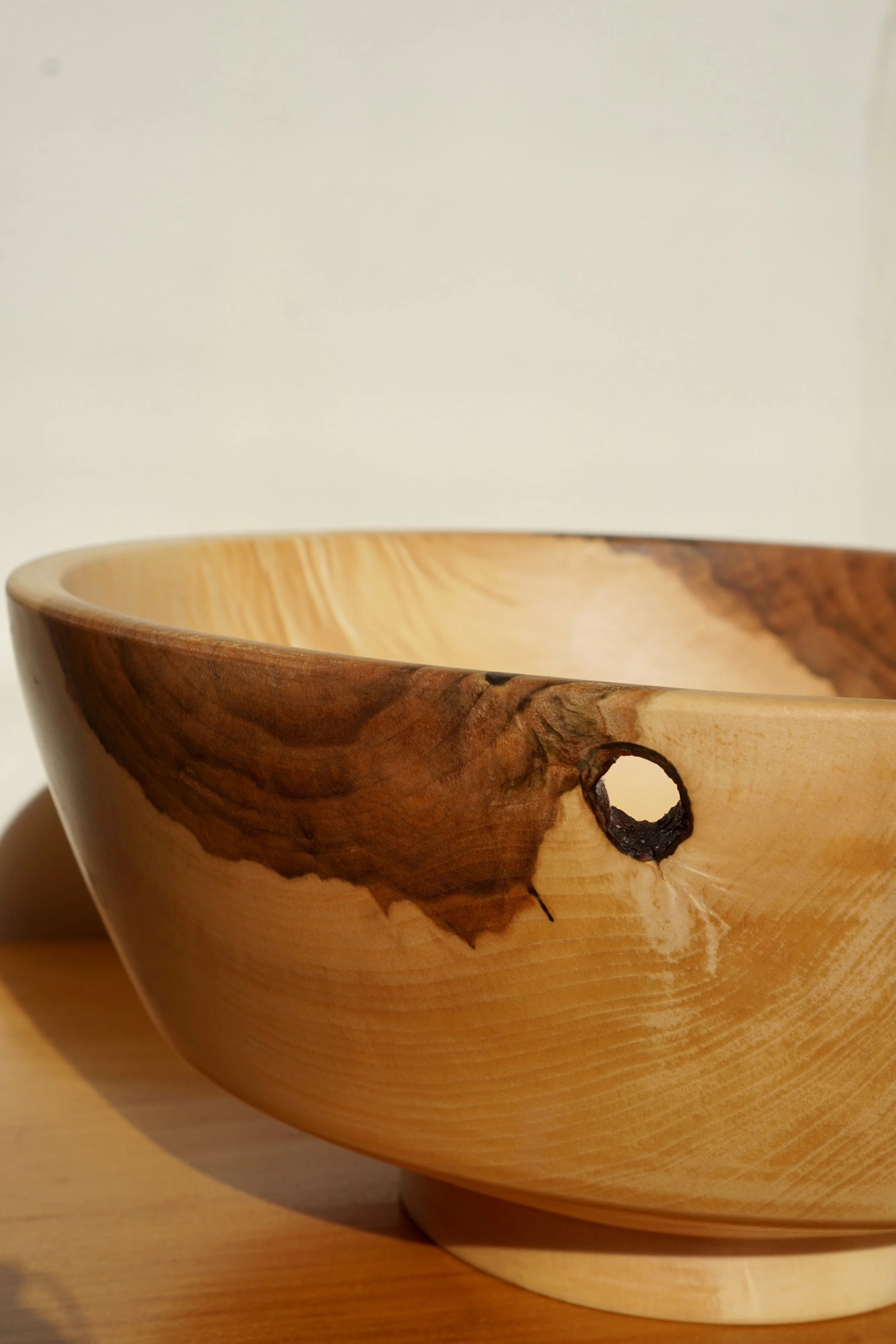
Dimensions: 11” x 5” tall
About the tree
These bowls originate from an assortment of various Maples from my log pile – all are soft (Red, Silver, and Norway) acquired from various downed trees and backyard finds. Maple’s closed, straight grain make it an exceptionally durable (and very pretty) material for bowls.
Care instructions
All bowls are made from locally sourced Maine wood, often spalted and salvaged. The forms and finishes therefore may have blemishes, cracks, and imperfections. Finishes are food-safe linseed oil and beeswax, and can be maintained with an occasional application of an oil of your choice.
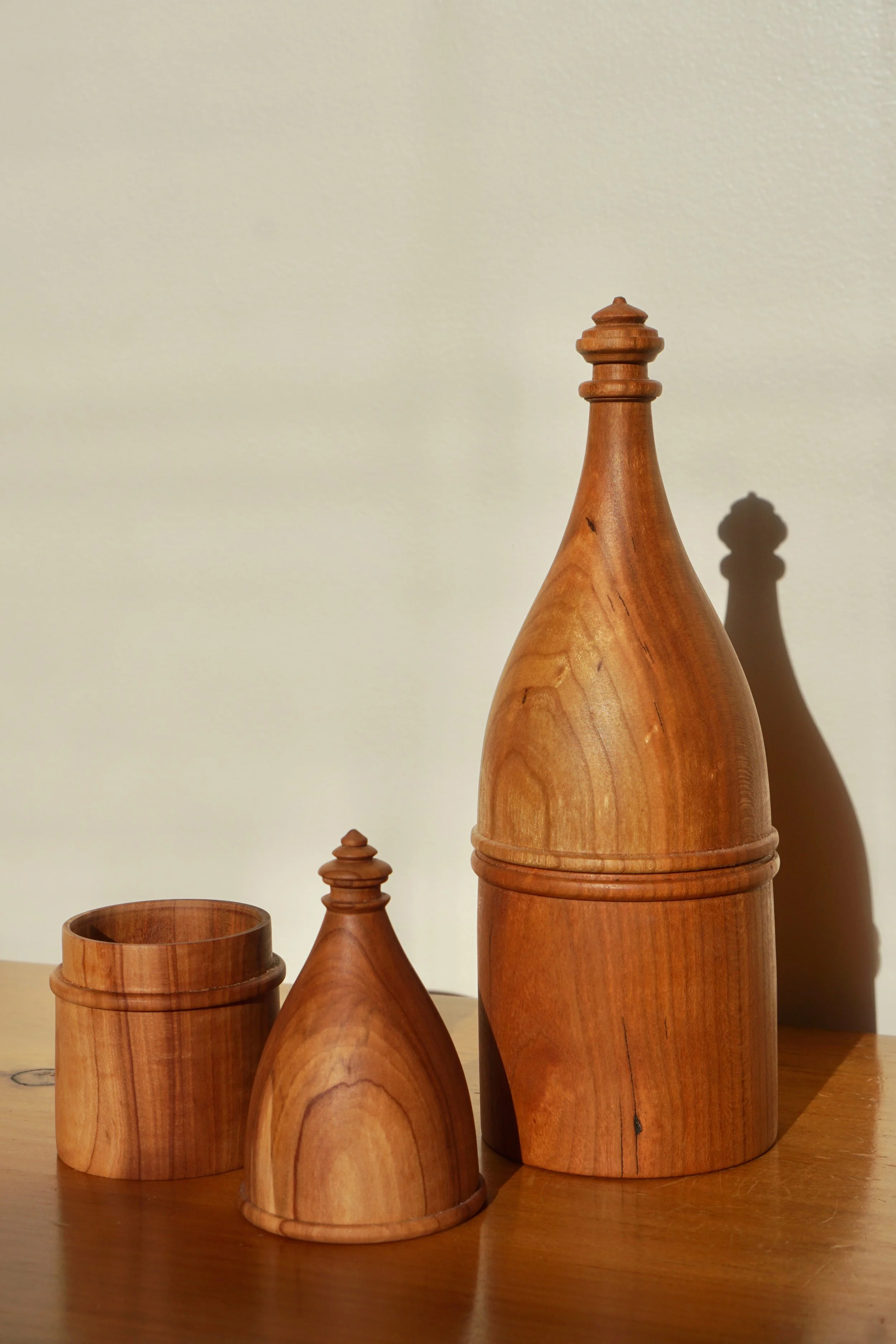
Dimensions
Large: 3” x 8”
Small: 2.5” x 5”
Sculptural boxes made of Cherry and influenced by British woodturner Richard Raffan, who took inspiration in African grain stores and ancient fortresses.
Center for Maine Craft
West Gardiner, Maine
December 2026 — February 2027
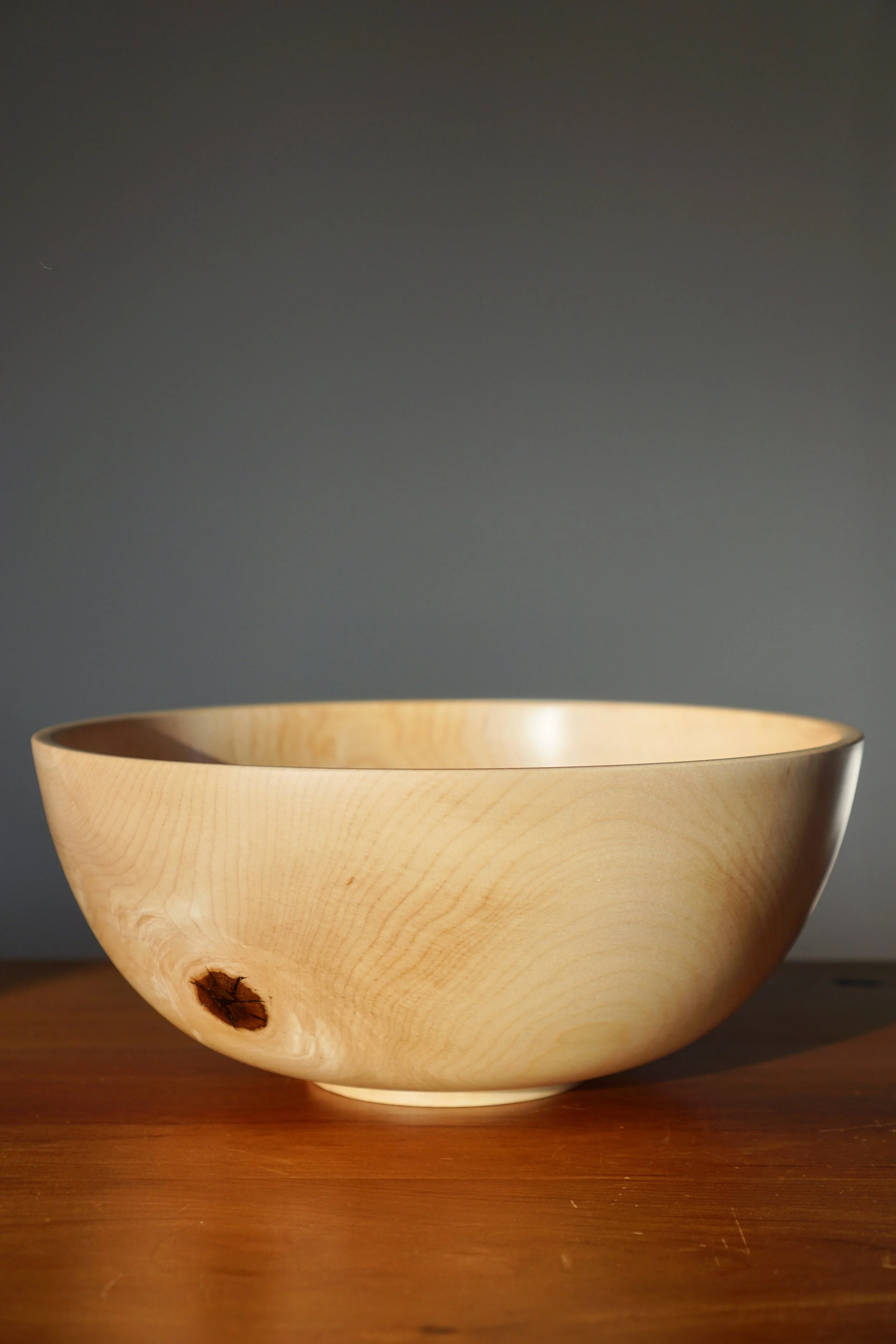
Dimensions: 11 × 4.5” tall
About the tree
These bowls originate from an assortment of various Maples from my log pile – all are soft (Red, Silver, and Norway) acquired from various downed trees and backyard finds. Maple’s closed, straight grain make it an exceptionally durable (and very pretty) material for bowls.
Care instructions
All bowls are made from locally sourced Maine wood, often spalted and salvaged. The forms and finishes therefore may have blemishes, cracks, and imperfections. Finishes are food-safe linseed oil and beeswax, and can be maintained with an occasional application of an oil of your choice.
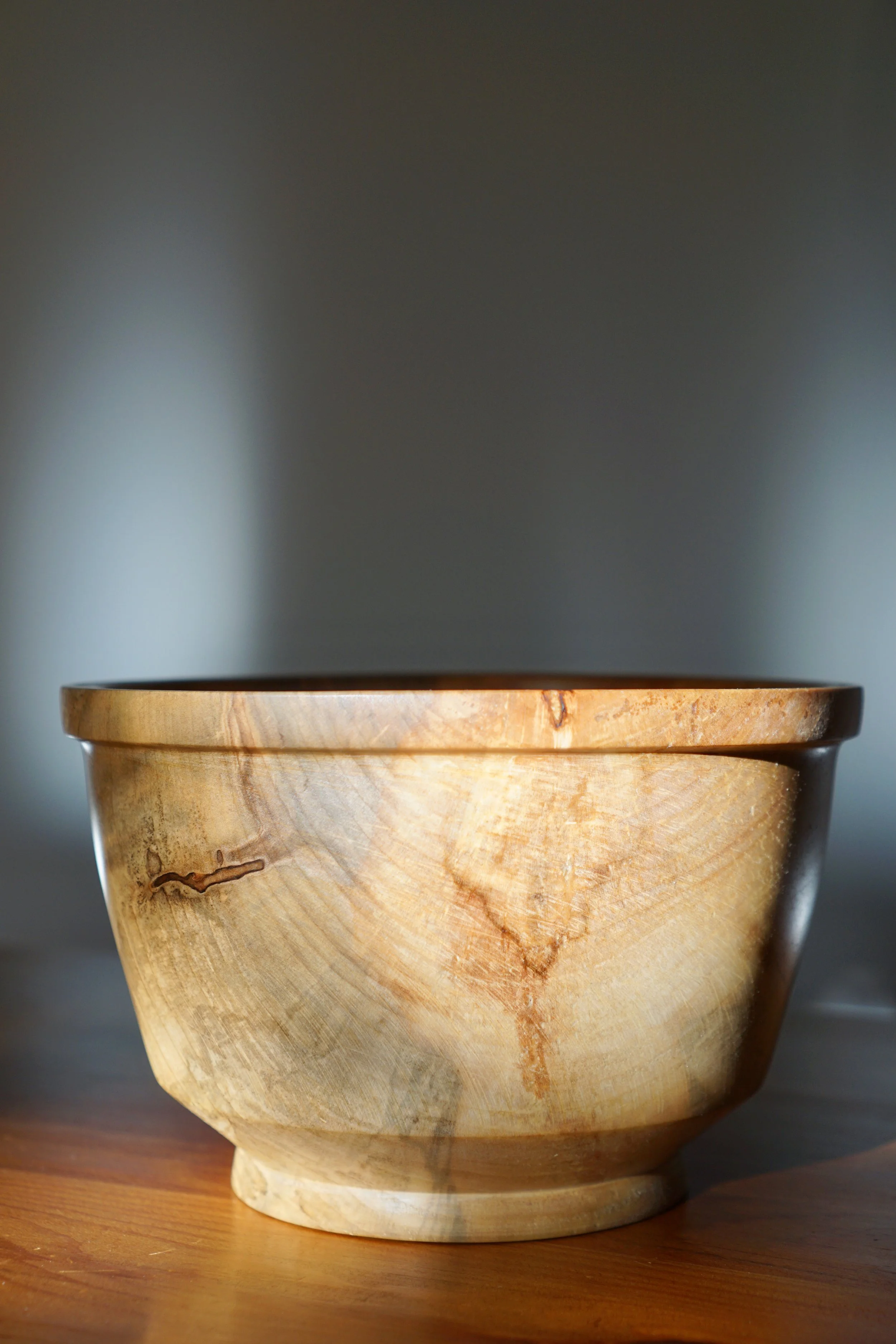
Dimensions: 7.5” x 5” tall
About the tree
These bowls originate from an assortment of various Maples from my log pile – all are soft (Red, Silver, and Norway) acquired from various downed trees and backyard finds. Maple’s closed, straight grain make it an exceptionally durable (and very pretty) material for bowls.
Care instructions
All bowls are made from locally sourced Maine wood, often spalted and salvaged. The forms and finishes therefore may have blemishes, cracks, and imperfections. Finishes are food-safe linseed oil and beeswax, and can be maintained with an occasional application of an oil of your choice.
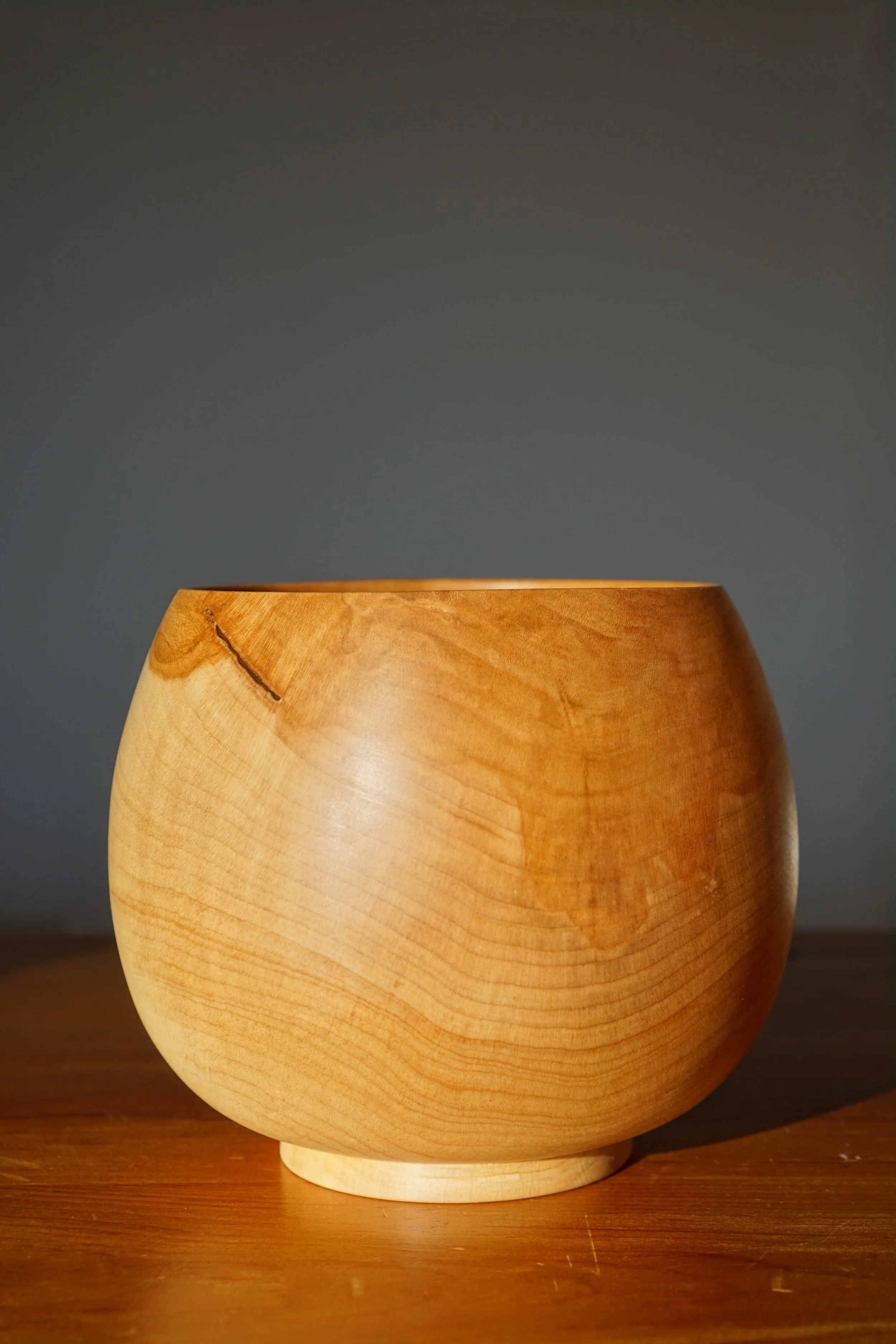
Dimensions: 6.5” x 5.5” tall
About the tree
This 140 year old Sugar Maple was knocked over in a thunderstorm in Cumberland, Maine. As an arborist, I was called to clean up the tree since it was blocking the home’s driveway. We used the branches for firewood but salvaged the trunk. Hopefully there are some nice surprises ahead with this log but you never know until you get it on the lathe and see what it holds.
Ambrosia maple is a hardwood known for the unique patterns left by the boring of ambrosia beetles when they inhabit the wood and lay their eggs. You can spot ambrosia by the straight black boring lines. They’re most prevalent in Sugar Maples but can affect any Maple variety.
Care Instructions
All bowls are made from locally sourced Maine wood, often spalted and salvaged. The forms and finishes therefore may have blemishes, cracks, and imperfections. Finishes are food-safe linseed oil and beeswax, and can be maintained with an occasional application of an oil of your choice.

Dimensions: 9” x 3.75” tall
About the tree
These bowls originate from an assortment of various Maples from my log pile – all are soft (Red, Silver, and Norway) acquired from various downed trees and backyard finds. Maple’s closed, straight grain make it an exceptionally durable (and very pretty) material for bowls.
Care instructions
All bowls are made from locally sourced Maine wood, often spalted and salvaged. The forms and finishes therefore may have blemishes, cracks, and imperfections. Finishes are food-safe linseed oil and beeswax, and can be maintained with an occasional application of an oil of your choice.
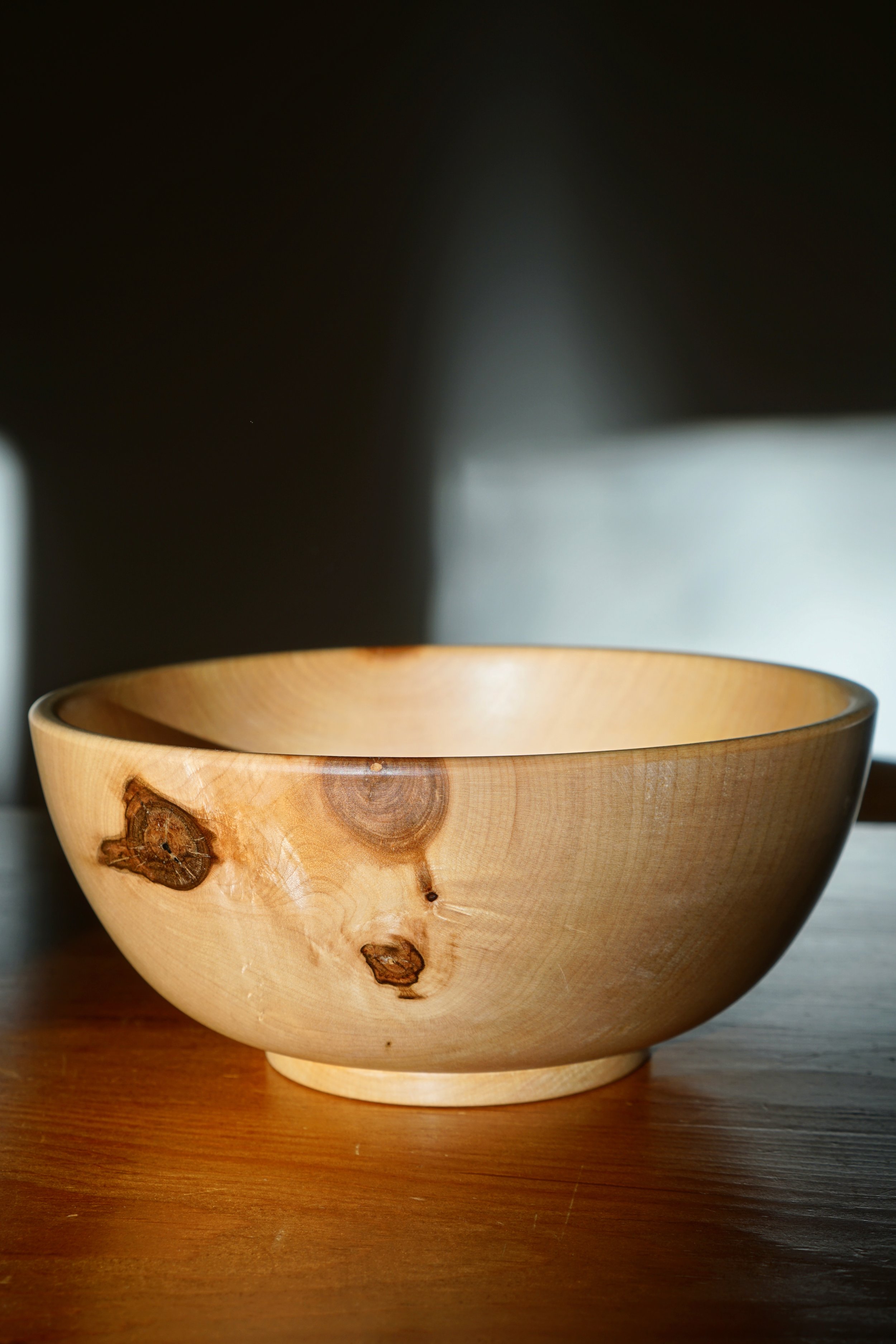
Dimensions: 7” x 3” tall
About the tree
These bowls originate from an assortment of various Maples from my log pile – all are soft (Red, Silver, and Norway) acquired from various downed trees and backyard finds. Maple’s closed, straight grain make it an exceptionally durable (and very pretty) material for bowls.
Care instructions
All bowls are made from locally sourced Maine wood, often spalted and salvaged. The forms and finishes therefore may have blemishes, cracks, and imperfections. Finishes are food-safe linseed oil and beeswax, and can be maintained with an occasional application of an oil of your choice.
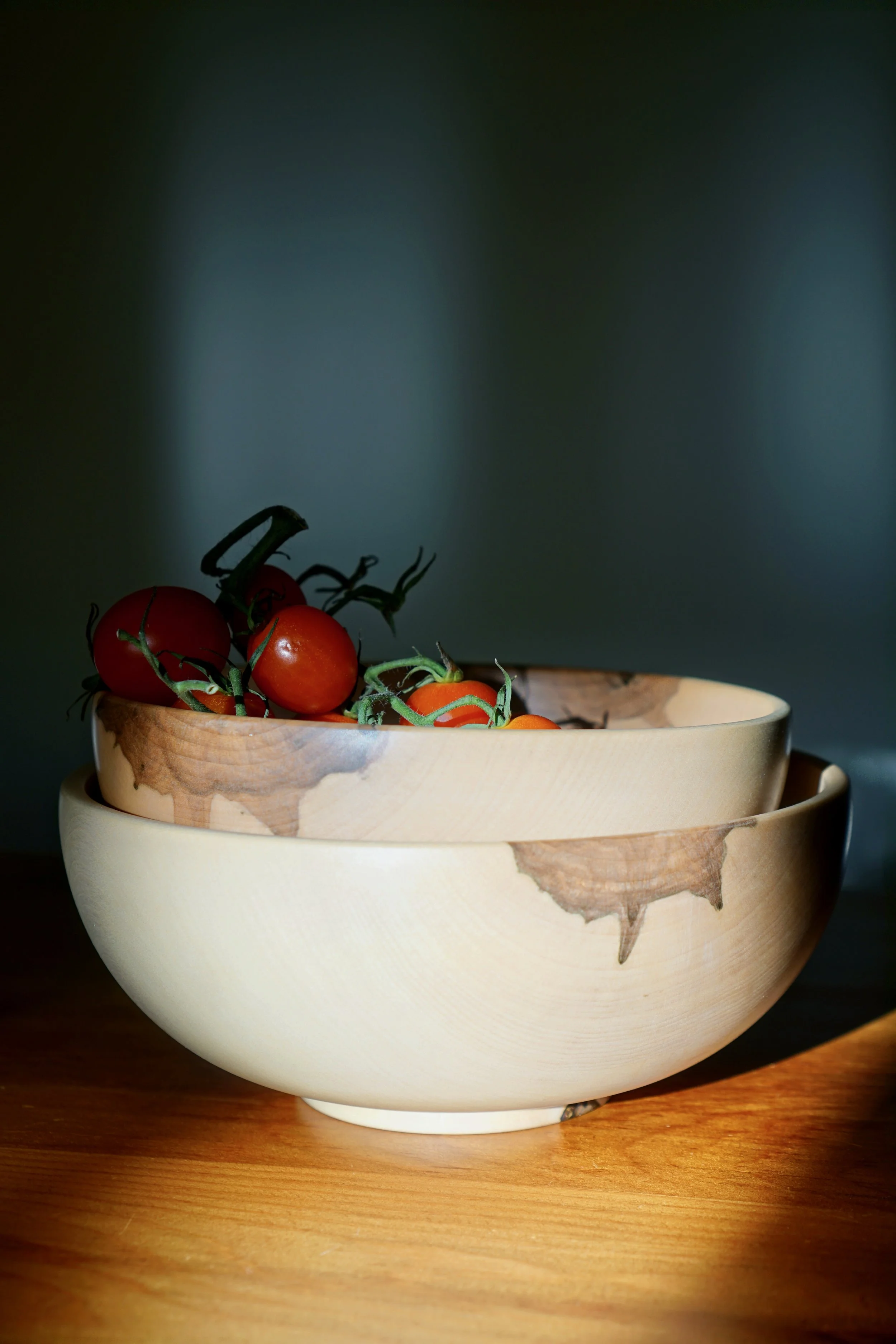
Dimensions: 7” x 3" tall (larger), 6” x 3” tall (smaller)
About the tree
These bowls originate from an assortment of various Maples from my log pile – all are soft (Red, Silver, and Norway) acquired from various downed trees and backyard finds. Maple’s closed, straight grain make it an exceptionally durable (and very pretty) material for bowls.
Care instructions
All bowls are made from locally sourced Maine wood, often spalted and salvaged. The forms and finishes therefore may have blemishes, cracks, and imperfections. Finishes are food-safe linseed oil and beeswax, and can be maintained with an occasional application of an oil of your choice.
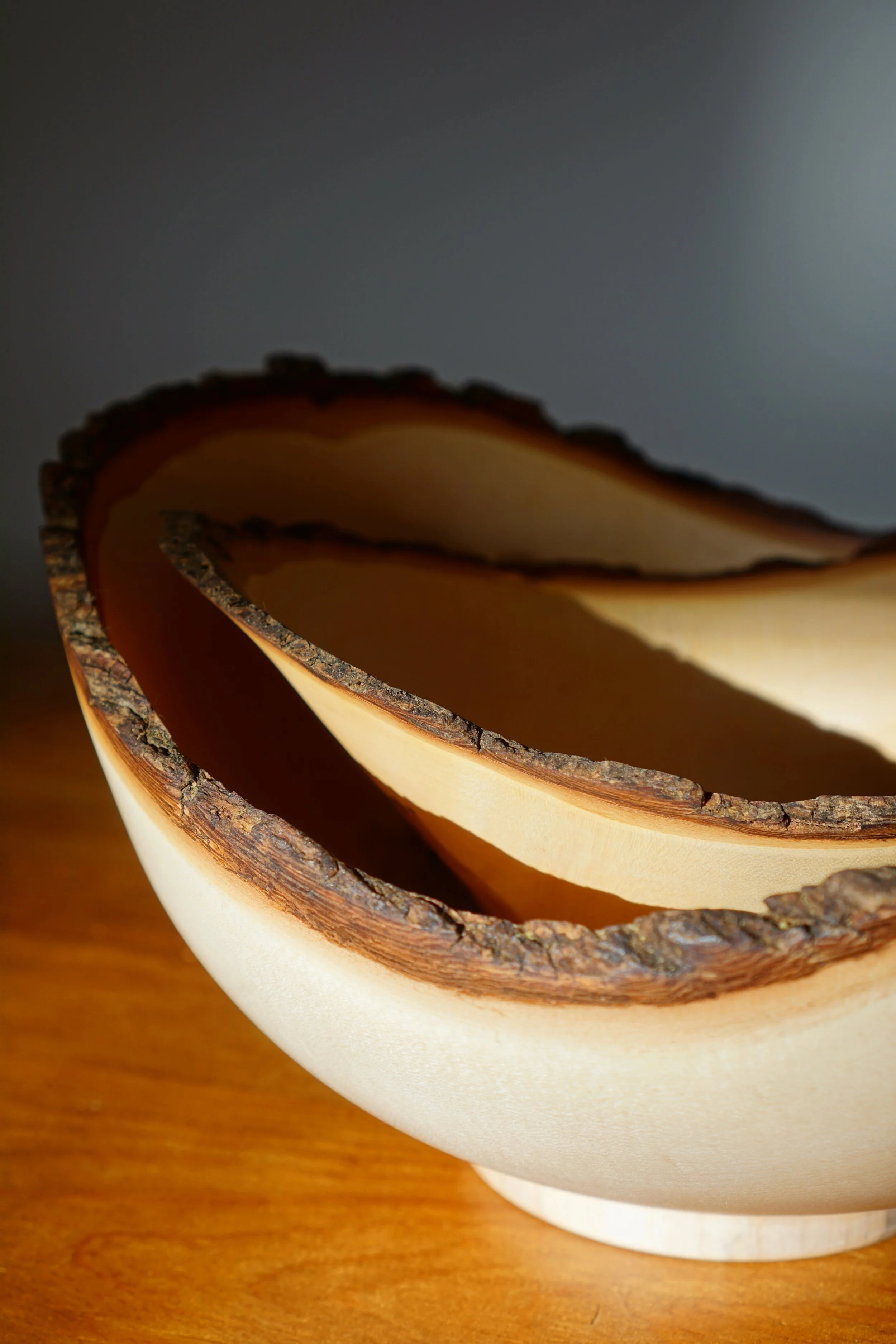
Dimensions
Large: 10.5” x 8.5” x 5.5” tall
Small: 8.25” x 6” x 4” tall
Live edge
Live edge bowls are made from wood harvested in late fall or winter, when the bark naturally bonds to the wood. Underneath the outer & inner bark lies the cambium layer of the tree – a thin, wet, live layer where all the cell division in a tree occurs, and the layer through which water and nutrients are passed between the leaves and roots. During the growing seasons of spring and summer, the cambium layer is full of water which makes a weak attachment to the bark. When the tree drops its leaves in the fall and dries out, this cambium layer hardens and the bark becomes glued to the wood underneath – allowing the bowl to retain its live edge.
About the tree
I salvaged this Ash tree when the power lines were being cleaned and trees were being cut down. This tree was about 70 years old, and I was able to salvage a few 6’ logs; all the smaller pieces were donated to the local firewood bank. Unfortunately, the state of Maine has been heavily infected by the Emerald Ash borer which is devastating our Ash trees – I foresee working with a lot more Ash as these infected trees get taken down. Luckily, this tree was spared. Mature Ash can have very nice figure and is typically relatively dry even while standing, which lessens the drying time required by many other hardwoods. It’s known for its tensile strength and shock absorption.
Care instructions
All bowls are made from locally sourced Maine wood, often spalted and salvaged. The forms and finishes therefore may have blemishes, cracks, and imperfections. Finishes are food-safe linseed oil and beeswax, and can be maintained with an occasional application of an oil of your choice.
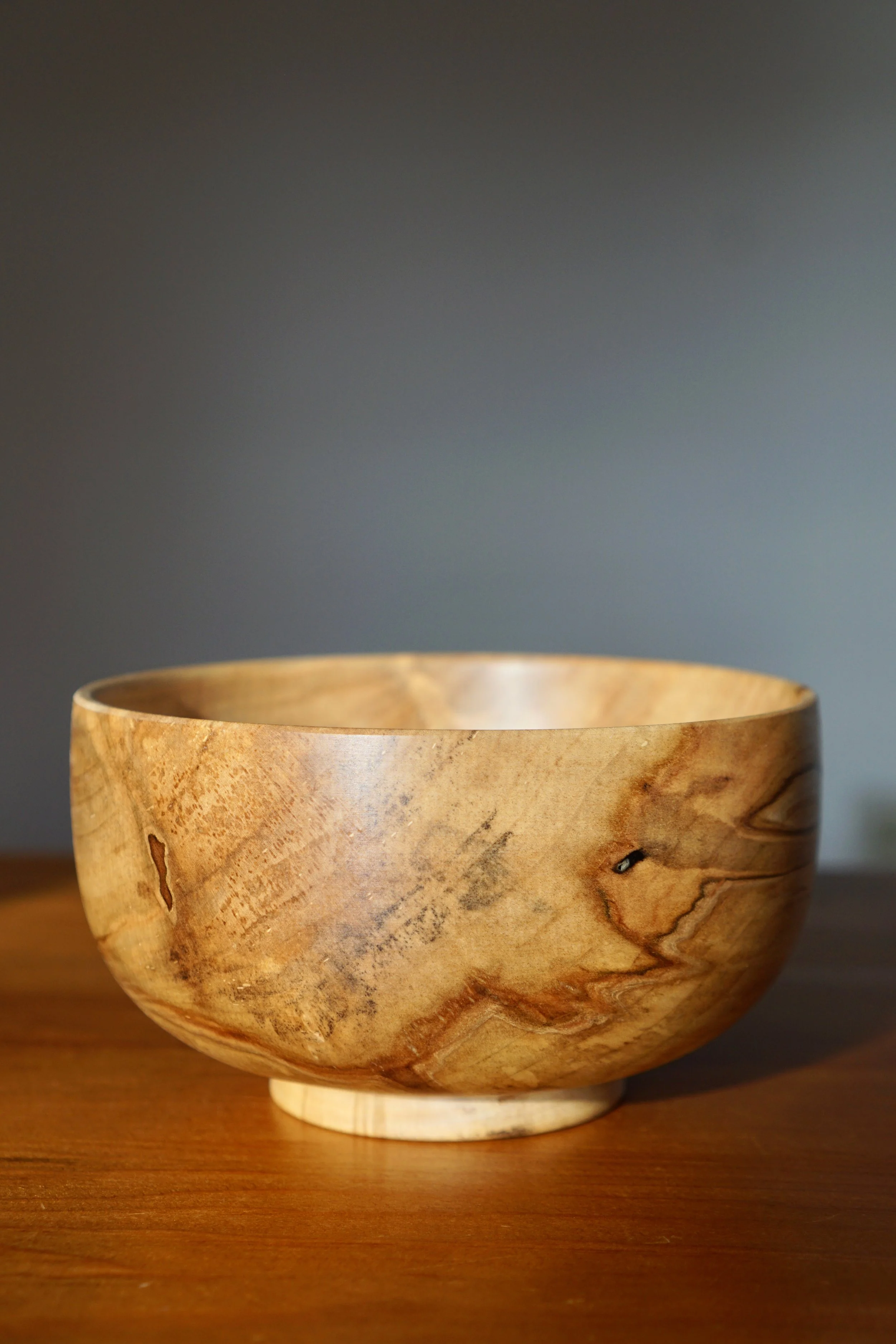
Dimensions: 5.75” x 3.25” tall
About the tree
These bowls originate from an assortment of various Maples from my log pile – all are soft (Red, Silver, and Norway) acquired from various downed trees and backyard finds. Maple’s closed, straight grain make it an exceptionally durable (and very pretty) material for bowls.
Care instructions
All bowls are made from locally sourced Maine wood, often spalted and salvaged. The forms and finishes therefore may have blemishes, cracks, and imperfections. Finishes are food-safe linseed oil and beeswax, and can be maintained with an occasional application of an oil of your choice.
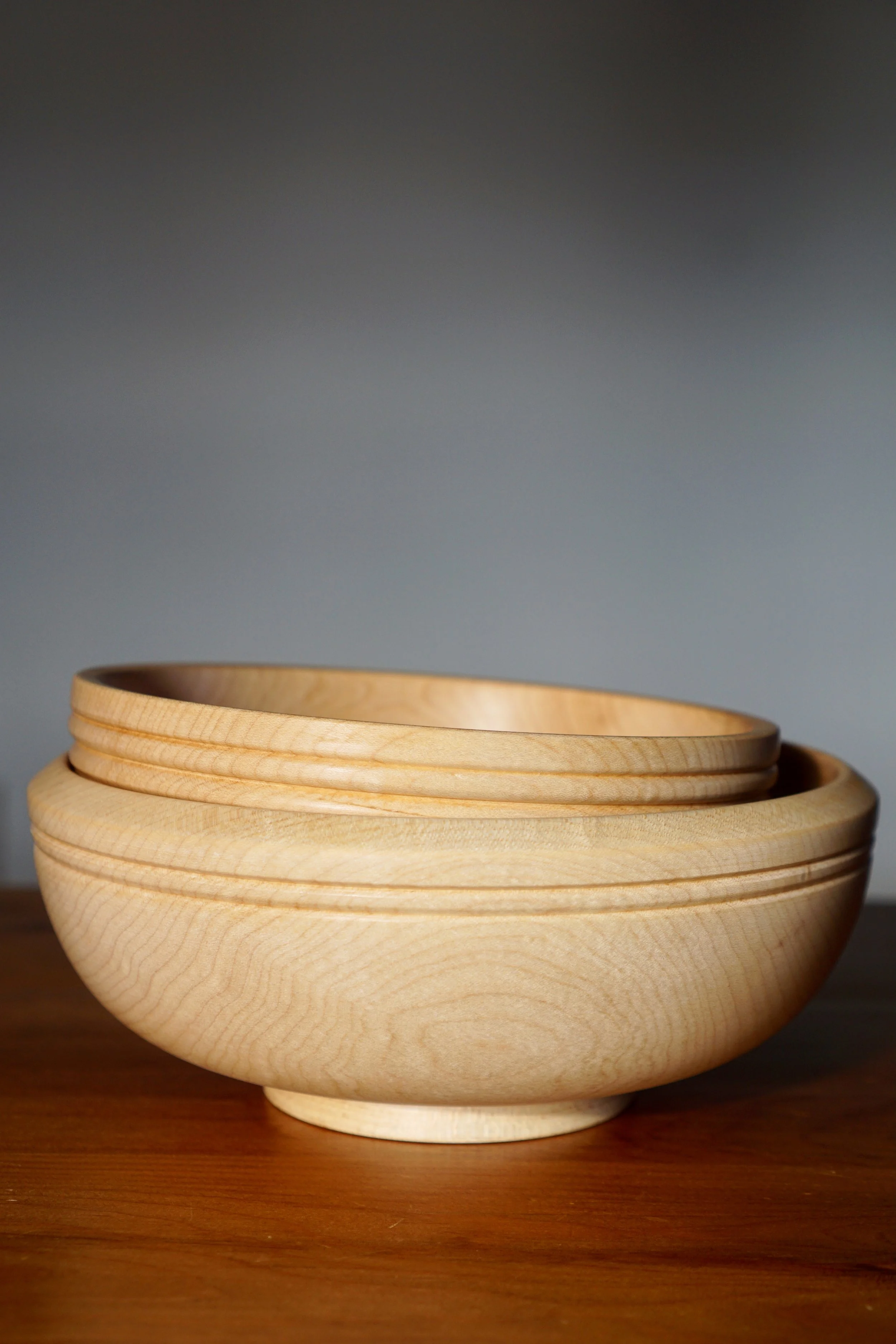
Dimensions:
Large: 8.25” × 3.5” tall
Small: 6.75” x 3” tall
About the tree
These bowls originate from an assortment of various Maples from my log pile – all are soft (Red, Silver, and Norway) acquired from various downed trees and backyard finds. Maple’s closed, straight grain make it an exceptionally durable (and very pretty) material for bowls.
Care instructions
All bowls are made from locally sourced Maine wood, often spalted and salvaged. The forms and finishes therefore may have blemishes, cracks, and imperfections. Finishes are food-safe linseed oil and beeswax, and can be maintained with an occasional application of an oil of your choice.
Dimensions: 10.5” x 10” x 6” tall
Live edge
Live edge bowls are made from wood harvested in late fall or winter, when the bark naturally bonds to the wood. Underneath the outer & inner bark lies the cambium layer of the tree – a thin, wet, live layer where all the cell division in a tree occurs, and the layer through which water and nutrients are passed between the leaves and roots. During the growing seasons of spring and summer, the cambium layer is full of water which makes a weak attachment to the bark. When the tree drops its leaves in the fall and dries out, this cambium layer hardens and the bark becomes glued to the wood underneath – allowing the bowl to retain its live edge.
About the tree
I salvaged this Ash tree when the power lines were being cleaned and trees were being cut down. This tree was about 70 years old, and I was able to salvage a few 6’ logs; all the smaller pieces were donated to the local firewood bank. Unfortunately, the state of Maine has been heavily infected by the Emerald Ash borer which is devastating our Ash trees – I foresee working with a lot more Ash as these infected trees get taken down. Luckily, this tree was spared. Mature Ash can have very nice figure and is typically relatively dry even while standing, which lessens the drying time required by many other hardwoods. It’s known for its tensile strength and shock absorption.
Care instructions
All bowls are made from locally sourced Maine wood, often spalted and salvaged. The forms and finishes therefore may have blemishes, cracks, and imperfections. Finishes are food-safe linseed oil and beeswax, and can be maintained with an occasional application of an oil of your choice.