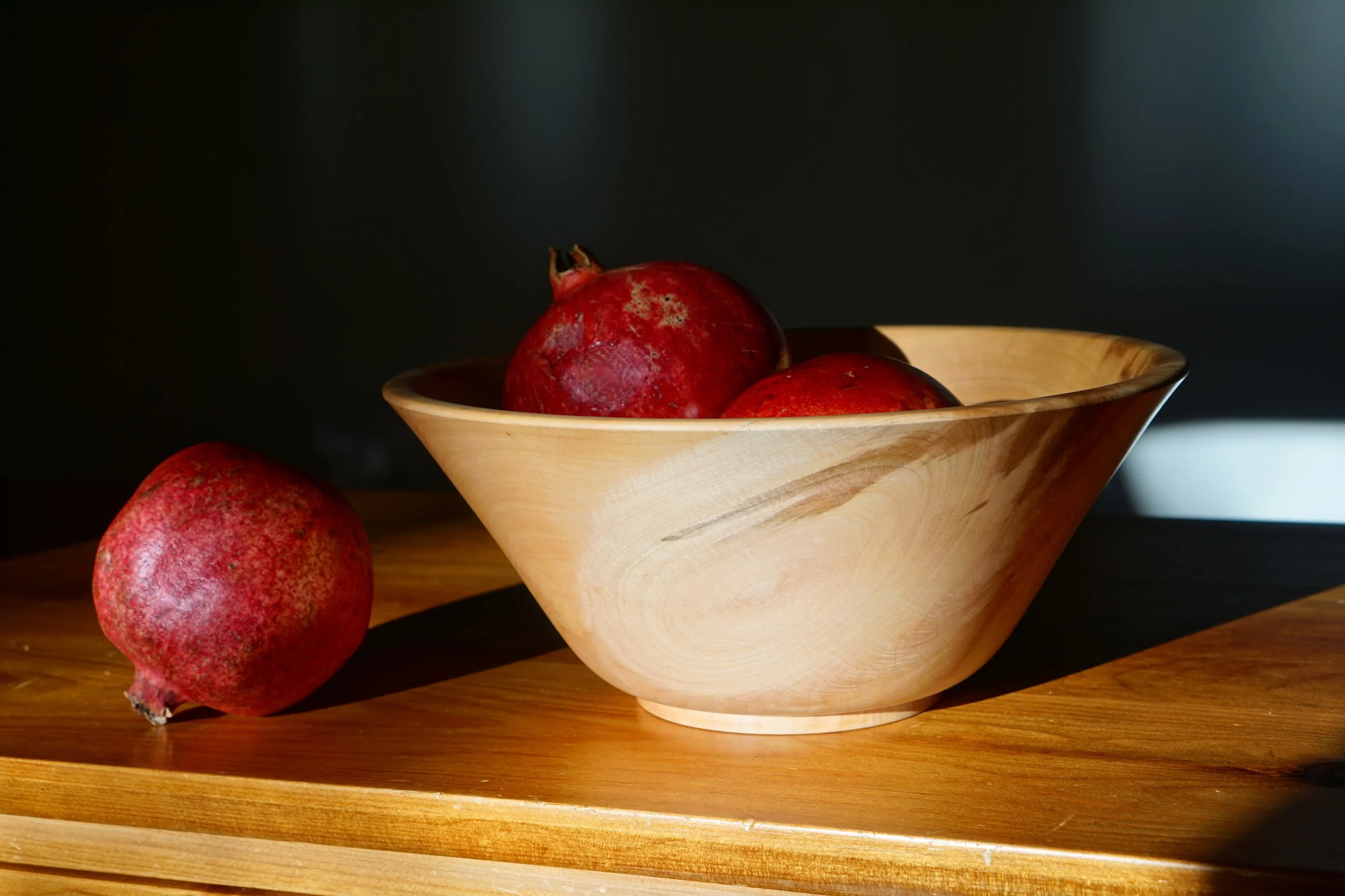
Dimensions: 10” x 4” tall
About the tree
This 70-year old soft Maple tree was rooted in a wet, swampy spot in Yarmouth, Maine. Trees in this circumstance are prone to uprooting and this one would have landed right on the neighbor's house, so it had to come down. I salvaged what I could of the 16” diameter trunk for bowl blanks, and the rest became firewood for the winter. Some parts of this tree carry distinctive patterns left by ambrosia beetles when they tunneled through the wood to lay their eggs. You can spot ambrosia by the straight black boring lines running through the grain.
Care instructions
All bowls are made from locally sourced Maine wood, often spalted and salvaged. The forms and finishes therefore may have blemishes, cracks, and imperfections. Finishes are food-safe linseed oil and beeswax, and can be maintained with an occasional application of an oil of your choice.
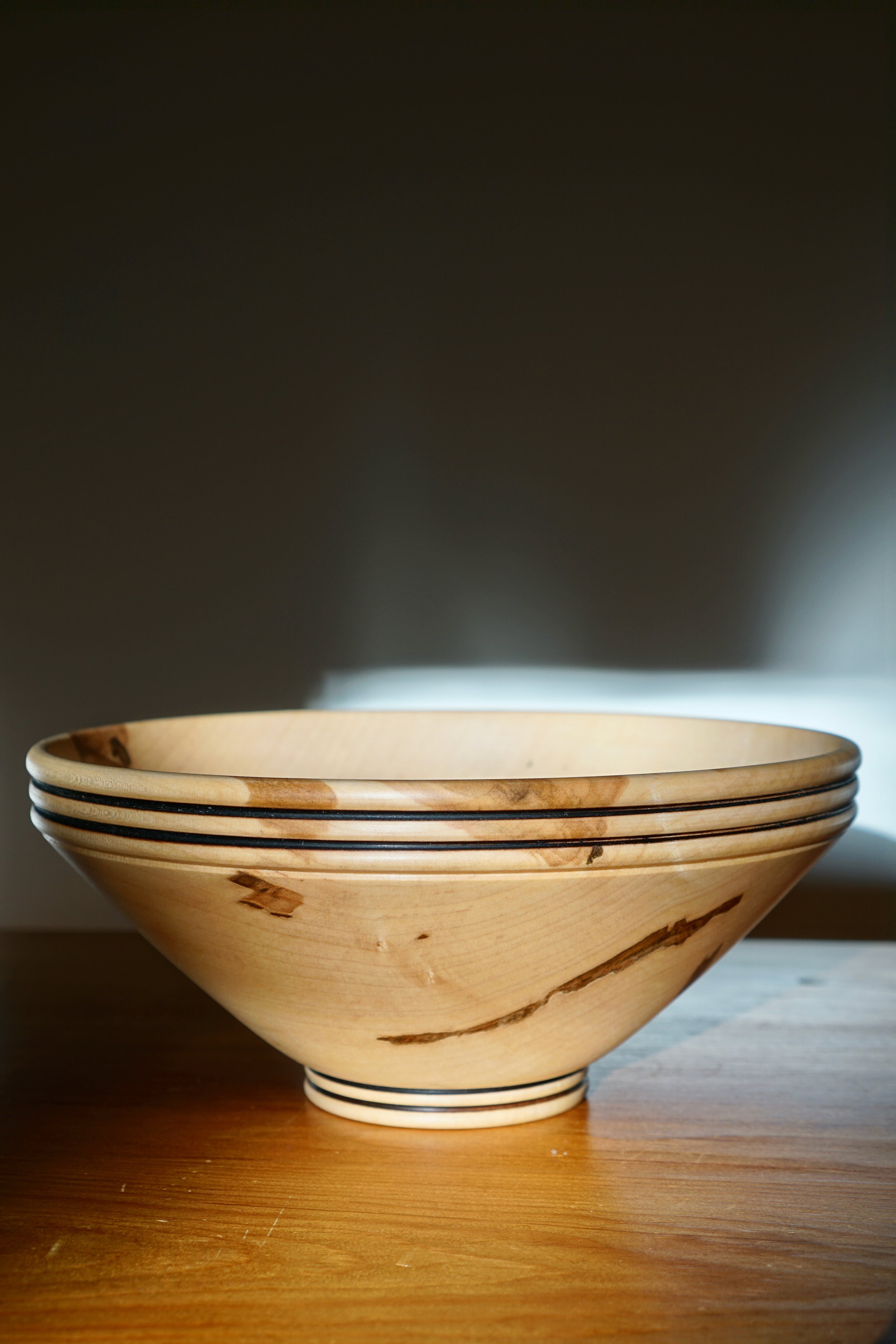
Dimensions: 9” x 4” tall
About the tree
This 70-year old soft Maple tree was rooted in a wet, swampy spot in Yarmouth, Maine. Trees in this circumstance are prone to uprooting and this one would have landed right on the neighbor's house, so it had to come down. I salvaged what I could of the 16” diameter trunk for bowl blanks, and the rest became firewood for the winter. Some parts of this tree carry distinctive patterns left by ambrosia beetles when they tunneled through the wood to lay their eggs. You can spot ambrosia by the straight black boring lines running through the grain.
Care instructions
All bowls are made from locally sourced Maine wood, often spalted and salvaged. The forms and finishes therefore may have blemishes, cracks, and imperfections. Finishes are food-safe linseed oil and beeswax, and can be maintained with an occasional application of an oil of your choice.
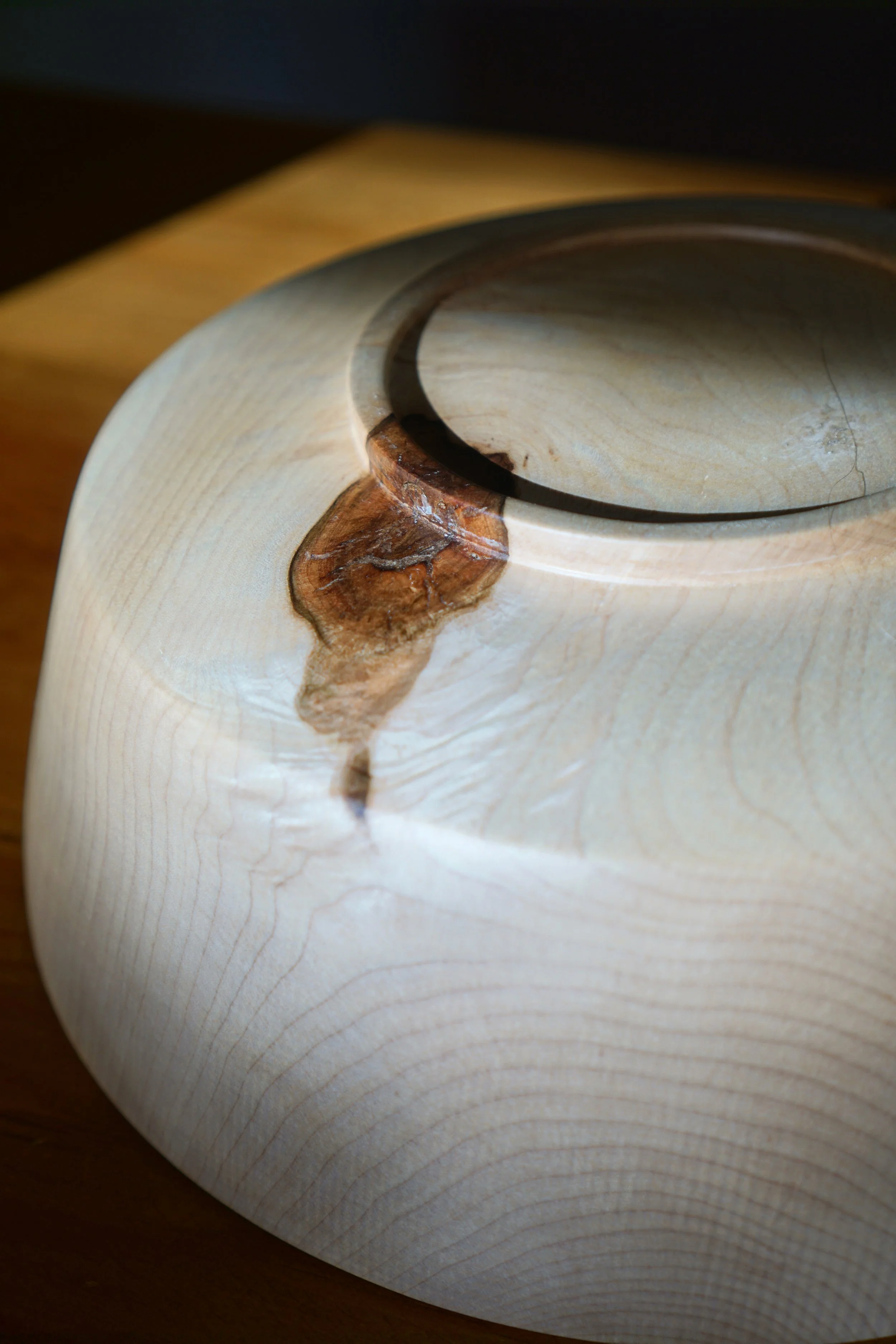
Dimensions: 9” x 3.5” tall
About the tree
This 70-year old soft Maple tree was rooted in a wet, swampy spot in Yarmouth, Maine. Trees in this circumstance are prone to uprooting and this one would have landed right on the neighbor's house, so it had to come down. I salvaged what I could of the 16” diameter trunk for bowl blanks, and the rest became firewood for the winter. Some parts of this tree carry distinctive patterns left by ambrosia beetles when they tunneled through the wood to lay their eggs. You can spot ambrosia by the straight black boring lines running through the grain.
Care instructions
All bowls are made from locally sourced Maine wood, often spalted and salvaged. The forms and finishes therefore may have blemishes, cracks, and imperfections. Finishes are food-safe linseed oil and beeswax, and can be maintained with an occasional application of an oil of your choice.

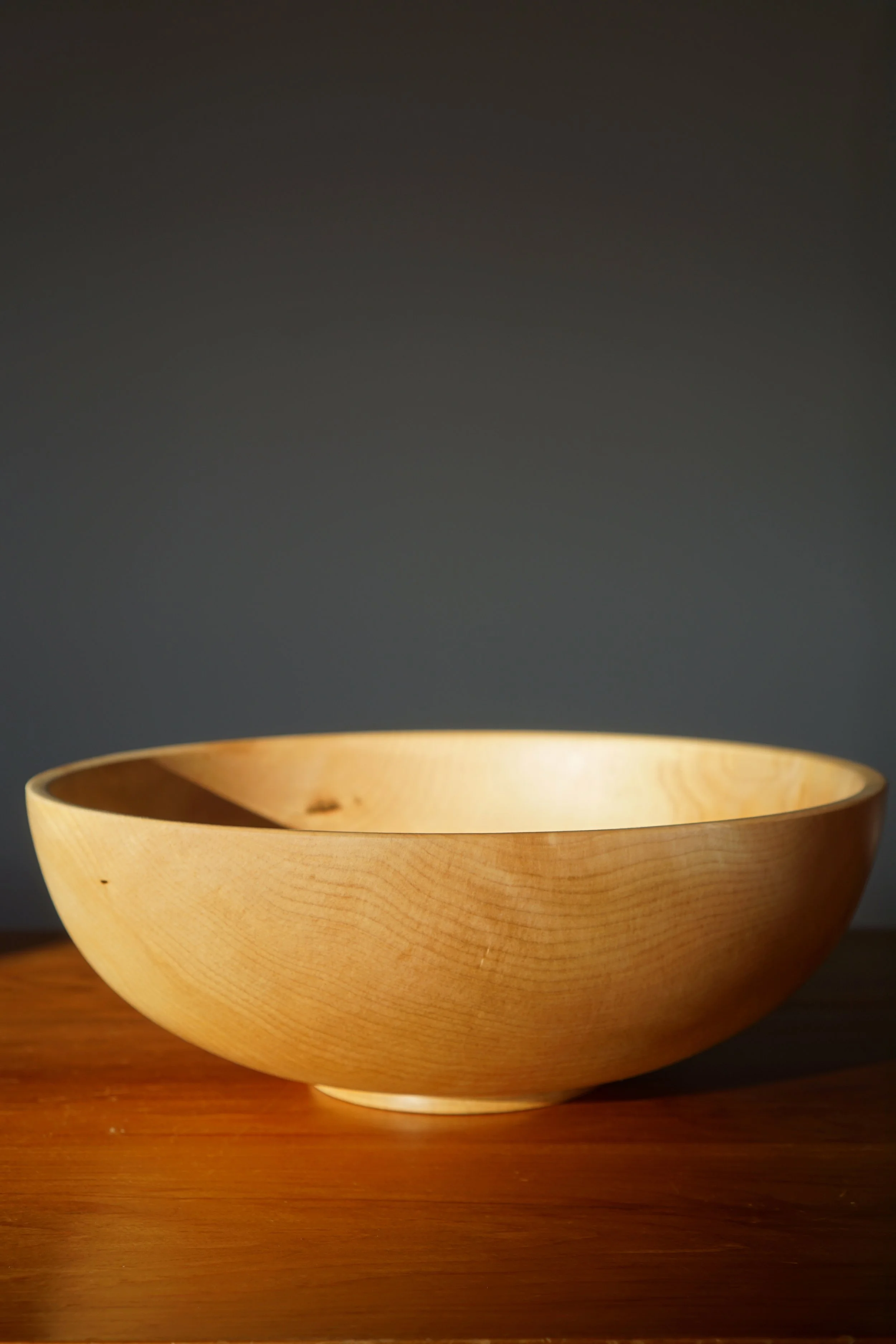
Dimensions: 10.5” x 4” tall
About the tree
This 70-year old soft Maple tree was rooted in a wet, swampy spot in Yarmouth, Maine. Trees in this circumstance are prone to uprooting and this one would have landed right on the neighbor's house, so it had to come down. I salvaged what I could of the 16” diameter trunk for bowl blanks, and the rest became firewood for the winter. Some parts of this tree carry distinctive patterns left by ambrosia beetles when they tunneled through the wood to lay their eggs. You can spot ambrosia by the straight black boring lines running through the grain.
Care instructions
All bowls are made from locally sourced Maine wood, often spalted and salvaged. The forms and finishes therefore may have blemishes, cracks, and imperfections. Finishes are food-safe linseed oil and beeswax, and can be maintained with an occasional application of an oil of your choice.
Dimensions: 10.5” x 4” tall
About the tree
This 70-year old soft Maple tree was rooted in a wet, swampy spot in Yarmouth, Maine. Trees in this circumstance are prone to uprooting and this one would have landed right on the neighbor's house, so it had to come down. I salvaged what I could of the 16” diameter trunk for bowl blanks, and the rest became firewood for the winter. Some parts of this tree carry distinctive patterns left by ambrosia beetles when they tunneled through the wood to lay their eggs. You can spot ambrosia by the straight black boring lines running through the grain.
Care instructions
All bowls are made from locally sourced Maine wood, often spalted and salvaged. The forms and finishes therefore may have blemishes, cracks, and imperfections. Finishes are food-safe linseed oil and beeswax, and can be maintained with an occasional application of an oil of your choice.
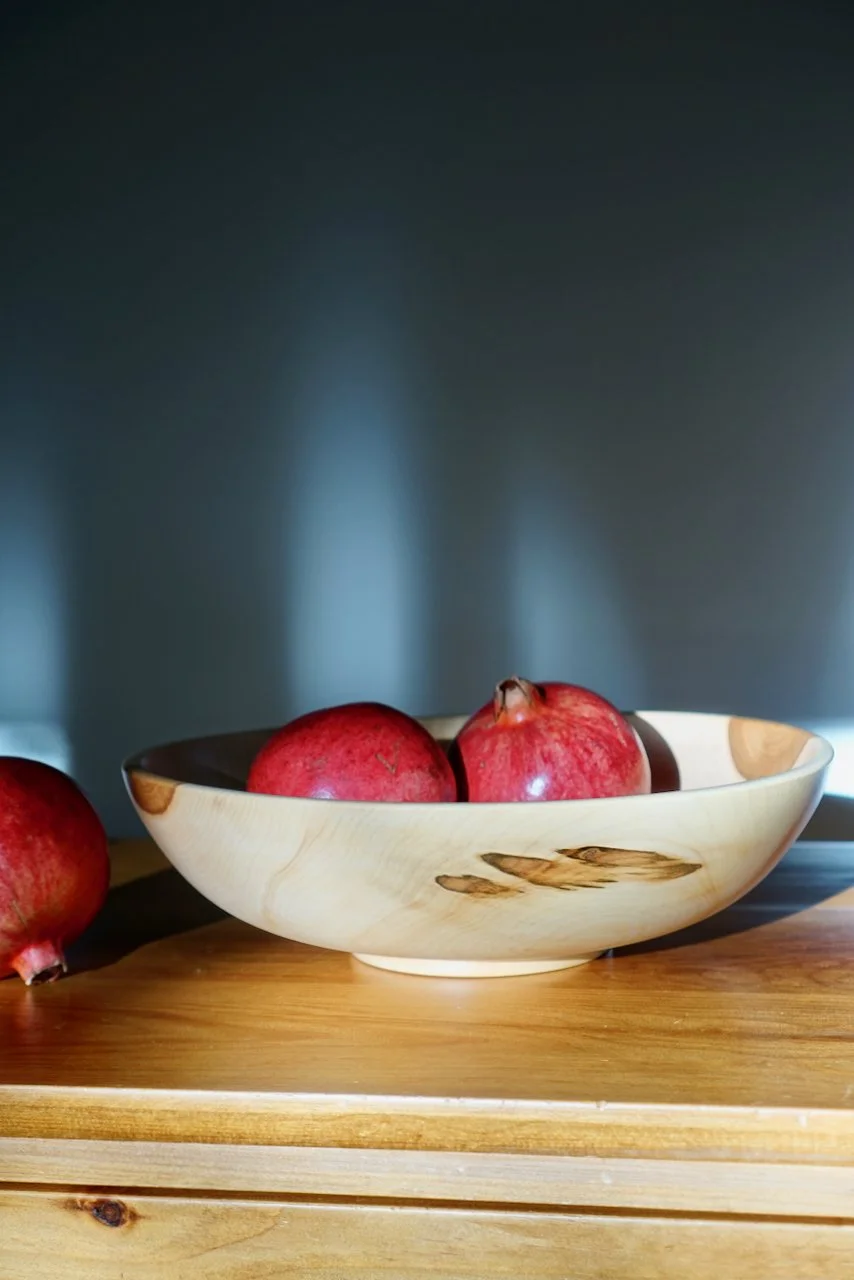
Dimensions: 11.75” x 3.5” tall
About the tree
This 70-year old soft Maple tree was rooted in a wet, swampy spot in Yarmouth, Maine. Trees in this circumstance are prone to uprooting and this one would have landed right on the neighbor's house, so it had to come down. I salvaged what I could of the 16” diameter trunk for bowl blanks, and the rest became firewood for the winter. Some parts of this tree carry distinctive patterns left by ambrosia beetles when they tunneled through the wood to lay their eggs. You can spot ambrosia by the straight black boring lines running through the grain.
Care instructions
All bowls are made from locally sourced Maine wood, often spalted and salvaged. The forms and finishes therefore may have blemishes, cracks, and imperfections. Finishes are food-safe linseed oil and beeswax, and can be maintained with an occasional application of an oil of your choice.
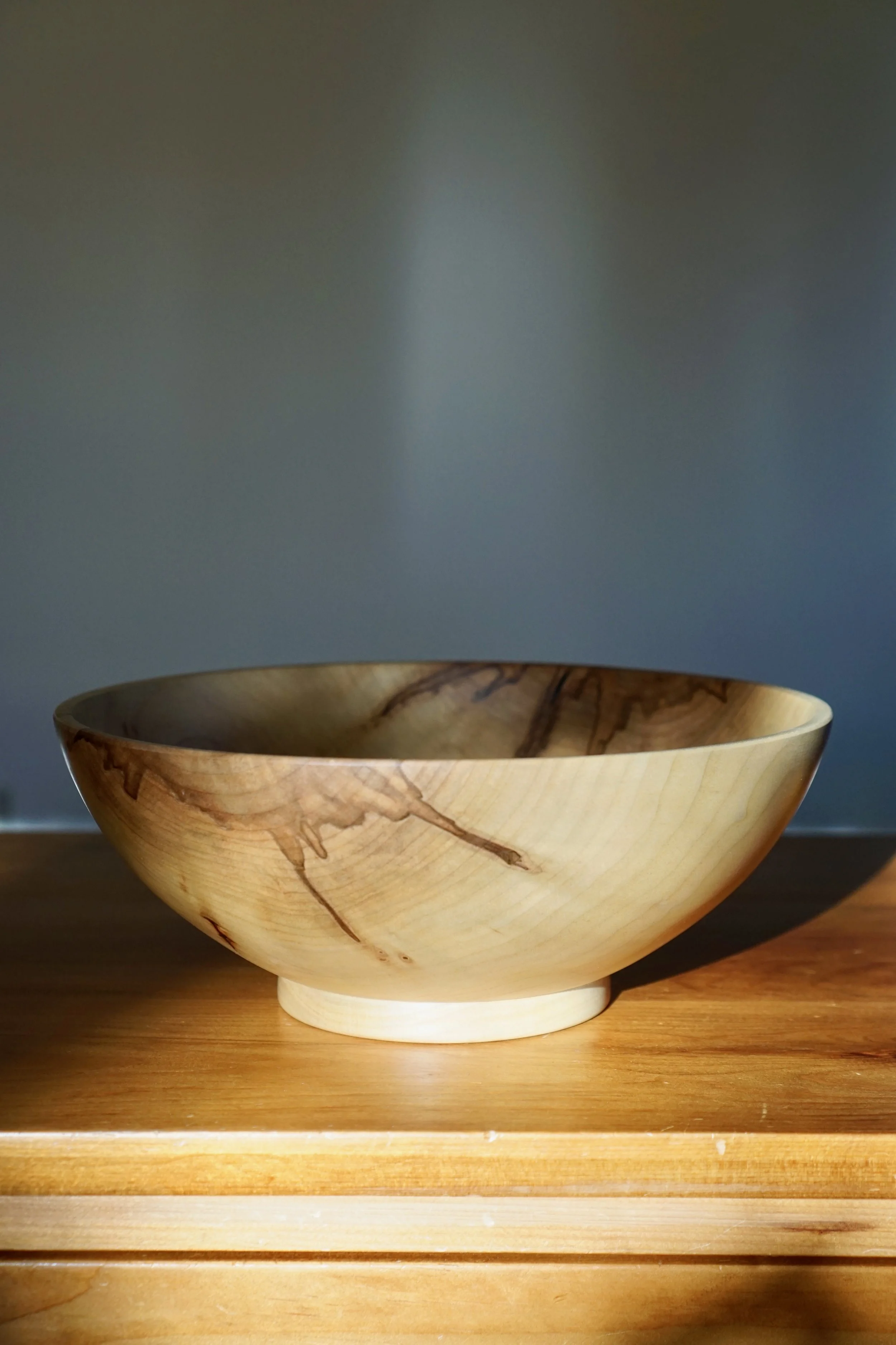
Dimensions: 10” x 4” tall
About the tree
This 70-year old soft Maple tree was rooted in a wet, swampy spot in Yarmouth, Maine. Trees in this circumstance are prone to uprooting and this one would have landed right on the neighbor's house, so it had to come down. I salvaged what I could of the 16” diameter trunk for bowl blanks, and the rest became firewood for the winter. Some parts of this tree carry distinctive patterns left by ambrosia beetles when they tunneled through the wood to lay their eggs. You can spot ambrosia by the straight black boring lines running through the grain.
Care instructions
All bowls are made from locally sourced Maine wood, often spalted and salvaged. The forms and finishes therefore may have blemishes, cracks, and imperfections. Finishes are food-safe linseed oil and beeswax, and can be maintained with an occasional application of an oil of your choice.
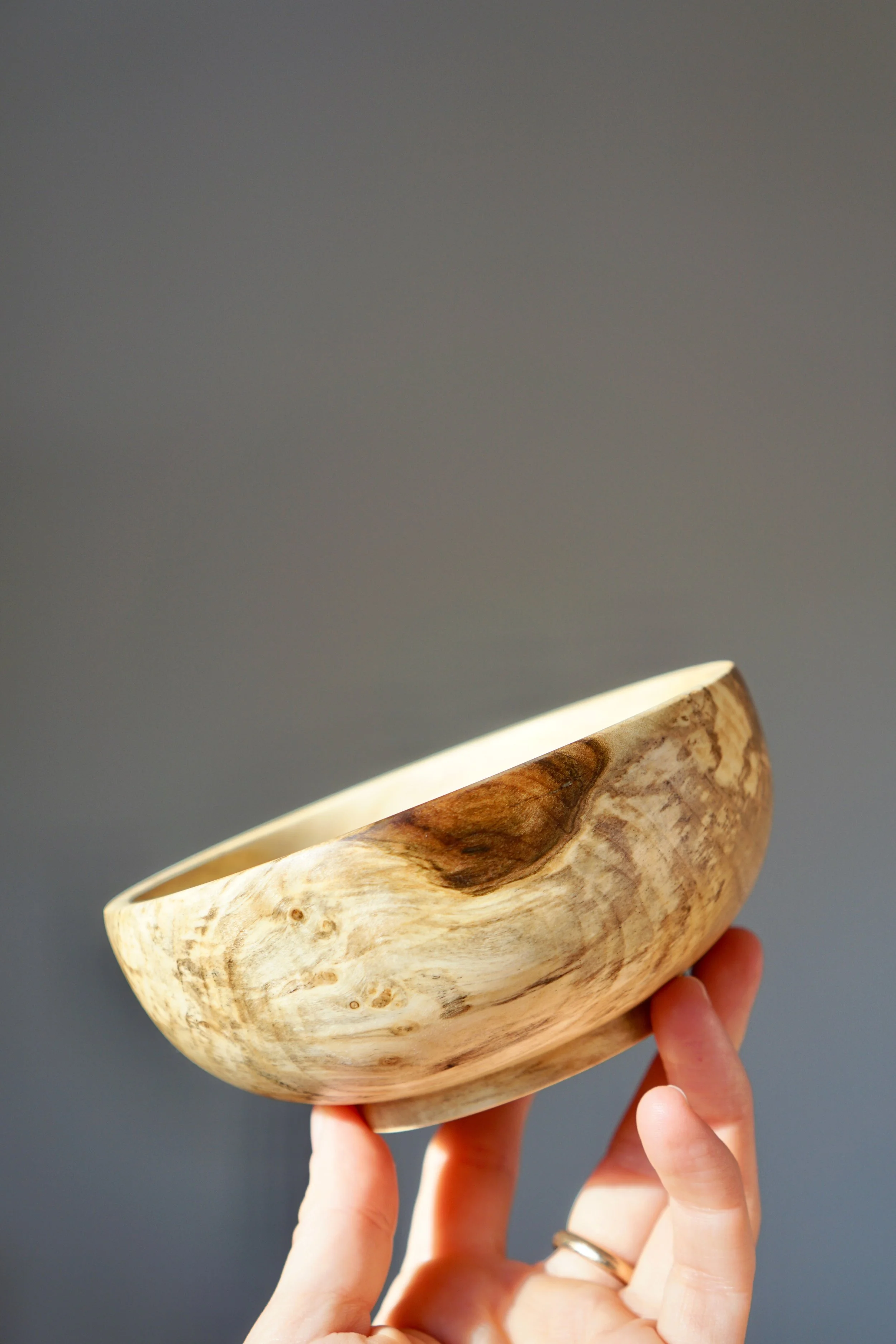
Dimensions: 5” x 2.25” tall
About the tree
This 70-year old soft Maple tree was rooted in a wet, swampy spot in Yarmouth, Maine. Trees in this circumstance are prone to uprooting and this one would have landed right on the neighbor's house, so it had to come down. I salvaged what I could of the 16” diameter trunk for bowl blanks, and the rest became firewood for the winter. Some parts of this tree carry distinctive patterns left by ambrosia beetles when they tunneled through the wood to lay their eggs. You can spot ambrosia by the straight black boring lines running through the grain.
Care instructions
All bowls are made from locally sourced Maine wood, often spalted and salvaged. The forms and finishes therefore may have blemishes, cracks, and imperfections. Finishes are food-safe linseed oil and beeswax, and can be maintained with an occasional application of an oil of your choice.
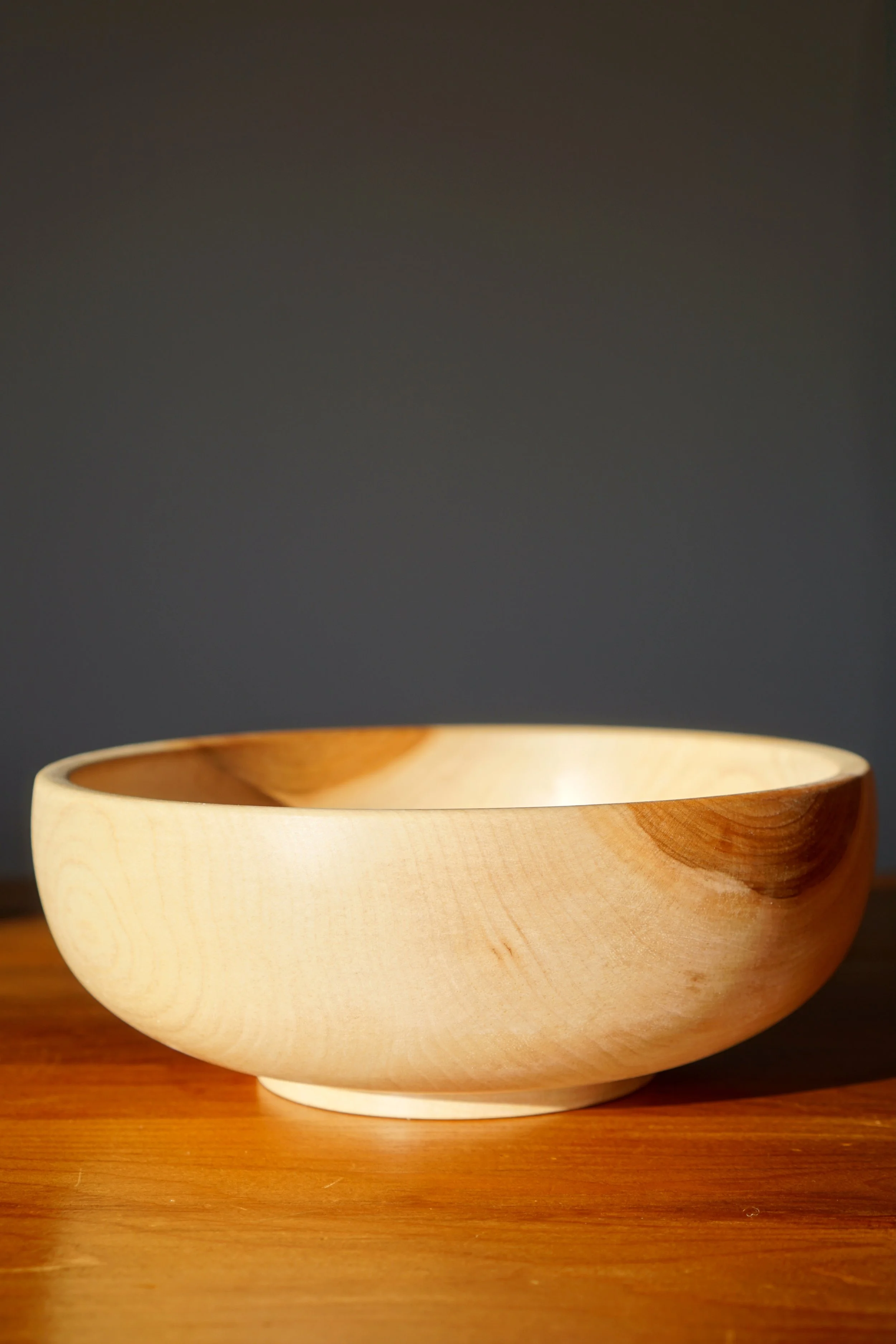
Dimensions: 6.5” x 2.5” tall
About the tree
This 70-year old soft Maple tree was rooted in a wet, swampy spot in Yarmouth, Maine. Trees in this circumstance are prone to uprooting and this one would have landed right on the neighbor's house, so it had to come down. I salvaged what I could of the 16” diameter trunk for bowl blanks, and the rest became firewood for the winter. Some parts of this tree carry distinctive patterns left by ambrosia beetles when they tunneled through the wood to lay their eggs. You can spot ambrosia by the straight black boring lines running through the grain.
Care instructions
All bowls are made from locally sourced Maine wood, often spalted and salvaged. The forms and finishes therefore may have blemishes, cracks, and imperfections. Finishes are food-safe linseed oil and beeswax, and can be maintained with an occasional application of an oil of your choice.
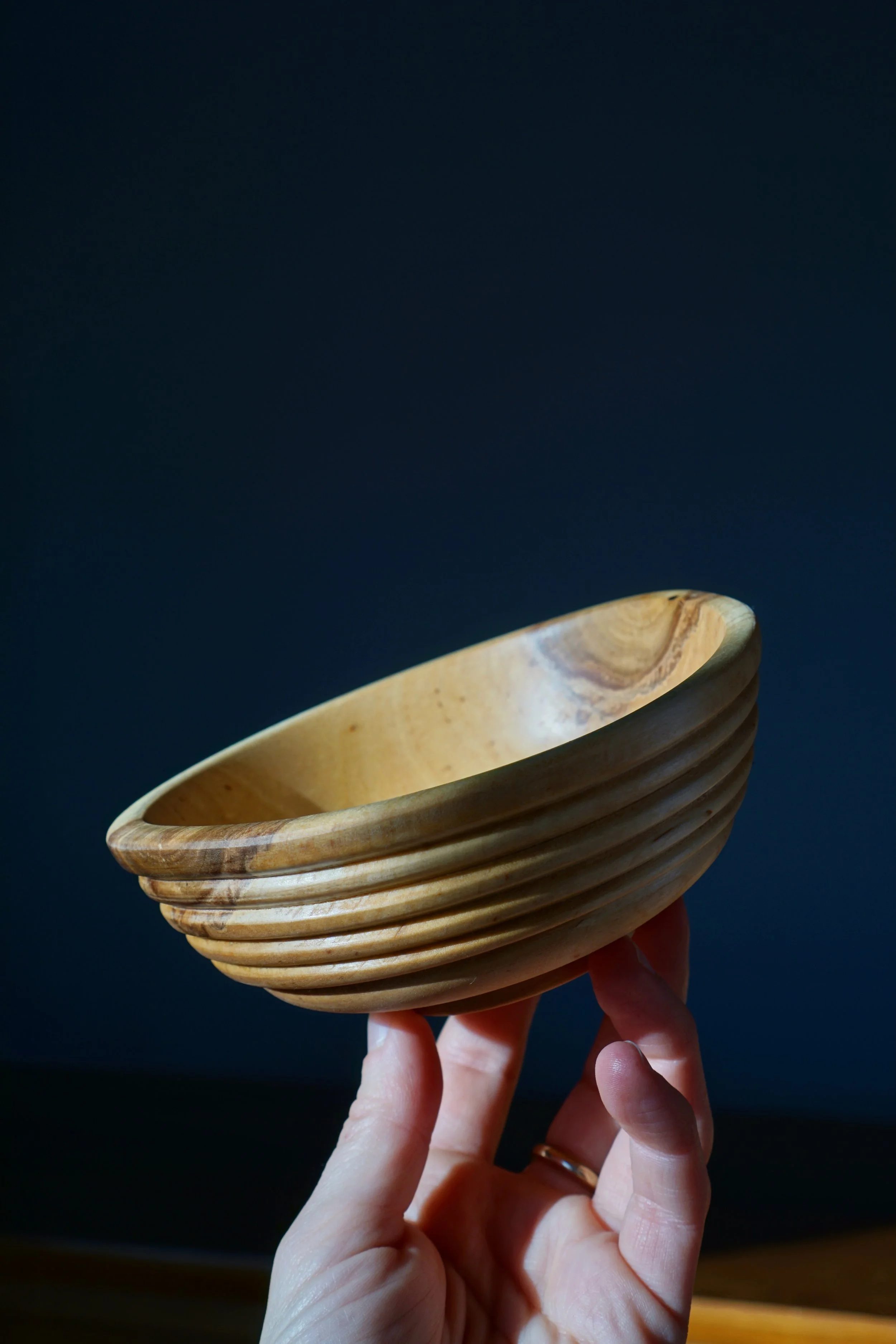
Dimensions: 5” x 2” tall
About the tree
This 70-year old soft Maple tree was rooted in a wet, swampy spot in Yarmouth, Maine. Trees in this circumstance are prone to uprooting and this one would have landed right on the neighbor's house, so it had to come down. I salvaged what I could of the 16” diameter trunk for bowl blanks, and the rest became firewood for the winter. Some parts of this tree carry distinctive patterns left by ambrosia beetles when they tunneled through the wood to lay their eggs. You can spot ambrosia by the straight black boring lines running through the grain.
Care instructions
All bowls are made from locally sourced Maine wood, often spalted and salvaged. The forms and finishes therefore may have blemishes, cracks, and imperfections. Finishes are food-safe linseed oil and beeswax, and can be maintained with an occasional application of an oil of your choice.
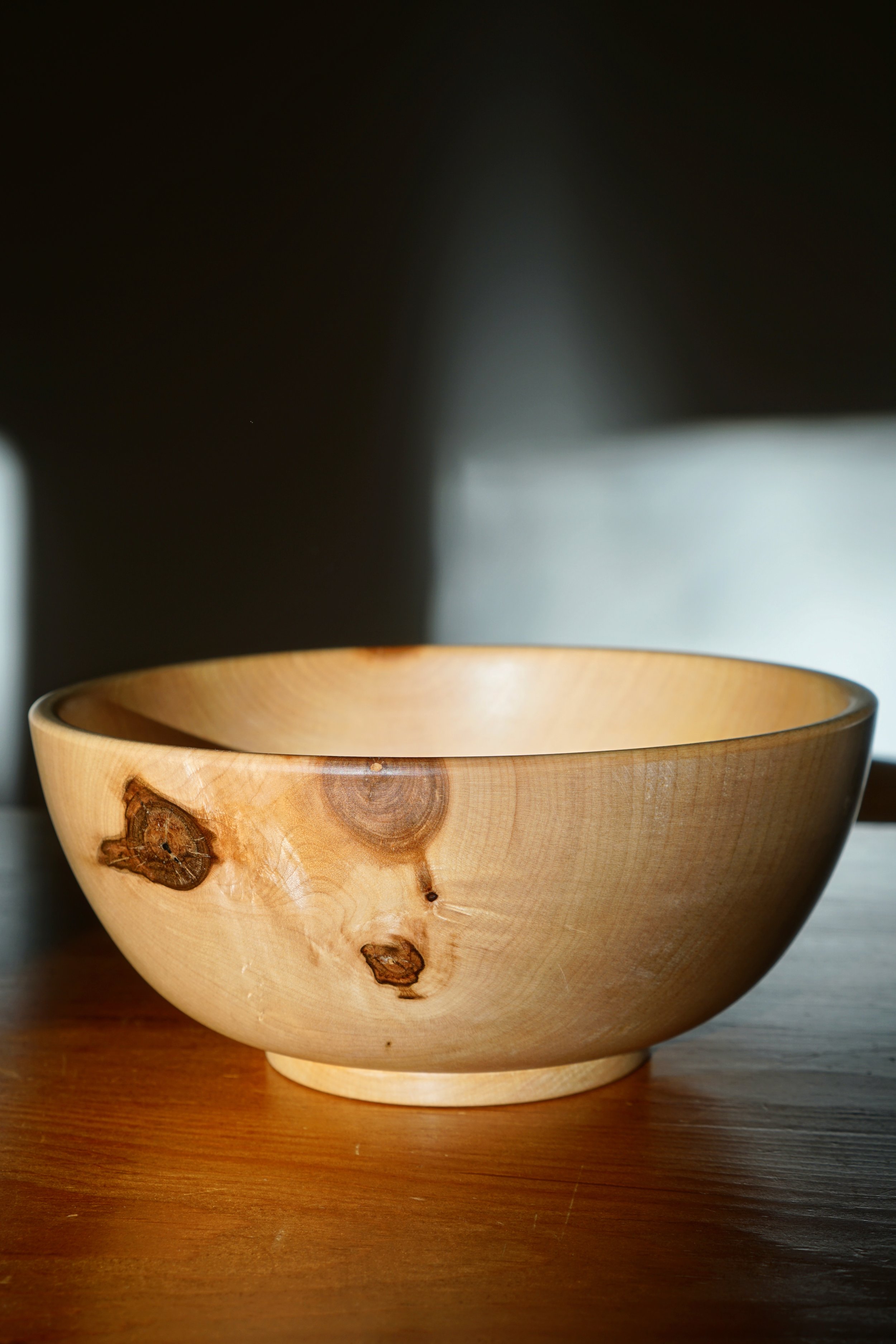
Dimensions: 7” x 3” tall
About the tree
This 70-year old soft Maple tree was rooted in a wet, swampy spot in Yarmouth, Maine. Trees in this circumstance are prone to uprooting and this one would have landed right on the neighbor's house, so it had to come down. I salvaged what I could of the 16” diameter trunk for bowl blanks, and the rest became firewood for the winter. Some parts of this tree carry distinctive patterns left by ambrosia beetles when they tunneled through the wood to lay their eggs. You can spot ambrosia by the straight black boring lines running through the grain.
Care instructions
All bowls are made from locally sourced Maine wood, often spalted and salvaged. The forms and finishes therefore may have blemishes, cracks, and imperfections. Finishes are food-safe linseed oil and beeswax, and can be maintained with an occasional application of an oil of your choice.
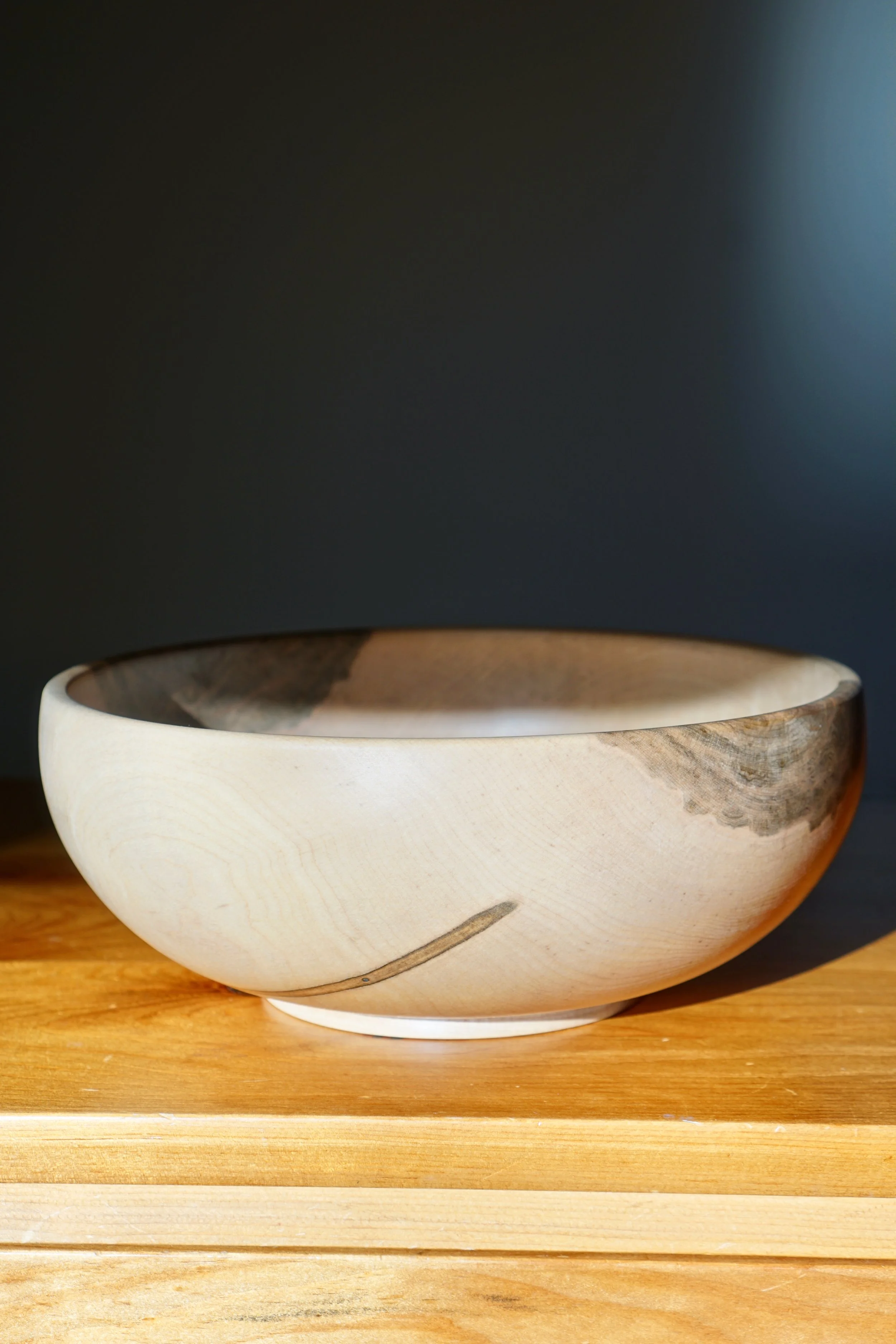
Dimensions: 9” x 3.5” tall
About the tree
This 70-year old soft Maple tree was rooted in a wet, swampy spot in Yarmouth, Maine. Trees in this circumstance are prone to uprooting and this one would have landed right on the neighbor's house, so it had to come down. I salvaged what I could of the 16” diameter trunk for bowl blanks, and the rest became firewood for the winter. Some parts of this tree carry distinctive patterns left by ambrosia beetles when they tunneled through the wood to lay their eggs. You can spot ambrosia by the straight black boring lines running through the grain.
Care instructions
All bowls are made from locally sourced Maine wood, often spalted and salvaged. The forms and finishes therefore may have blemishes, cracks, and imperfections. Finishes are food-safe linseed oil and beeswax, and can be maintained with an occasional application of an oil of your choice.
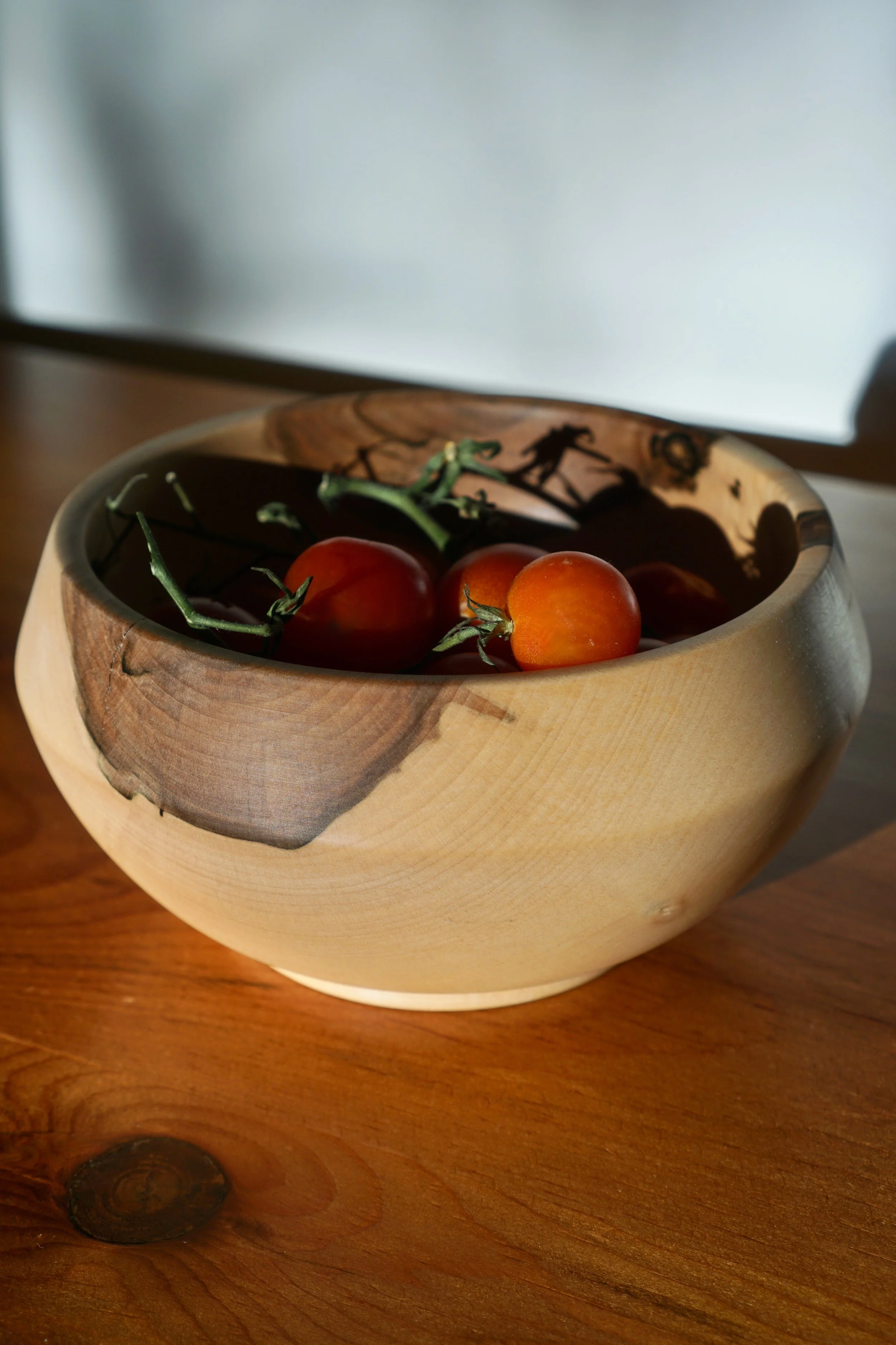
Dimensions: 5.5” x 3” tall
About the tree
This 70-year old soft Maple tree was rooted in a wet, swampy spot in Yarmouth, Maine. Trees in this circumstance are prone to uprooting and this one would have landed right on the neighbor's house, so it had to come down. I salvaged what I could of the 16” diameter trunk for bowl blanks, and the rest became firewood for the winter. Some parts of this tree carry distinctive patterns left by ambrosia beetles when they tunneled through the wood to lay their eggs. You can spot ambrosia by the straight black boring lines running through the grain.
Care instructions
All bowls are made from locally sourced Maine wood, often spalted and salvaged. The forms and finishes therefore may have blemishes, cracks, and imperfections. Finishes are food-safe linseed oil and beeswax, and can be maintained with an occasional application of an oil of your choice.
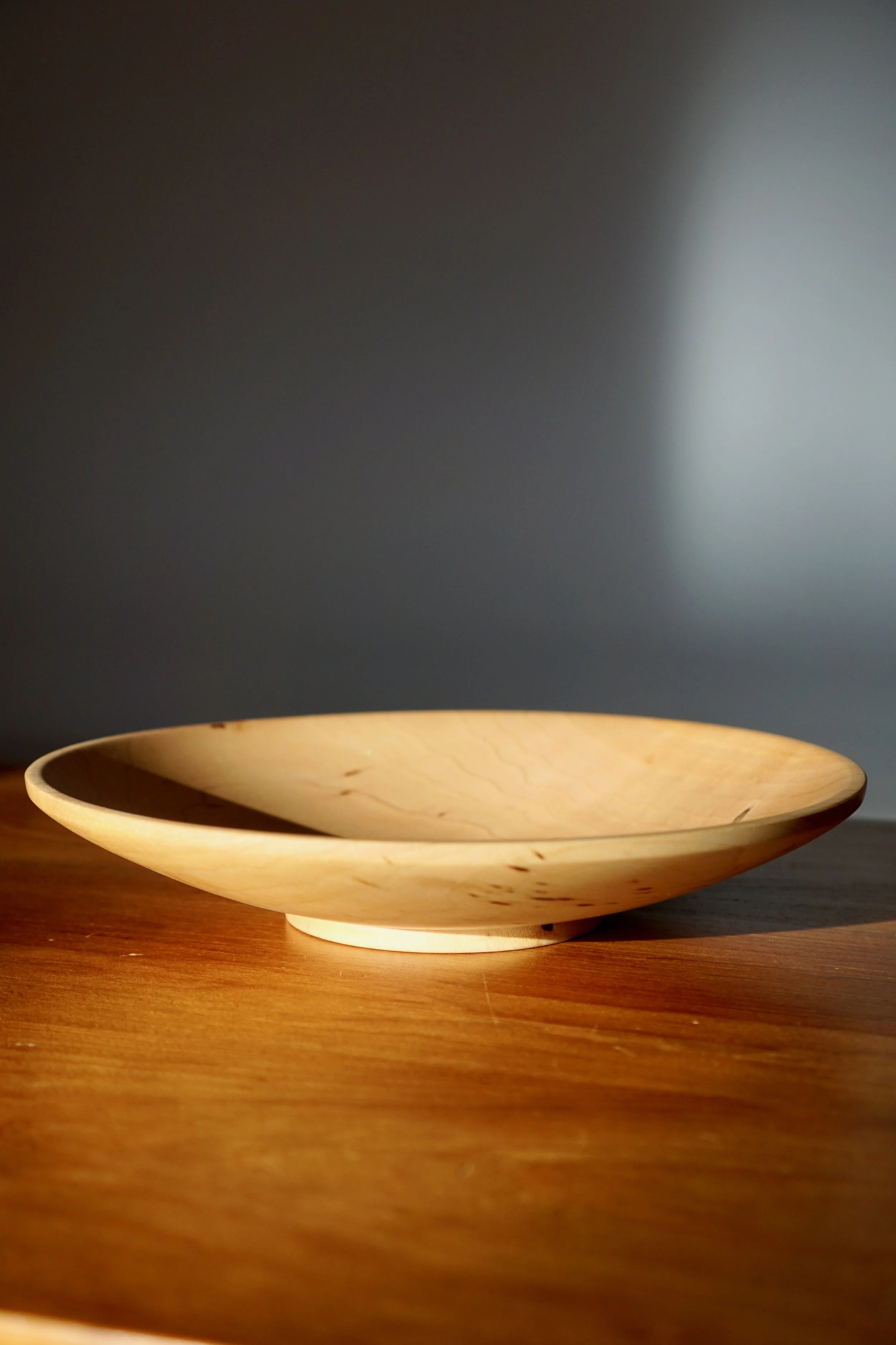
Dimensions: 9” x 1.75” tall
About the tree
This 70-year old soft Maple tree was rooted in a wet, swampy spot in Yarmouth, Maine. Trees in this circumstance are prone to uprooting and this one would have landed right on the neighbor's house, so it had to come down. I salvaged what I could of the 16” diameter trunk for bowl blanks, and the rest became firewood for the winter. Some parts of this tree carry distinctive patterns left by ambrosia beetles when they tunneled through the wood to lay their eggs. You can spot ambrosia by the straight black boring lines running through the grain.
Care instructions
All bowls are made from locally sourced Maine wood, often spalted and salvaged. The forms and finishes therefore may have blemishes, cracks, and imperfections. Finishes are food-safe linseed oil and beeswax, and can be maintained with an occasional application of an oil of your choice.
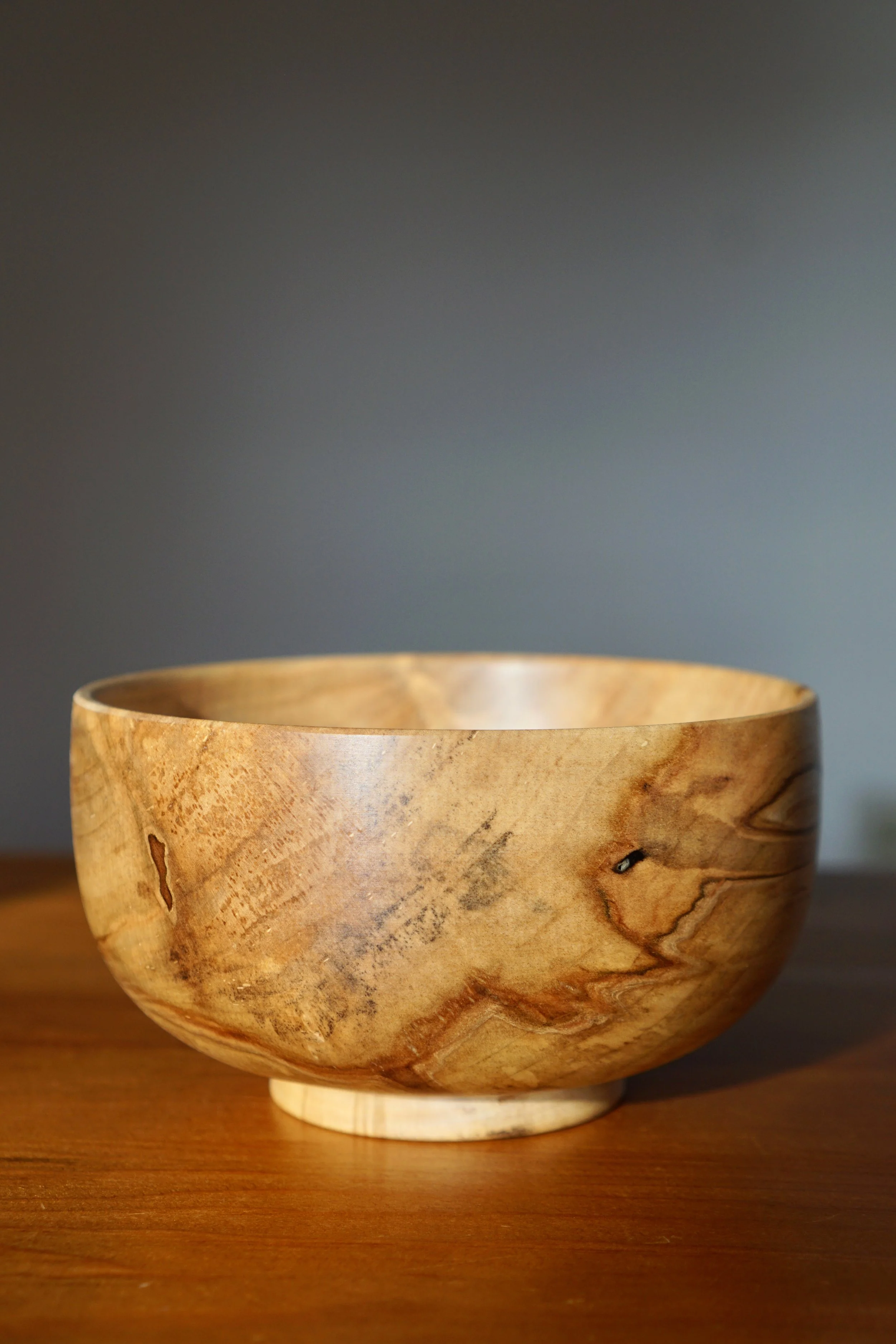
Dimensions: 5.75” x 3.25” tall
About the tree
This 70-year old soft Maple tree was rooted in a wet, swampy spot in Yarmouth, Maine. Trees in this circumstance are prone to uprooting and this one would have landed right on the neighbor's house, so it had to come down. I salvaged what I could of the 16” diameter trunk for bowl blanks, and the rest became firewood for the winter. Some parts of this tree carry distinctive patterns left by ambrosia beetles when they tunneled through the wood to lay their eggs. You can spot ambrosia by the straight black boring lines running through the grain.
Care instructions
All bowls are made from locally sourced Maine wood, often spalted and salvaged. The forms and finishes therefore may have blemishes, cracks, and imperfections. Finishes are food-safe linseed oil and beeswax, and can be maintained with an occasional application of an oil of your choice.
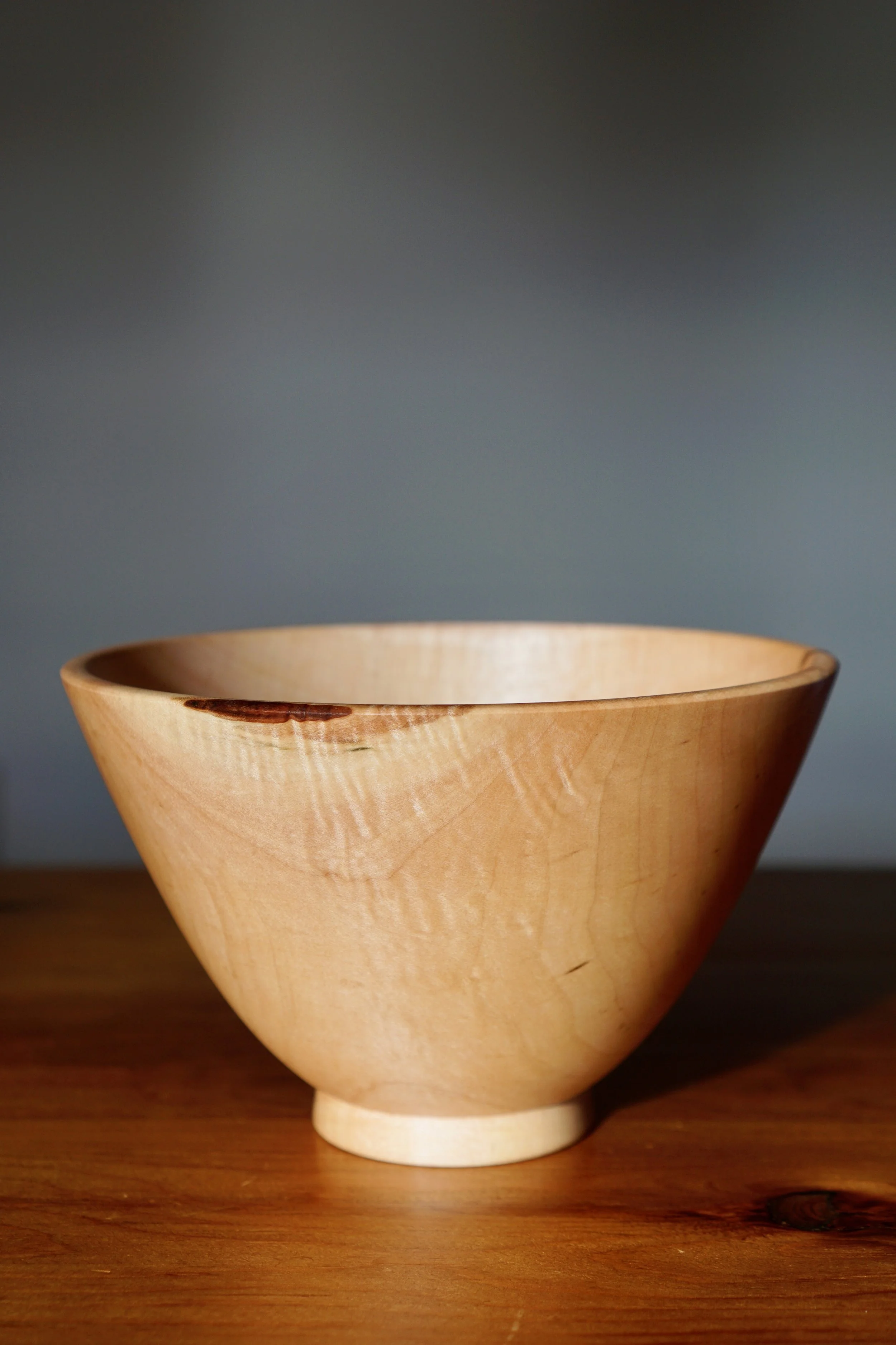
Dimensions: 7” x 4.5” tall
About the tree
This 70-year old soft Maple tree was rooted in a wet, swampy spot in Yarmouth, Maine. Trees in this circumstance are prone to uprooting and this one would have landed right on the neighbor's house, so it had to come down. I salvaged what I could of the 16” diameter trunk for bowl blanks, and the rest became firewood for the winter. Some parts of this tree carry distinctive patterns left by ambrosia beetles when they tunneled through the wood to lay their eggs. You can spot ambrosia by the straight black boring lines running through the grain.
Care instructions
All bowls are made from locally sourced Maine wood, often spalted and salvaged. The forms and finishes therefore may have blemishes, cracks, and imperfections. Finishes are food-safe linseed oil and beeswax, and can be maintained with an occasional application of an oil of your choice.
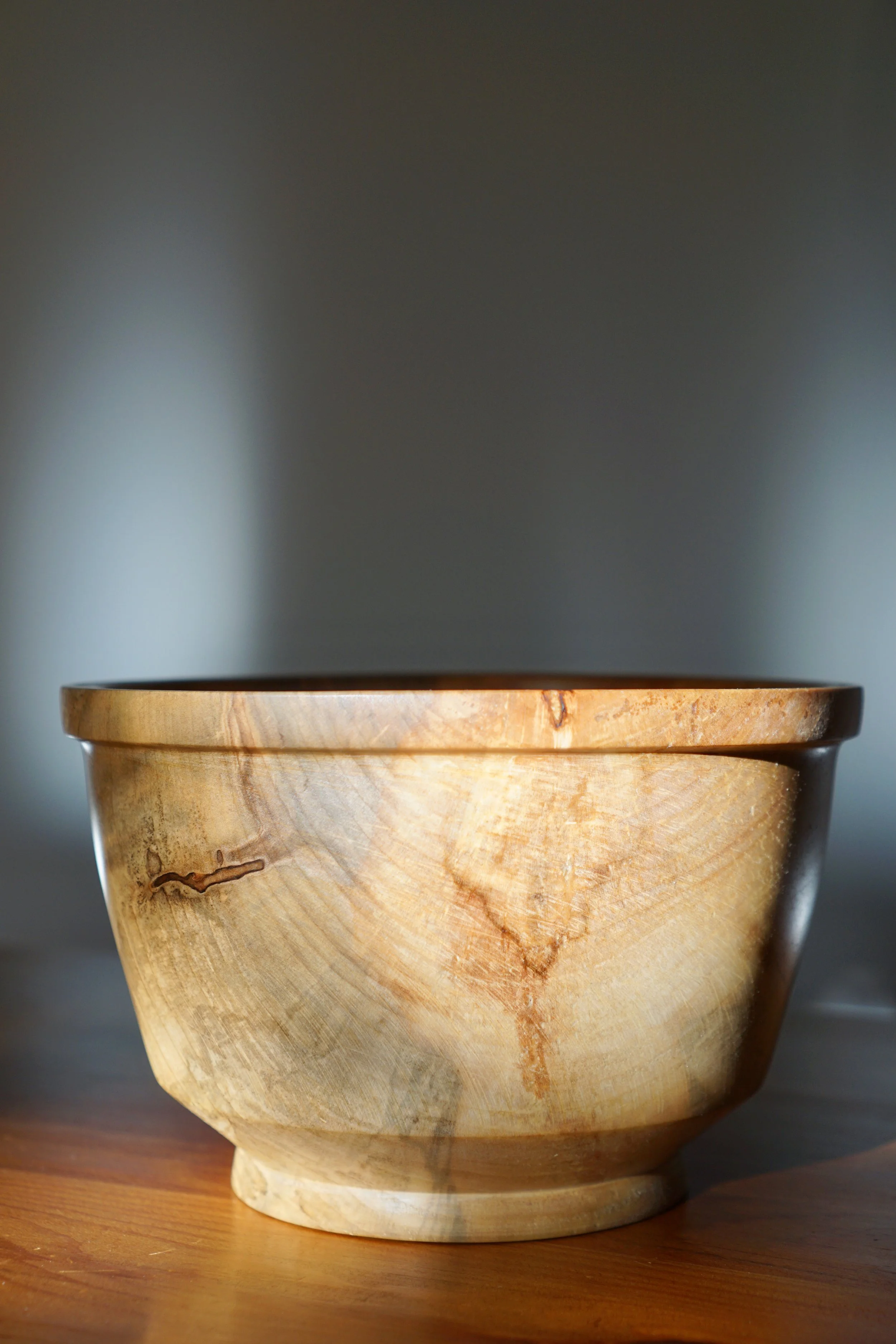
Dimensions: 7.5” x 5” tall
About the tree
This 70-year old soft Maple tree was rooted in a wet, swampy spot in Yarmouth, Maine. Trees in this circumstance are prone to uprooting and this one would have landed right on the neighbor's house, so it had to come down. I salvaged what I could of the 16” diameter trunk for bowl blanks, and the rest became firewood for the winter. Some parts of this tree carry distinctive patterns left by ambrosia beetles when they tunneled through the wood to lay their eggs. You can spot ambrosia by the straight black boring lines running through the grain.
Care instructions
All bowls are made from locally sourced Maine wood, often spalted and salvaged. The forms and finishes therefore may have blemishes, cracks, and imperfections. Finishes are food-safe linseed oil and beeswax, and can be maintained with an occasional application of an oil of your choice.
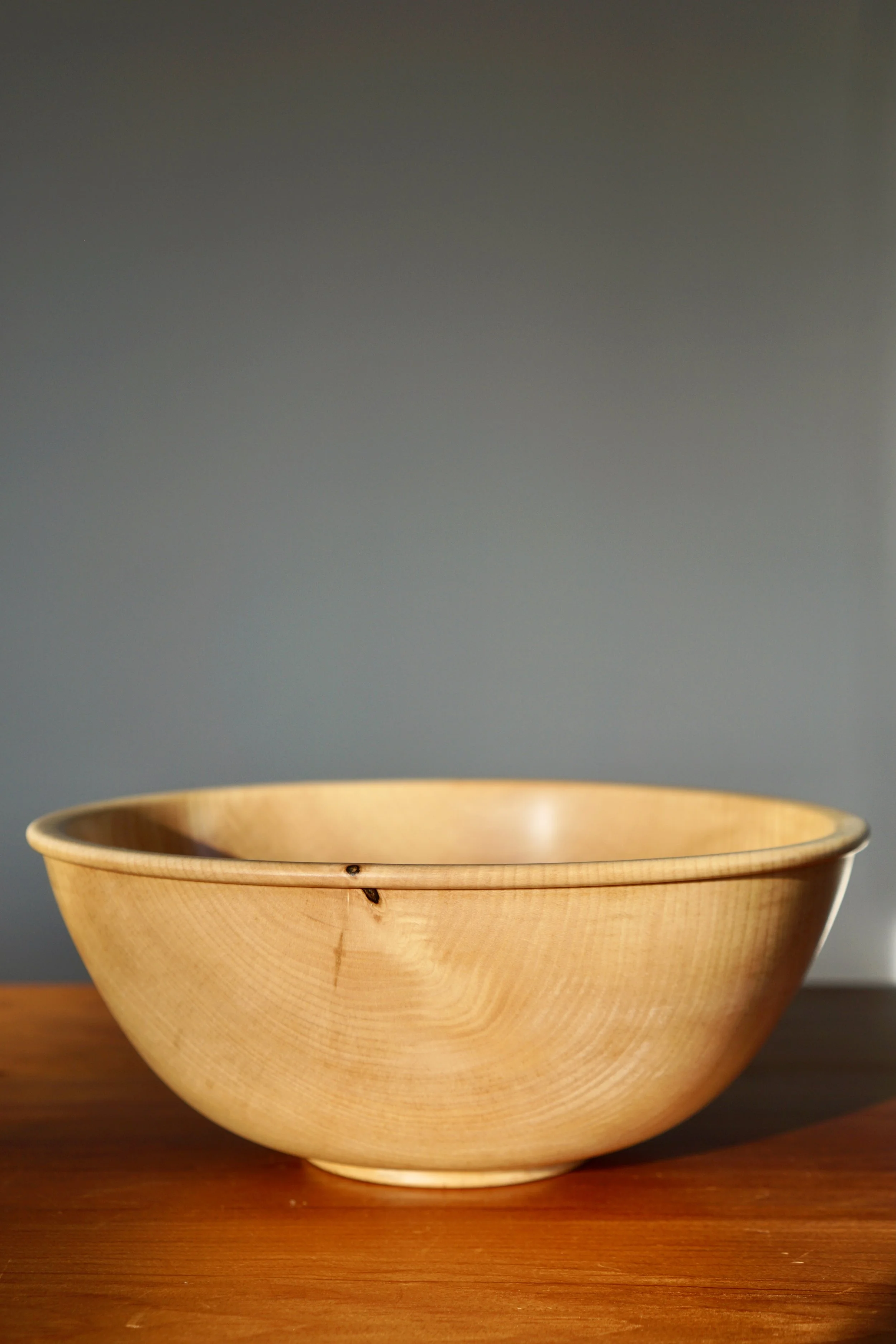
Dimensions: 9” x 3.5” tall
About the tree
This 70-year old soft Maple tree was rooted in a wet, swampy spot in Yarmouth, Maine. Trees in this circumstance are prone to uprooting and this one would have landed right on the neighbor's house, so it had to come down. I salvaged what I could of the 16” diameter trunk for bowl blanks, and the rest became firewood for the winter. Some parts of this tree carry distinctive patterns left by ambrosia beetles when they tunneled through the wood to lay their eggs. You can spot ambrosia by the straight black boring lines running through the grain.
Care instructions
All bowls are made from locally sourced Maine wood, often spalted and salvaged. The forms and finishes therefore may have blemishes, cracks, and imperfections. Finishes are food-safe linseed oil and beeswax, and can be maintained with an occasional application of an oil of your choice.
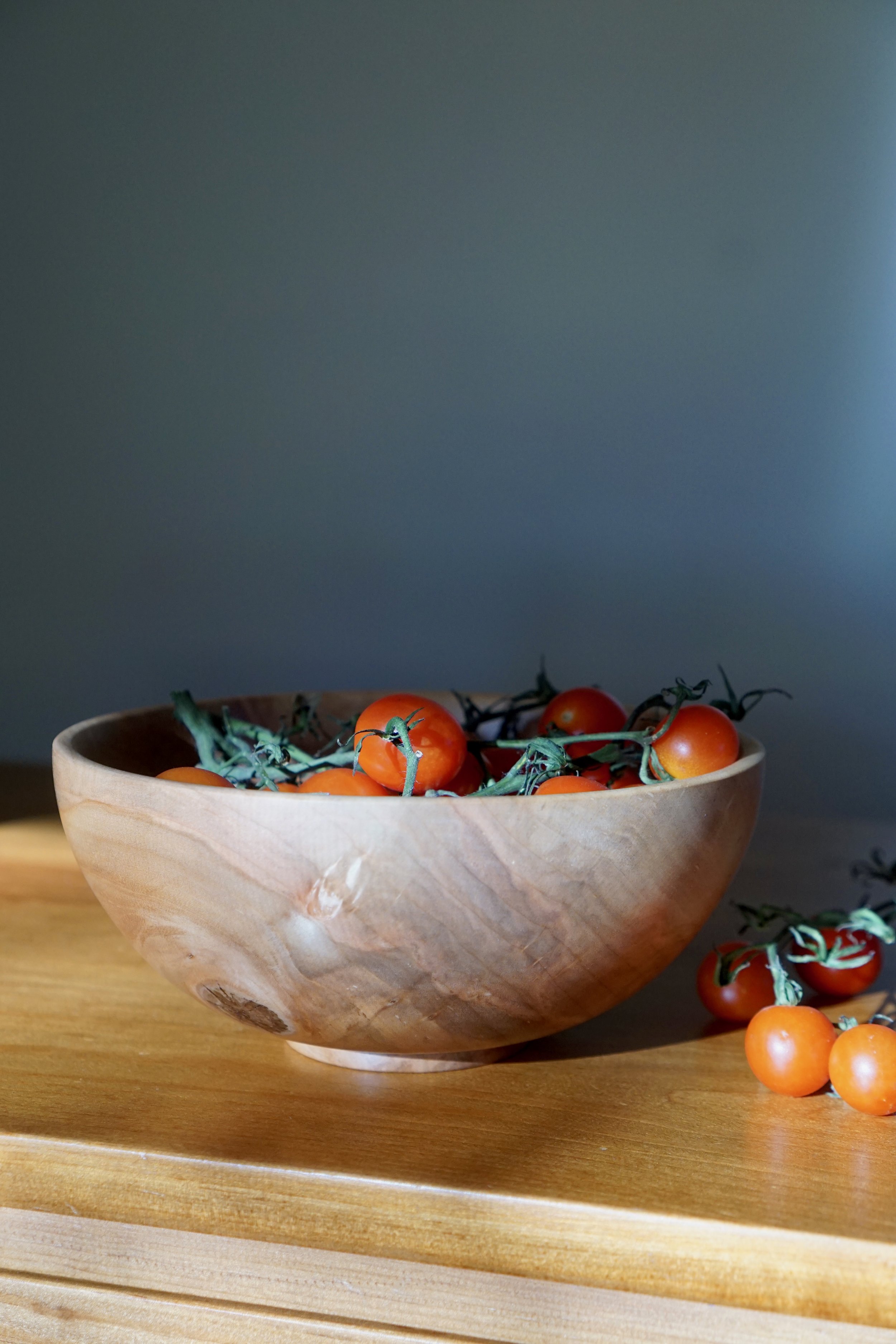
Dimensions: 7” x 3” tall
About the tree
This 70-year old soft Maple tree was rooted in a wet, swampy spot in Yarmouth, Maine. Trees in this circumstance are prone to uprooting and this one would have landed right on the neighbor's house, so it had to come down. I salvaged what I could of the 16” diameter trunk for bowl blanks, and the rest became firewood for the winter. Some parts of this tree carry distinctive patterns left by ambrosia beetles when they tunneled through the wood to lay their eggs. You can spot ambrosia by the straight black boring lines running through the grain.
Care instructions
All bowls are made from locally sourced Maine wood, often spalted and salvaged. The forms and finishes therefore may have blemishes, cracks, and imperfections. Finishes are food-safe linseed oil and beeswax, and can be maintained with an occasional application of an oil of your choice.
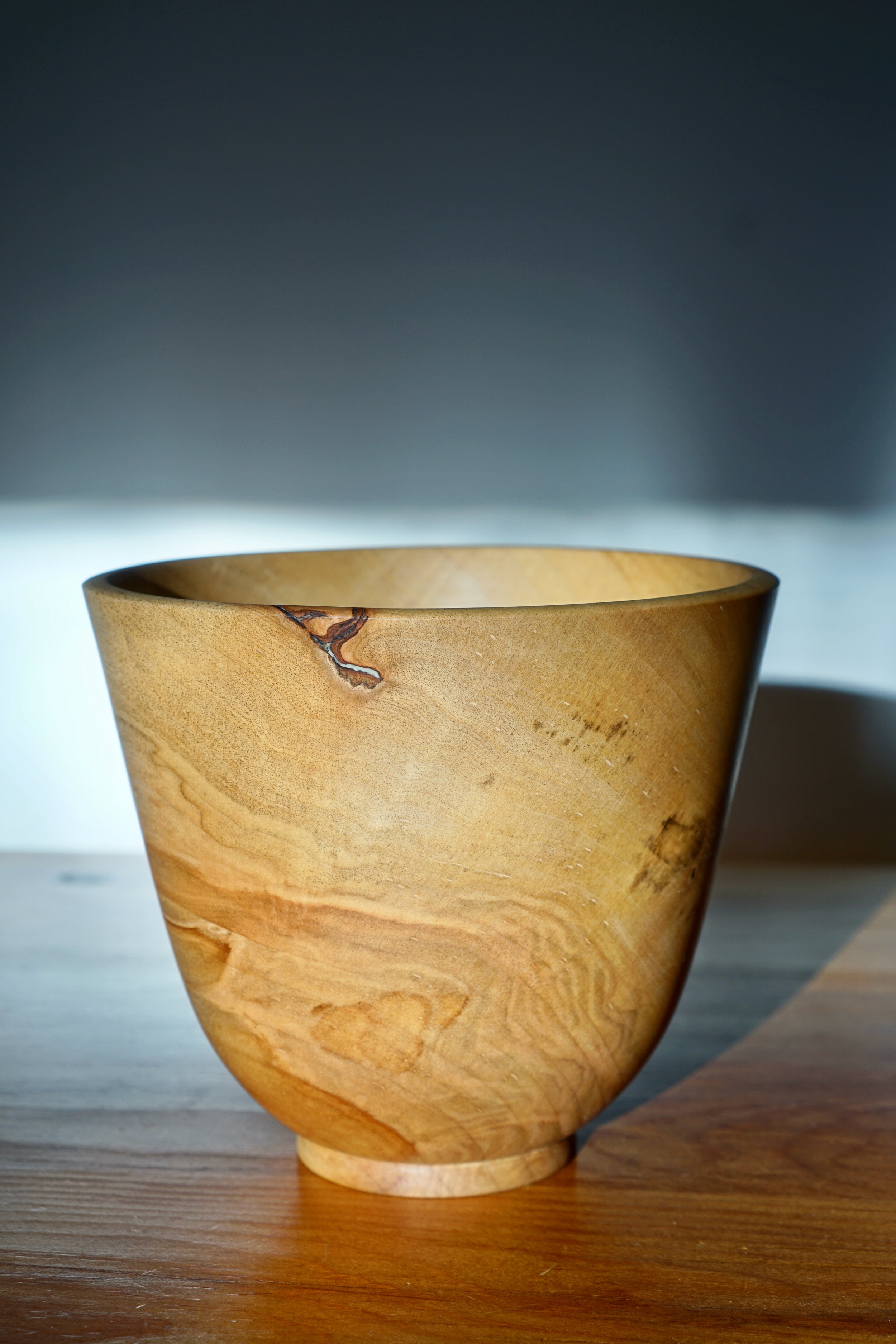
Dimensions: 5.75” x 5” tall
About the tree
This 70-year old soft Maple tree was rooted in a wet, swampy spot in Yarmouth, Maine. Trees in this circumstance are prone to uprooting and this one would have landed right on the neighbor's house, so it had to come down. I salvaged what I could of the 16” diameter trunk for bowl blanks, and the rest became firewood for the winter. Some parts of this tree carry distinctive patterns left by ambrosia beetles when they tunneled through the wood to lay their eggs. You can spot ambrosia by the straight black boring lines running through the grain.
Care instructions
All bowls are made from locally sourced Maine wood, often spalted and salvaged. The forms and finishes therefore may have blemishes, cracks, and imperfections. Finishes are food-safe linseed oil and beeswax, and can be maintained with an occasional application of an oil of your choice.
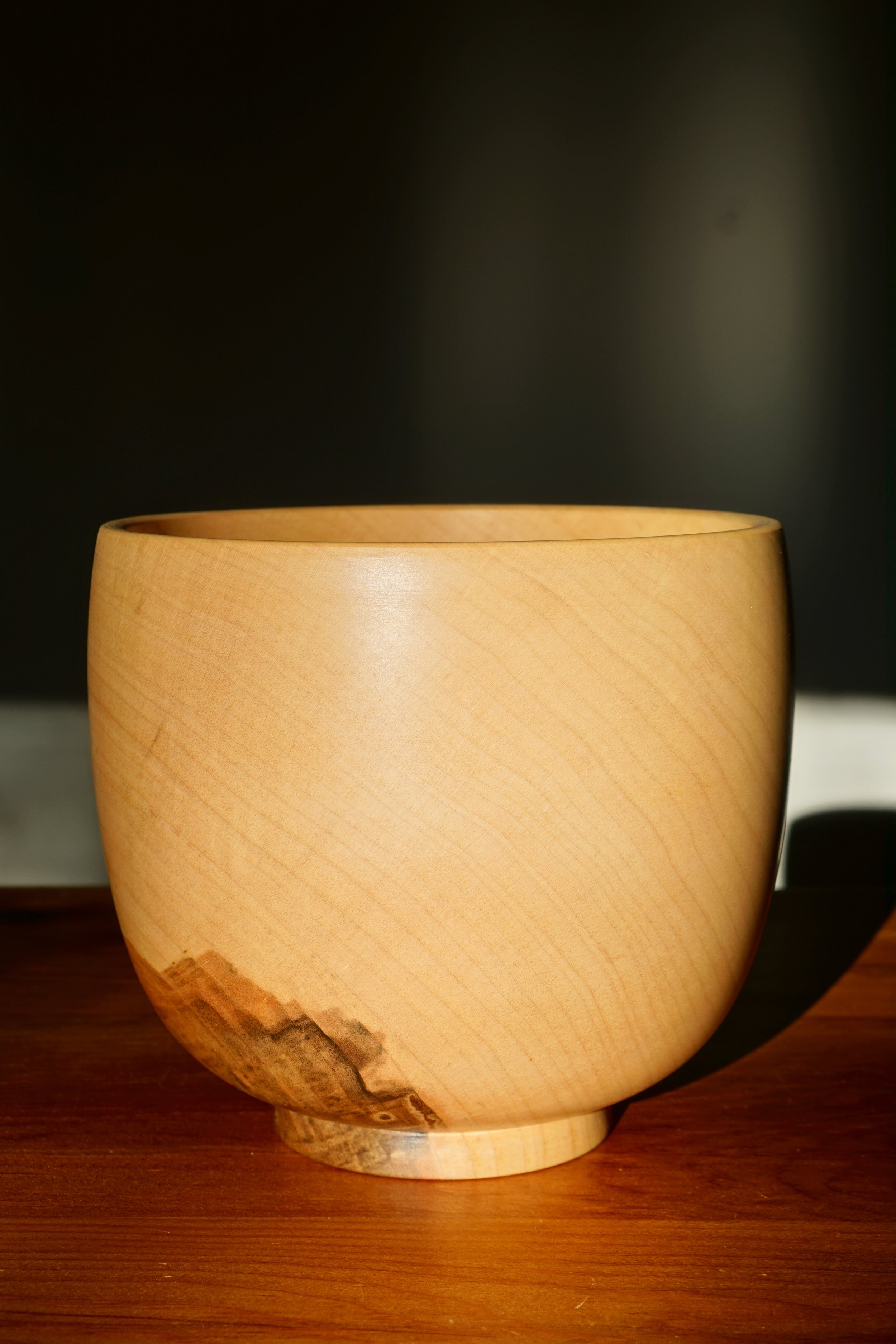
Dimensions: 6” x 6” tall
About the tree
This 70-year old soft Maple tree was rooted in a wet, swampy spot in Yarmouth, Maine. Trees in this circumstance are prone to uprooting and this one would have landed right on the neighbor's house, so it had to come down. I salvaged what I could of the 16” diameter trunk for bowl blanks, and the rest became firewood for the winter. Some parts of this tree carry distinctive patterns left by ambrosia beetles when they tunneled through the wood to lay their eggs. You can spot ambrosia by the straight black boring lines running through the grain.
Care instructions
All bowls are made from locally sourced Maine wood, often spalted and salvaged. The forms and finishes therefore may have blemishes, cracks, and imperfections. Finishes are food-safe linseed oil and beeswax, and can be maintained with an occasional application of an oil of your choice.
Dimensions: 11.5” x 4” tall
About the tree
This 70-year old soft Maple tree was rooted in a wet, swampy spot in Yarmouth, Maine. Trees in this circumstance are prone to uprooting and this one would have landed right on the neighbor's house, so it had to come down. I salvaged what I could of the 16” diameter trunk for bowl blanks, and the rest became firewood for the winter. Some parts of this tree carry distinctive patterns left by ambrosia beetles when they tunneled through the wood to lay their eggs. You can spot ambrosia by the straight black boring lines running through the grain.
Care instructions
All bowls are made from locally sourced Maine wood, often spalted and salvaged. The forms and finishes therefore may have blemishes, cracks, and imperfections. Finishes are food-safe linseed oil and beeswax, and can be maintained with an occasional application of an oil of your choice.